Steel Hub

Why 304 Stainless Steel Bar Remains Relevant Across Equipment and Structural Uses
Material selection has become a more strategic decision for manufacturers, fabricators, maintenance teams, and end users. In many sectors, equipment is expected to operate longer, cleaning standards are stricter, downtime is more expensive, and replacement cycles are closely watched. Against that background, stainless steel components are often evaluated not only for strength, but also for corrosion resistance, hygiene, fabrication flexibility, and life-cycle stability. Among the many grades available, 304 stainless steel continues to attract attention because it fits a wide range of practical applications without being tied to a single industry.
Bars made from this grade are widely used in petroleum, chemical processing, medical environments, food production, light industry, machinery, furniture, and kitchen-related products. Their role is often less visible than sheets or pipes, yet bars are critical in shafts, fasteners, supports, brackets, frames, connectors, and custom-machined parts. For companies comparing material options, understanding where this grade performs well can reduce procurement mistakes and improve operating reliability.
Typical Equipment Applications
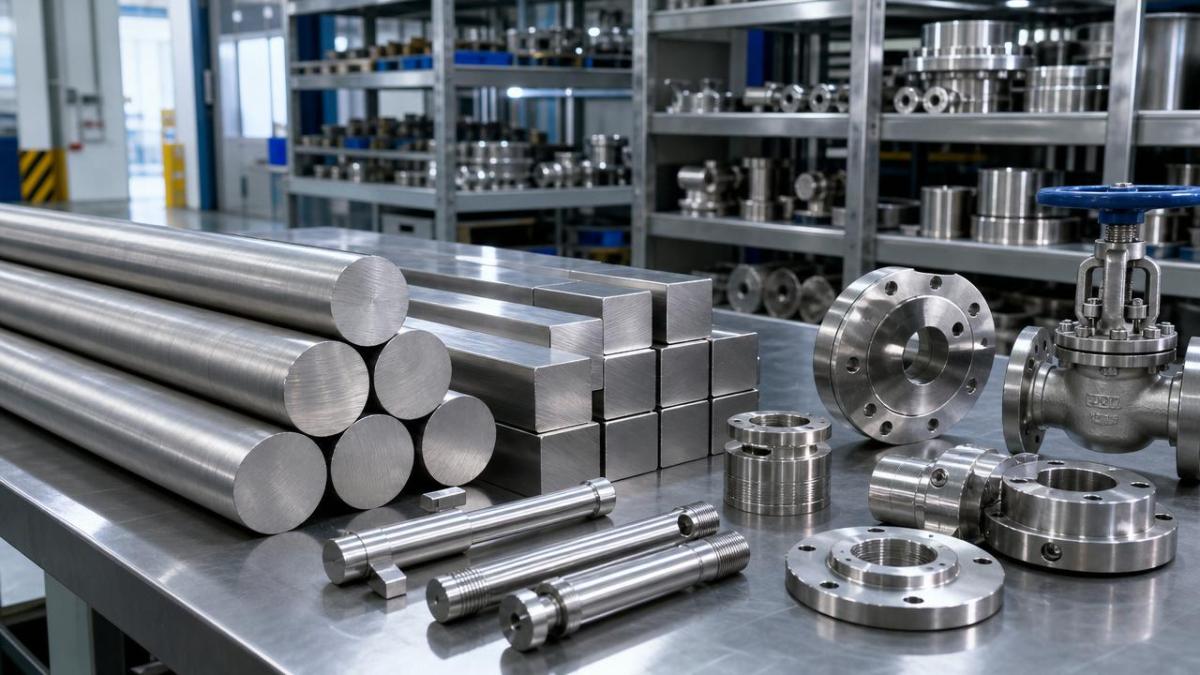
In equipment manufacturing, bars are frequently chosen as the starting form for machined components. Round bars may be processed into pins, axles, valve stems, couplings, threaded parts, or rotating elements. Flat or square bars may be used for brackets, reinforcement members, guiding parts, and fixture systems. Because 304 stainless steel offers a balanced combination of corrosion resistance and workability, it is often suitable for parts that operate in humid environments, are exposed to cleaning agents, or require a relatively clean surface finish.
In food and beverage processing, for example, contact surfaces and support components often need materials that can handle frequent washdown and resist contamination. In medical or laboratory settings, the material may be used in carts, instrument supports, non-critical structural pieces, and fabricated frames where surface cleanliness and resistance to ordinary corrosion matter. In light industrial equipment, the same grade may be selected for machine guards, conveyor accessories, housings, and hardware that must remain stable under daily use.
Petrochemical and chemical-sector use tends to be more conditional. The grade can serve effectively in many general fabrication and support functions, but actual suitability depends on the process medium, chloride exposure, operating temperature, and cleaning chemistry. That is why engineers usually assess the full service environment rather than choosing based on grade familiarity alone.
Common Structural Roles in Industrial and Commercial Settings
Beyond equipment internals, stainless steel bars also appear in structural and semi-structural uses. These include handrails, support frames, base members, reinforcement pieces, platform accessories, mounting assemblies, and architectural details in environments where both appearance and durability matter. In many facilities, bars are not selected only for load-bearing needs. They are also chosen because they can maintain a cleaner look over time and may require less surface protection than carbon steel in comparable indoor or mildly corrosive conditions.
Furniture and kitchen applications provide another familiar example. Table frames, shelf supports, handles, appliance components, and decorative structural elements often rely on stainless bars because the material can be machined, bent, polished, and welded into finished products with a durable appearance. For manufacturers serving commercial kitchens or public-use spaces, this matters because the final product must often balance visual quality, cleanability, and resistance to everyday wear.
Why This Grade Is Frequently Considered
The continued use of this material in so many sectors comes from a practical middle ground. It is commonly considered when users need a stainless option that performs reliably in general atmospheric, moisture-related, and cleaning-intensive environments. It is also widely available in forms that support machining and fabrication, which helps shorten sourcing and production timelines in many markets.
For sourcing teams reviewing 304 Stainless Steel Bar within broader equipment or structural projects, the main value often lies in versatility. A single material family may support multiple part types across one facility, from machine components to support hardware and visible exterior structures. This can simplify stock planning, processing coordination, and maintenance replacement strategy.
Another reason for its broad use is compatibility with common fabrication methods. In many workshops, stainless bar stock is cut, machined, drilled, welded, and finished with processes already familiar to operators. That reduces the learning curve compared with more specialized alloys. However, fabrication quality still matters. Improper cutting tools, contaminated surfaces, or poor welding practice can reduce corrosion performance even when the base material is suitable.
How Requirements Differ by Industry
Although the same grade appears across many applications, decision criteria are not identical from one sector to another. Buyers and engineers usually focus on the following factors:
- Food processing and kitchens tend to prioritize cleanability, surface finish, and resistance to routine washing and mild chemicals.
- Medical and laboratory environments often place more attention on hygiene, smooth finishing, and consistency in fabrication.
- Machinery manufacturers may care more about machinability, dimensional consistency, weldability, and compatibility with assembled parts.
- Chemical and petrochemical users usually need closer review of corrosion conditions, temperature range, and contact media before final selection.
- Furniture and visible structural applications often balance durability with appearance, especially where polished or brushed finishes are expected.
This variation matters because a material that performs well in a food-grade frame may not automatically be the best fit for chloride-heavy outdoor installations or high-temperature chemical service. Broad familiarity should never replace application-specific review.
Procurement and Technical Evaluation Points
For technical evaluators and purchasing teams, the bar itself is only part of the decision. Form, tolerance, finish, and traceability can influence downstream production efficiency just as much as nominal grade. If a part is going into precision equipment, straightness, dimensional consistency, and surface condition may affect machining waste and assembly speed. If the material is intended for visible architectural or kitchen use, finish uniformity may become a quality issue long before corrosion does.
A practical review often includes several checkpoints:
- Confirm the operating environment, including moisture, chemical exposure, cleaning frequency, and temperature.
- Match the bar shape and dimensions to the intended manufacturing route, such as turning, milling, welding, or direct structural assembly.
- Assess whether the required surface finish is functional, aesthetic, or both.
- Review fabrication practices to avoid contamination from carbon steel tools or storage conditions.
- Check supply stability if the same material will be used across multiple parts or product lines.
These steps help buyers move beyond price-only decisions. Lower upfront cost may not deliver lower total cost if machining losses rise, if finish defects lead to rejection, or if the wrong stainless grade creates premature maintenance issues.
Frequent Misunderstandings in Real-World Selection
One common misunderstanding is assuming that all stainless steels behave the same in corrosive environments. In reality, performance can differ significantly depending on the grade and service conditions. 304 is often a strong general-purpose option, but not an all-condition solution. Environments with high chlorides, aggressive chemicals, or unusual thermal demands may call for a more specific material review.
Another mistake is overlooking fabrication and maintenance practices. Even an appropriate grade can underperform if the surface is scratched, contaminated, or exposed to unsuitable cleaning agents over time. For maintenance personnel, this means material choice should be paired with clear handling and cleaning standards. For operators, it means understanding that service life is influenced by use conditions, not only by the name of the alloy.
There is also a tendency to focus on the final assembled product while paying too little attention to bar quality before machining or fabrication. Inconsistent stock can create dimensional variation, added tool wear, and production delays. For manufacturers working to reduce scrap and improve repeatability, this is an important but sometimes underestimated issue.
Where It Creates Practical Value
The strongest value of this material usually appears where users need a dependable balance rather than an extreme performance profile. It can support hygienic equipment frameworks, general industrial hardware, machine components, furniture structures, and kitchen-related products without introducing unnecessary complexity into production. For many businesses, that balance supports easier standardization across product lines and maintenance inventories.
For end users, the benefit may be longer service stability and a cleaner appearance in daily-use environments. For technical teams, the benefit is often easier fabrication planning and a material profile that is well understood. For maintenance staff, consistent replacement parts and manageable upkeep can be more valuable than choosing a higher-specification alloy where it is not truly required.
Final Considerations for Decision-Makers
The widespread use of 304 stainless steel bar in equipment and structures is not accidental. It reflects the material’s ability to serve many practical roles across manufacturing, processing, commercial, and consumer-oriented applications. Its relevance remains strong because modern projects increasingly require materials that can support durability, cleanliness, fabrication efficiency, and acceptable visual quality at the same time.
Still, good results depend on matching the material to the environment, the production method, and the performance expectation. Companies that take a broader view of service conditions, processing quality, and long-term maintenance are usually better positioned to gain full value from their material choice. In a market where reliability and efficiency are closely connected, informed selection of stainless bar stock remains a small decision with a meaningful operational impact.
Please give us a message
Tianjin Kaichuang Metal Material Co., Ltd
Add: No. 41, District 6, First Street, Huanghuadian Town, Wuqing District, Tianjin
Tel: + 86 137 9101 9833
E-mail: boss@kaichsteel.com