Steel Hub

H Beam Load Capacity: Key Checks Before Finalizing a Section
Choosing the right H beam is more than a sizing exercise. It directly affects safety, cost control, and project delivery.
Before locking a section, teams need to verify load paths, span conditions, support details, connection demands, and serviceability limits.
This guide explains the checks that shape H beam load capacity. It also helps decisions move faster without cutting technical rigor.
Start With the Real Load Case
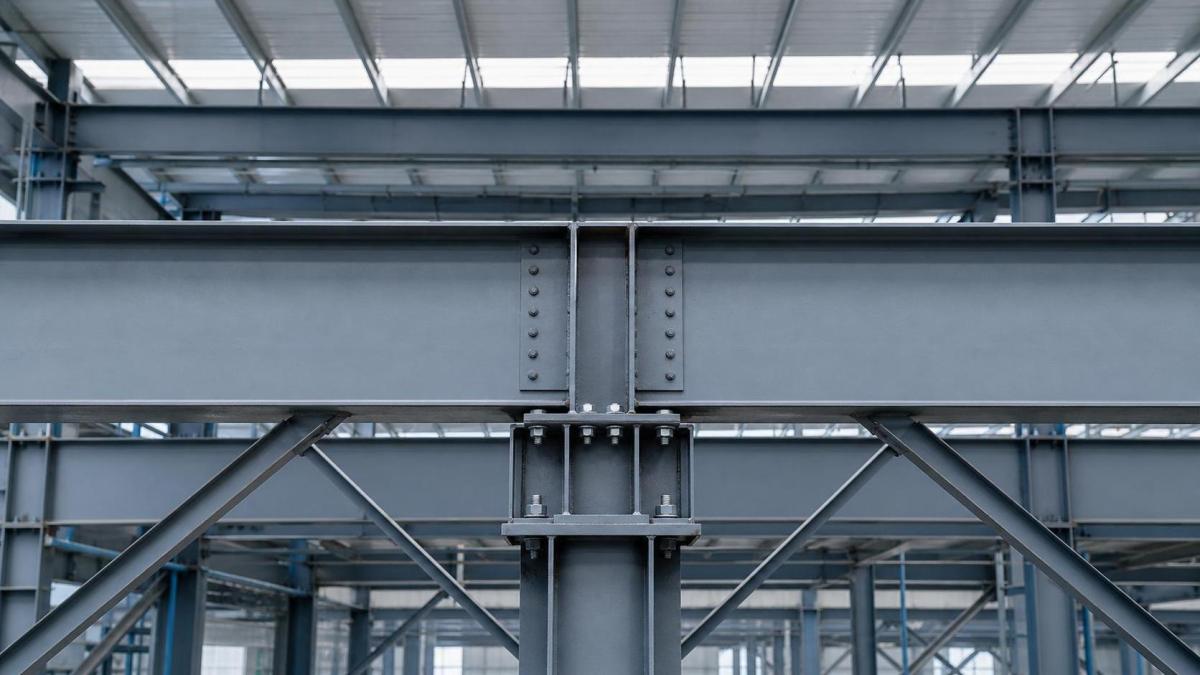
The first check is not beam size. It is the actual load case the H beam must carry.
Many selection errors come from simplified assumptions. A beam that looks adequate on paper can fail under a different load pattern.
Separate the loads into clear categories before reviewing H beam load capacity:
- Dead load from slab, finishes, equipment, and self-weight
- Live load from occupancy, storage, traffic, or maintenance access
- Concentrated load from machinery, hanging systems, or transfer points
- Dynamic or impact load where vibration or moving equipment is involved
- Environmental load such as wind, snow, or seismic effects when relevant
This matters because H beam capacity changes with load type and load position. Uniform loads and point loads do not stress the section in the same way.
In practice, equipment zones and later-stage tenant changes often create the biggest surprises. That is why design reserves should match the project reality.
Check Span, Support, and Boundary Conditions
The same H beam can show very different load capacity under different support conditions. Span length alone can shift the result dramatically.
A simply supported beam behaves differently from a continuous beam. A cantilever creates another set of bending and deflection demands.
Before finalizing a section, confirm these points:
- Clear span versus center-to-center span
- Pinned, fixed, or partial restraint at supports
- Presence of intermediate bracing or secondary framing
- Load sharing with adjacent beams or composite slab action
- Any future opening, notch, or service penetration near supports
Even a small span increase can force a heavier H beam. More importantly, support assumptions copied from earlier drawings often cause misalignment later.
From a delivery perspective, verifying boundary conditions early avoids redesign, procurement delay, and fabrication change orders.
Review Bending, Shear, and Deflection Together
A common mistake is checking only bending strength. Real H beam selection should balance bending, shear, and serviceability at the same time.
For most building frames, bending controls section size first. Yet in short spans with heavy reactions, shear can become critical.
Deflection is often the hidden limiter. The H beam may pass strength checks, but still cause floor bounce, facade cracking, or alignment issues.
This is why H beam load capacity should be read in two layers: ultimate strength and usable performance in service.
Typical review items include:
- Maximum moment under governing load combinations
- Support reaction and web shear resistance
- Instantaneous and long-term deflection limits
- Vibration performance for sensitive occupancy
- Local web bearing or crippling near concentrated loads
More projects now include tighter tolerance requirements. That trend makes serviceability a decision driver, not a secondary note.
Do Not Ignore Lateral Stability and Bracing
H beam load capacity is not only about section depth and weight. Lateral stability can reduce usable capacity long before material strength is reached.
The main concern is lateral-torsional buckling. When the compression flange is not restrained, the beam can twist and lose capacity.
This becomes more important in long-span roofs, transfer beams, and equipment platforms with uneven loading.
Confirm the following before sign-off:
- Unbraced length of the compression flange
- Deck, slab, or purlin restraint conditions
- Temporary erection stage without full bracing installed
- Torsional effects from offset loads or eccentric connections
- Need for stiffeners, bracing members, or a different section strategy
In actual procurement, one heavier H beam can still be the wrong answer if the bracing plan is weak or incomplete.
Connections Can Govern the Final Choice
A beam does not work alone. Its real performance depends on how loads enter and leave the section.
That is why connection design should be reviewed alongside H beam load capacity, not after the member is selected.
Key issues usually include end plate thickness, bolt layout, weld size, cope details, and access for fabrication or field installation.
A beam with excellent section capacity may still create problems if the connection zone weakens the web or flange.
Watch for these decision points:
In other words, the best H beam is the one that works with the full connection strategy, not just the structural spreadsheet.
Material Grade, Standards, and Fabrication Reality
H beam load capacity depends on material grade as much as geometry. Yield strength, toughness, and standard compliance all shape the final result.
Different markets may use ASTM, EN, JIS, GB, or project-specific standards. Substitution without rechecking capacity is a real risk.
This also affects sourcing. A theoretically ideal H beam may create lead-time pressure if the section or grade is not readily available.
A practical review should cover:
- Specified steel grade and minimum yield strength
- Section tolerance under the applicable product standard
- Weldability and heat input sensitivity
- Mill availability and rolling schedule
- Coating, fire protection, or corrosion allowance requirements
For project delivery, the strongest choice is often the section that balances design efficiency with stable supply and predictable fabrication.
A Fast Pre-Finalization Checklist for H Beam Selection
Before approving an H beam, run through a short but disciplined checklist. It helps catch issues before they become procurement or site problems.
- Confirm governing load combinations and actual equipment loads.
- Verify span, support type, and any composite action assumptions.
- Check bending, shear, deflection, and vibration limits together.
- Review unbraced length and lateral stability in service and erection.
- Coordinate connection details with local web and flange demand.
- Validate steel grade, standard, and supply availability.
- Test whether the selected H beam still works after foreseeable scope changes.
That last step is often overlooked. Yet modest future changes can quickly erode H beam load capacity margins.
Final section approval should therefore connect structural checks with procurement logic, fabrication constraints, and site execution needs.
When those pieces align, the H beam choice is usually safer, more economical, and easier to deliver on schedule.
Please give us a message
Tianjin Kaichuang Metal Material Co., Ltd
Add: No. 41, District 6, First Street, Huanghuadian Town, Wuqing District, Tianjin
Tel: + 86 137 9101 9833
E-mail: boss@kaichsteel.com