Steel Hub

Why does a lower steel material quote sometimes create a higher final cost?
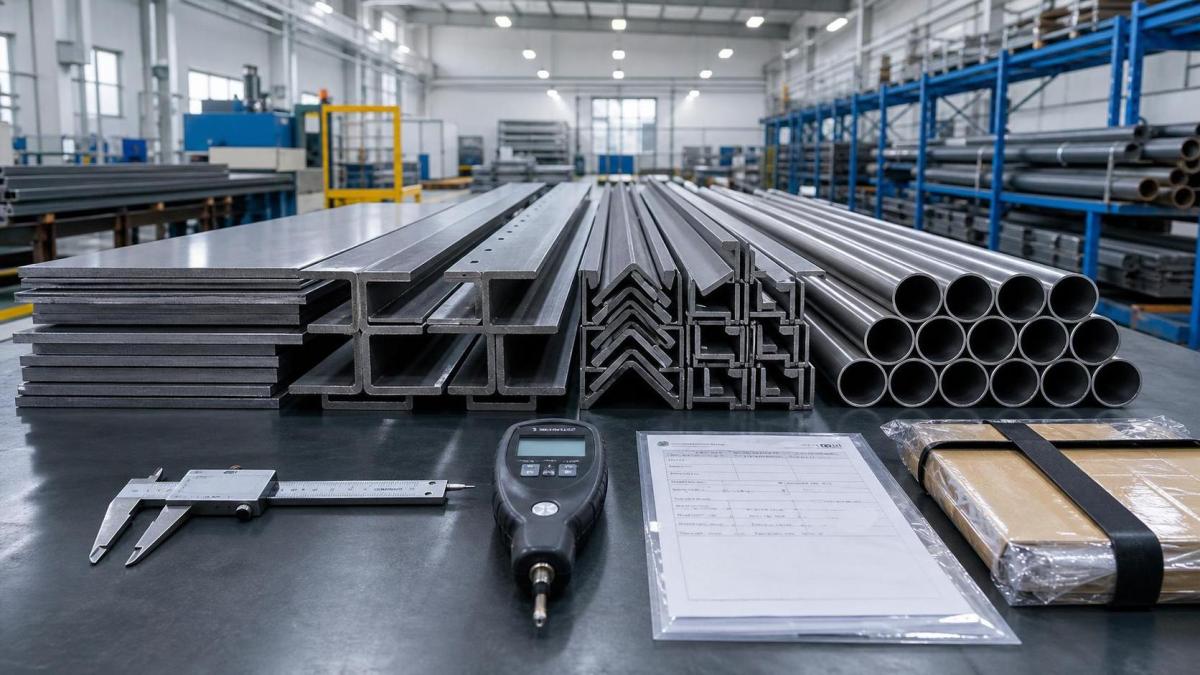
Comparing steel material cost looks simple until two similar quotes lead to very different project results.
The issue is not price alone. It is what sits behind the number.
Steel is a basic upstream material for construction, equipment, automotive, shipbuilding, energy, and rail applications.
Because of that, a small mistake in steel material selection can multiply across fabrication, delivery, and downstream assembly.
In practice, the cheapest offer may exclude testing, tighter thickness tolerance, surface quality control, or stable lead time.
That is where hidden cost begins.
A low quote can turn expensive when rework, scrap, welding issues, coating failure, or delayed shipment appears later.
A better way to compare steel material is to treat price as one signal, not the whole decision.
The useful question is this: what quality level, process stability, and supply reliability are included in the quote?
What should be matched before comparing steel material prices?
Many pricing errors happen before negotiation even starts.
Two offers may look comparable, while the actual steel material scope is different.
Start by checking whether the following points are truly aligned.
- Grade and standard, such as ASTM, EN, JIS, or GB equivalents
- Product form, including plate, section, pipe, tube, bar, or wire rod
- Thickness, width, length, and dimensional tolerance
- Surface condition, edge condition, and flatness requirement
- Heat treatment, galvanizing, pickling, coating, or machining
- Inspection documents, mill test certificates, and traceability level
- Packaging, delivery terms, and shipment schedule
If one supplier quotes base material only, while another includes processing, testing, and export packing, the gap is not a pricing mystery.
It is a scope difference.
A practical comparison table helps make those differences visible before they become purchasing mistakes.
Which quality risks are most often hidden inside steel material offers?
Some risks are obvious. Others stay invisible until fabrication begins.
The most common hidden problem is grade substitution.
A supplier may quote a steel material that sounds equivalent, but the impact toughness, yield strength, or chemistry is not fully matched.
That matters in welded structures, cold forming, pressure applications, and outdoor service.
Another frequent issue is tolerance drift.
If thickness runs high, the ton price may look attractive while actual piece cost rises.
If thickness runs low, material may fail structural or forming requirements.
Processing quality also changes the real value of steel material.
Uneven galvanizing, poor cutting accuracy, edge cracks, or residual stress can create expensive secondary losses.
Need a quick filter? Watch for these warning signs.
- The quote names a grade but not the standard revision
- Testing documents are promised later, without sample references
- Lead time is unusually short for a special size or hard-to-source material
- The price excludes tolerance confirmation or processing details
- No clear answer is given on source mill or rolling route
When several warning signs appear together, the low price usually has a reason.
How do you compare steel material quotes fairly when specs look similar?
This is where total evaluated cost becomes more useful than nominal price.
A fair comparison asks what each supplier really delivers per ton, per piece, and per approved batch.
In actual sourcing, a simple scorecard works better than relying on memory or email threads.
Give weight to commercial and technical factors together.
This kind of table is especially useful for plate, section, pipe, and long products, where application requirements differ sharply.
A plate used for structural fabrication should not be evaluated the same way as tube for pressure systems or wire rod for downstream drawing.
When does lead time become a quality issue, not just a logistics issue?
This point is often underestimated during steel material comparison.
A rushed lead time can signal unstable sourcing, mixed batches, or unverified substitute stock.
That does not mean every fast quote is risky.
It means speed should be explained by inventory position, rolling capacity, or processing readiness.
For steel material, delivery performance and quality control are often tied together.
If a supplier misses mill booking windows, inspection timing may also become compressed.
That increases the chance of incomplete checks, document gaps, or last-minute substitutions.
A useful question is not only “When can this ship?”
Ask “What production and inspection steps support that date?”
The answer often tells more than the quote itself.
What is a practical way to reduce steel material risk before placing the order?
A strong comparison process does not need to be complicated.
It needs to be disciplined and consistent.
Before approval, build a short decision routine around the steel material offer.
- Freeze the exact standard, grade, dimensions, and tolerance in writing
- Request sample MTCs or recent batch documents before order release
- Confirm whether processing is in-house or outsourced
- Check realistic lead time against mill route and shipping plan
- Define rejection rules for chemistry, mechanical properties, and defects
- Review the cost impact of scrap, rework, and delayed approval
For repeat purchases, keep a record of claim rate, dimensional stability, and document accuracy by supplier.
That history becomes more valuable than a one-time low quote.
In the steel industry, where raw materials, rolling schedules, and freight conditions shift often, disciplined comparison protects both cost and continuity.
The best next step is to compare current steel material offers using one shared checklist, then flag any quote that cannot explain its quality basis, process route, or delivery commitment clearly.
That is usually where better purchasing decisions begin.
Please give us a message
Tianjin Kaichuang Metal Material Co., Ltd
Add: No. 41, District 6, First Street, Huanghuadian Town, Wuqing District, Tianjin
Tel: + 86 137 9101 9833
E-mail: boss@kaichsteel.com