Steel Hub

Why does supplier evaluation matter more than unit price?
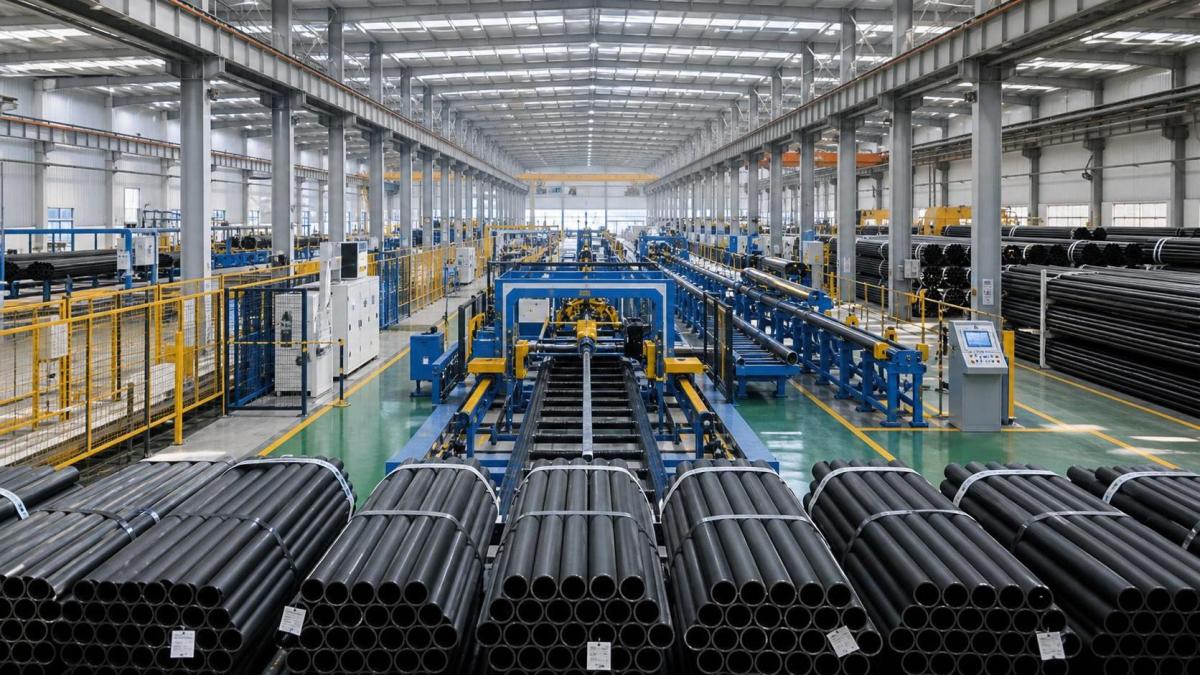
A low quote can look attractive, but stable supply depends on far more than price.
When reviewing a carbon steel pipe manufacturer, the real question is whether supply will remain consistent during market swings, tight lead times, and specification changes.
That matters because steel sits upstream of construction, energy, rail transit, shipbuilding, machinery, and appliance production.
If pipe delivery slips, downstream schedules, fabrication plans, and installation windows usually slip with it.
A reliable carbon steel pipe manufacturer should show control over raw material sourcing, production scheduling, testing, and shipment coordination.
In practice, stable supply comes from system strength, not from one good batch or one competitive offer.
That is why many buyers now compare risk exposure, capacity discipline, and document accuracy before they compare final pricing.
What should you check first when comparing a carbon steel pipe manufacturer?
Start with the basics that affect continuity: product scope, standards coverage, mill capability, and supply history.
Not every carbon steel pipe manufacturer is equally strong in structural pipe, fluid pipe, line pipe, or custom dimensions.
A supplier may be competitive on common sizes, yet struggle with thicker walls, small trial orders, or mixed-specification schedules.
It helps to ask a few direct questions early.
- Which standards are produced regularly, such as ASTM, API, EN, or GB?
- Are raw materials sourced internally, from long-term mills, or from spot purchases?
- How often are the same grades and sizes exported or supplied to repeat projects?
- Can the mill handle peak demand without pushing out delivery dates?
These checks quickly show whether the carbon steel pipe manufacturer is built for stable programs or only for opportunistic orders.
How can you tell if production capacity is real and not just a sales claim?
This is often where evaluation becomes more useful.
A credible carbon steel pipe manufacturer should be able to explain output by line type, diameter range, wall thickness, and monthly utilization.
If answers stay broad, supply risk is usually higher.
More reliable signals include visible production planning, traceable heat numbers, inspection records, and realistic lead time commitments.
For example, a mill with access to coil or billet under stable contracts is often better positioned than one buying heavily on short-term fluctuations.
That upstream link matters in steel because iron ore, scrap, energy costs, and rolling schedules can affect pipe availability very quickly.
A useful way to compare suppliers is to score them against specific proof points.
A carbon steel pipe manufacturer that can support these answers with documents is usually easier to trust.
Are quality documents enough, or should you look deeper?
Certificates matter, but they are only the starting point.
A dependable carbon steel pipe manufacturer should also show how quality is controlled before, during, and after production.
That includes incoming material checks, dimensional inspection, hydrostatic or nondestructive testing where required, and final release procedures.
More important, the quality system should match the application.
Pipes used in energy, pressure service, piling, or structural work do not carry the same compliance risk.
A stronger supplier explains deviations clearly, not defensively, and provides retest logic when needed.
In actual purchasing decisions, one useful sign is document accuracy.
If quotations, test certificates, packing lists, and standard references frequently conflict, execution problems often appear later.
Common warning signs during review
- Lead times are promised immediately, but no production window is confirmed.
- Mill test certificates look generic or do not match the offered specification.
- Tolerance questions are answered only after repeated follow-up.
- The carbon steel pipe manufacturer avoids discussing claims history or replacement terms.
How should delivery, inventory, and logistics be evaluated?
Stable supply is not just about production. It also depends on how material moves after rolling and inspection.
A capable carbon steel pipe manufacturer usually has a defined process for storage, bundling, marking, loading, and shipment release.
This becomes especially important for export shipments, mixed containers, and project lots with staged delivery.
Ask whether finished stock is held regularly, or whether everything is purely made to order.
A stock-supported model can reduce emergency lead times, but only if inventory accuracy is reliable.
It is also worth checking how the supplier handles port congestion, document revisions, and partial shipment requests.
These details often separate a routine vendor from a stable carbon steel pipe manufacturer.
A practical comparison for supply stability
When two offers are close in price, this simple comparison can clarify the better decision.
What cost mistakes are most common when choosing a carbon steel pipe manufacturer?
The most common mistake is treating the cheapest ex-works price as the lowest total cost.
A carbon steel pipe manufacturer with weak delivery control can create expediting fees, idle labor, replacement orders, and freight changes.
Those costs rarely appear in the first quotation.
Another mistake is ignoring specification fit.
Buying from a supplier that mainly runs standard commodity sizes may look efficient, yet custom lengths, coating requirements, or stricter tolerances can become expensive later.
A better approach is to compare total delivered value across five items.
- Base price by grade and size
- Testing and documentation completeness
- Delivery reliability and schedule flexibility
- Packaging, loading, and logistics efficiency
- Claim handling speed and replacement responsibility
That comparison gives a more realistic view of which carbon steel pipe manufacturer can protect continuity over time.
What is a sensible next step before placing regular orders?
A phased review usually works better than a one-time yes or no decision.
Start by defining required standards, sizes, annual volume, delivery rhythm, and critical end-use risks.
Then compare each carbon steel pipe manufacturer against those points using the same checklist.
For new sources, a trial order with clear inspection and delivery milestones often reveals more than a long presentation.
Where demand is ongoing, it also helps to review quarterly performance on lead time, document accuracy, claims, and communication response.
The goal is not simply to find a low-cost carbon steel pipe manufacturer.
It is to secure a supplier that can support stable steel flow when raw materials tighten, schedules shift, or project pressure increases.
When the evaluation is structured around capacity, quality, and delivery evidence, supplier selection becomes more predictable and far easier to defend.
Please give us a message
Tianjin Kaichuang Metal Material Co., Ltd
Add: No. 41, District 6, First Street, Huanghuadian Town, Wuqing District, Tianjin
Tel: + 86 137 9101 9833
E-mail: boss@kaichsteel.com