Steel Hub

Does steel sheet surface finish affect paint adhesion on site? Yes. A smooth surface can offer too little mechanical grip for a coating that requires an anchor profile, while oil, corrosion, or an incompatible existing coating can prevent proper bonding even when the sheet looks clean. Reliable preparation starts with identifying what is on the steel and matching the cleaning and roughening method to the specified primer.
Do not assume that every shiny sheet should be ground to bright metal. Bare cold-rolled steel, galvanized sheet, factory-coated panels, and previously painted steel require different treatment. The wrong abrasive or chemical can remove a protective coating, damage thin sheet, or leave a surface unsuitable for the paint system.
Identify the surface before choosing a preparation method
Inspect more than one area, including edges, overlaps, fasteners, and sheltered faces. Surface condition can vary across the same installation, particularly where sheets have been handled, stored outdoors, or partially exposed to weather. Look for oil films, rust staining, white corrosion products, scratches, intact paint, and areas where an earlier coating is lifting.
Bare cold-rolled steel often has a smooth, relatively uniform finish and may carry rolling oil or a temporary rust-preventive film. Both must be removed before abrasion and priming. A clean appearance alone does not establish that the protective oil is gone.
Galvanized steel has a zinc coating that protects the steel beneath it. New galvanized surfaces can be difficult to paint without suitable cleaning and a compatible primer. They may also have passivation treatments or other residues that affect adhesion. Weathered galvanized sheet can accumulate white corrosion products and dirt. Avoid aggressive grinding that unnecessarily removes the zinc; use a preparation method and primer approved for the particular galvanized surface.
Factory-painted or previously painted sheet should be assessed as an existing coating system, not treated automatically as bare steel. Identify the coating if possible, check whether it is sound, and confirm that the proposed paint can be applied over it. Peeling, blistered, or poorly bonded paint must be removed to a sound edge. If the existing finish is unknown, a representative test area and coating-supplier advice are more reliable than assuming compatibility.
Some sheets have mill scale, a tightly attached oxide formed during hot rolling. Scale is not a substitute for a sound paint substrate: if it loosens, paint can detach with it. Where the specification calls for bare steel or a particular blast-cleaning grade, prepare accordingly rather than painting over scale merely because it appears firm.
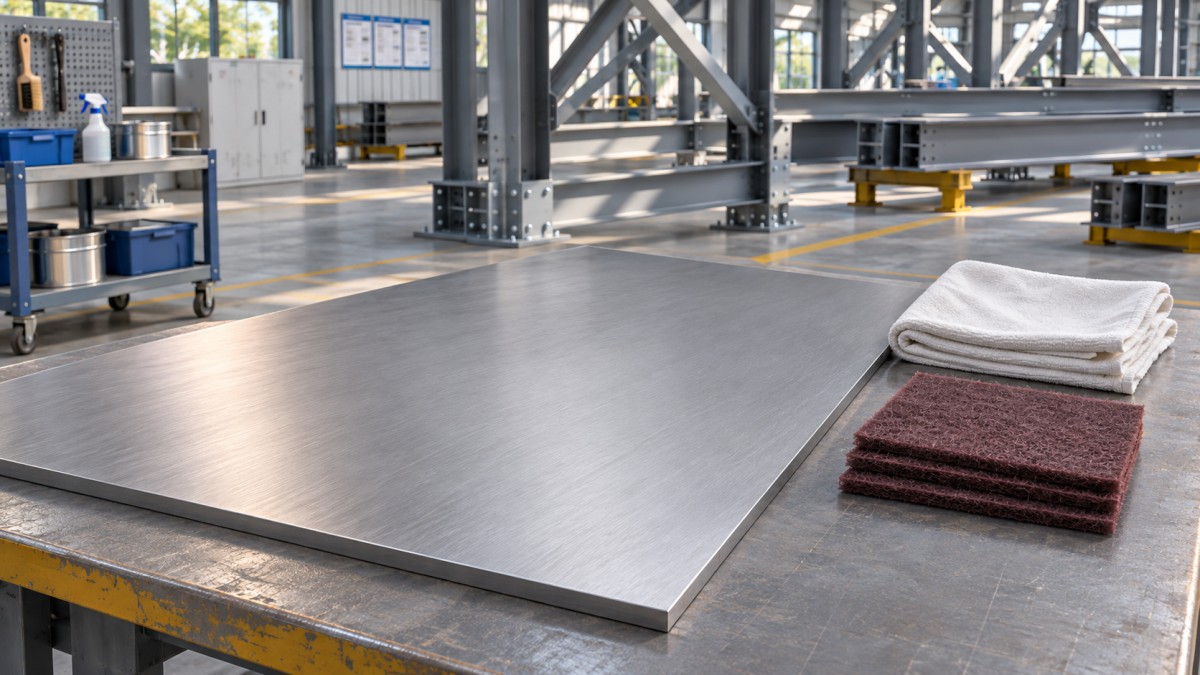
Remove contamination before creating a profile
Cleaning and abrasion solve different problems. Degreasing removes substances that interfere with wetting and bonding; abrasion creates the surface condition required by the coating. Abrading an oily sheet can spread the oil or work it into the surface, making subsequent cleaning harder.
Use a cleaner suitable for the substrate and the selected coating system. Apply it according to its instructions, paying attention to folds, joints, and areas touched during handling. Change cleaning cloths or solutions as they become contaminated rather than transferring residue from one area to another. Where a cleaner requires rinsing, rinse thoroughly and allow the surface to dry before the next operation.
Salt and other soluble contamination deserve attention on steel stored or installed near marine environments, de-icing salts, or industrial deposits. They can remain after loose dirt is removed and contribute to blistering or corrosion beneath paint. Use the cleaning and, where required, soluble-salt testing method specified for the project; a dry-looking surface is not evidence that salts have been removed.
Do not rely on a single wipe test as proof of cleanliness. A clean cloth can help reveal obvious oil or dirt, but it does not establish that all contamination is absent. If contamination is suspected after cleaning, repeat the appropriate treatment and resolve the cause before roughening or coating.
Create the surface the primer actually requires
The surface profile is the microscopic texture available to the coating. A profile can improve mechanical adhesion, but rougher is not automatically better. If the profile is too shallow for the system, adhesion may suffer; if it is too deep for the specified film thickness, peaks can remain inadequately covered. The coating manufacturer’s preparation and profile requirements should determine the method.
Hand and power-tool abrasion
Abrasive pads, sanding discs, and suitable power tools can prepare accessible areas where blasting is impractical. They are useful for removing loose rust and failing paint, feathering sound coating edges, and dulling a glossy finish when the new coating permits this approach. Work consistently across the area rather than leaving isolated polished patches.
On thin sheet, excessive pressure can distort the panel or cut through a protective metallic coating. Coarse grinding can also leave deep scratches that show through the finished paint or are difficult to cover. Select an abrasive that achieves the specified condition without unnecessary metal removal, and keep the tool moving to limit localized heating and damage.
Power-tool cleaning does not automatically produce the same cleanliness or profile as abrasive blasting. If a coating specification requires a defined blast-cleaning standard or measured anchor profile, do not substitute sanding simply because the surface looks rough. Obtain approval for an alternative system if the specified preparation cannot be achieved on site.
Abrasive blasting and other controlled methods
Abrasive blasting can remove rust, mill scale, and old coatings while producing a profile, but it requires control of abrasive selection, pressure, stand-off distance, and technique. Thin panels can warp, and galvanized coatings can be damaged if blasting is too aggressive. Protect adjacent equipment and prevent abrasive and debris from entering occupied or sensitive areas.
Where the coating system allows a light sweep blast on galvanized or coated sheet, use a procedure suited to that substrate rather than applying a bare-steel blasting procedure. The goal is controlled surface preparation, not indiscriminate removal of the underlying protective layer.
Confirm the result against the project specification. Visual cleanliness and surface profile are separate checks: a surface can look uniformly clean but have an unsuitable profile. When measurement is required, use the specified comparator, replica tape, gauge, or other approved method, and take readings at representative locations.
Deal with rust, edges, and existing paint
Remove loose rust and corrosion products to the level required by the coating system. Localized pitting needs particular attention because corrosion and contamination can remain in pits after the surrounding sheet looks clean. If corrosion has significantly reduced thickness or caused perforation, painting alone will not restore structural capacity; the damaged sheet should be assessed before coating proceeds.
Edges, cutouts, welds, fasteners, and overlaps are easy to miss and difficult to coat uniformly. Remove sharp burrs where practical and permitted, clean crevices as far as accessible, and follow the coating specification for edge treatment. A stripe coat applied by brush to edges and other difficult areas can improve coverage when it is part of the approved system.
For an existing coating that remains sound, remove loose sections and feather the transition so there is no abrupt, fragile edge. Scuff glossy surfaces if the new coating requires it, then remove sanding dust. Where bare steel or zinc is exposed during preparation, use the specified local primer or full-system repair rather than assuming the finish coat will protect those spots on its own.
A small compatibility test area should reproduce the intended cleaning, abrasion, primer, and topcoat sequence. Allow the coatings to cure as directed before assessing the result. A test patch can reveal obvious softening, lifting, or poor bonding, but it does not replace a specified adhesion test or guarantee long-term performance.
Control weather, condensation, and time between preparation and painting
Even well-prepared steel can become unsuitable for coating if conditions change. Rain, fog, airborne dust, and condensation can contaminate the surface; freshly cleaned bare steel can also develop flash rust. Arrange the work so that only an area that can be cleaned, checked, and primed within the permitted period is prepared at one time.
Measure surface temperature, air temperature, and relative humidity using suitable instruments, then compare them with the coating manufacturer’s application limits. Surface temperature matters because a sheet can cool below the surrounding air temperature. A common requirement is for the surface to remain at least 3 °C above the dew point, but the coating specification and local conditions govern the work. Check conditions throughout application and the initial drying period, not only at the start of the shift.
Avoid painting a damp surface unless the selected product explicitly permits it. Also consider direct sunlight and hot sheet metal: rapid solvent loss or premature surface drying can interfere with application and film formation. Follow the product’s limits for substrate temperature, and do not thin the paint outside the manufacturer’s instructions to compensate for difficult conditions.
If flash rust, dust, or other contamination appears before primer application, reassess the surface against the specification and clean or reprepare it as necessary. Do not cover visible deterioration in the hope that primer will stabilize it. Similarly, observe the coating’s minimum and maximum recoating intervals; exceeding a maximum can require cleaning or abrasion before the next coat.
Make the final check before opening the paint
After abrasion or blasting, remove dust with a method that does not introduce oil or moisture. Clean, dry compressed air may be suitable where permitted; poorly maintained air equipment can deposit contaminants back onto the sheet. Pay attention to horizontal ledges, seams, and the reverse side of overlaps where debris can settle.
Before application, confirm that the surface is dry, the required cleanliness and profile have been achieved, and the primer is compatible with both the substrate and the intended topcoat. Check mixed-product pot life and application instructions, especially when using a two-component coating. Apply the specified film thickness rather than treating one heavy coat as a substitute for the complete system.
Use appropriate eye, skin, hearing, and respiratory protection for the cleaning chemicals, dust, abrasive, and coating involved. Provide ventilation and ignition controls where required, and assess older or unidentified coatings before disturbing them: hazardous substances may be present, so testing and a controlled removal procedure may be necessary.
The practical release point is not simply that the sheet looks dull. Painting can begin when the correct substrate has been identified, contamination and unsound material have been removed, the required texture has been verified, and conditions will allow the primer to wet and cure on a clean, dry surface.
Please give us a message
Tianjin Kaichuang Metal Material Co., Ltd
Add: No. 41, District 6, First Street, Huanghuadian Town, Wuqing District, Tianjin
Tel: + 86 137 9101 9833
E-mail: boss@kaichsteel.com