Steel Hub

Yes. The surface finish of a steel sheet affects how well paint adheres on site. A coating needs to wet and bond to a sound, suitably prepared surface. Oil, rust, mill scale, zinc corrosion products, an existing factory coating, or an unsuitable surface profile can interfere with that bond. A sheet that looks clean and feels dry is not necessarily ready to paint.
The right preparation depends on the surface that is actually present and on the coating system specified for it. Bare carbon steel, galvanized sheet, and pre-painted sheet may all look metallic or smooth, yet they present different surfaces to the paint. Site conditions matter too: condensation or dust settling after preparation can undo work before the first coat is applied.
What the finish changes at the paint interface
Paint adheres through contact with the material beneath it. For that contact to develop, the liquid coating must spread across the surface instead of sitting on a layer of oil, moisture, dust, or loose corrosion. Once the coating cures, the strength of the bond is limited by the weakest layer in the assembly. Paint attached to loose mill scale, for example, may lift when the scale separates from the steel.
Surface texture also affects adhesion. A suitable profile gives many coatings a surface they can grip, but roughness alone does not make a sheet paintable. A rough surface contaminated with grease still needs cleaning. Conversely, aggressive abrasion can damage a thin metallic coating or leave an unsuitable profile for the specified paint.
Appearance is a poor substitute for identification. A bright, smooth sheet could be cold-rolled steel, galvanized steel, or steel carrying a transparent treatment. Each requires preparation compatible with its actual finish. Delivery documents, coating information, and the specified paint system are useful starting points when the surface is uncertain.
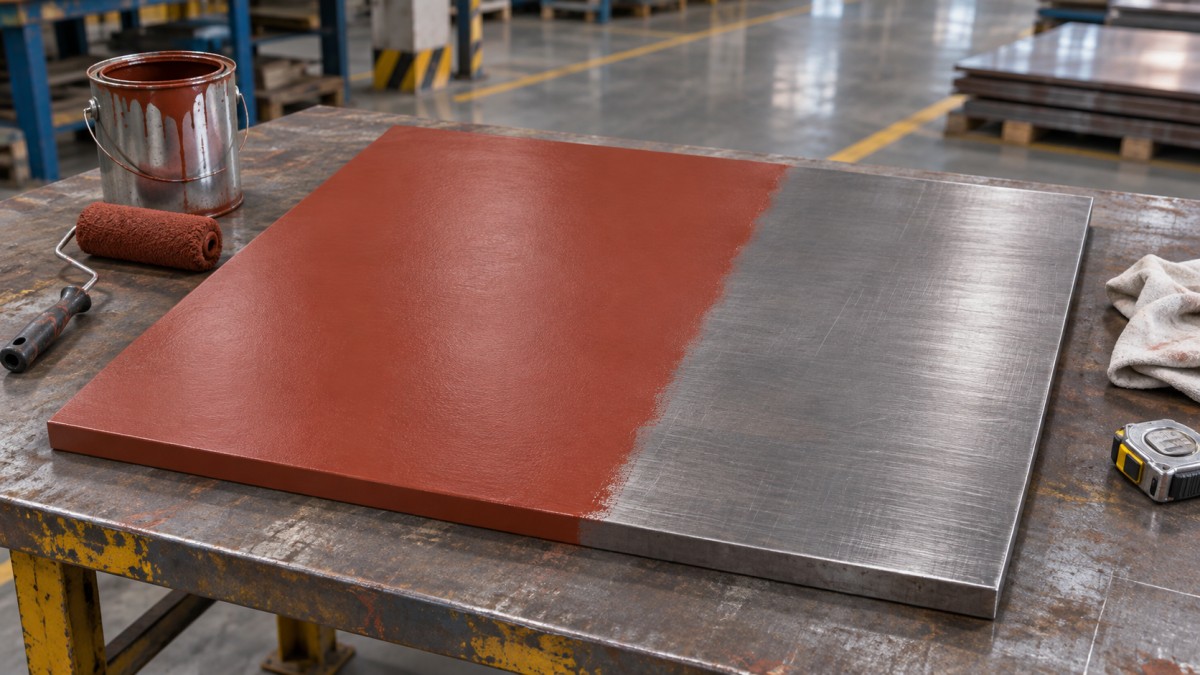
Common sheet surfaces and their preparation needs
Smooth, oiled steel
Cold-rolled sheet often has a relatively smooth surface and may carry a protective oil from manufacture or storage. Paint applied over that oil can develop poor adhesion even when the film looks continuous at first. Water beading on the sheet can suggest contamination, although a surface that wets evenly is not proof that every contaminant has been removed.
Use a cleaner and method approved for the coating system, and follow the cleaner’s instructions for removal or rinsing. A dirty cloth can redistribute oil rather than remove it; change wiping material as it becomes contaminated. Grinding through an oily surface can spread contamination into the abrasion marks, so degreasing normally comes before mechanical preparation.
After cleaning, the coating specification determines whether the steel needs abrasion, blasting, or another treatment. Some primers are designed for relatively smooth prepared steel; others require a defined profile. Do not assume that a shiny surface always needs heavy grinding.
Mill scale and rust
Hot-rolled steel can carry mill scale: an oxide layer formed during rolling. Tightly attached scale may look dark and uniform, while weathered scale can lift or crack. Rust can develop at breaks in the scale and spread beneath it. Painting over loose material leaves the coating bonded to a layer that is already separating.
The specified preparation may call for abrasive blasting, power-tool cleaning, or another approved method. The required cleanliness and profile depend on the coating and exposure. Removing visible loose rust alone may be insufficient where the specification requires a cleaner surface; equally, a treatment suitable for a small repair is not automatically suitable for an entire sheet.
Rust staining also deserves a closer look. A light stain on a sound surface, deeply pitted steel, and scale lifting in flakes are different conditions. Pits can retain corrosion products and contaminants after a quick pass with a tool, so inspect recesses and edges as well as the flat face.
Galvanized and other zinc-coated sheet
Galvanized sheet has a zinc surface rather than bare carbon steel. Fresh zinc can be smooth and may carry oil, a passivation treatment, or other processing residue. Weathered zinc may have white corrosion products and embedded dirt. Both conditions affect paint adhesion, but they do not call for the same preparation.
Identify the metallic coating and any surface treatment before selecting a primer. Follow the paint manufacturer’s instructions for cleaning and, where specified, light abrasion or sweep blasting. Excessive abrasion can remove zinc and reduce the protection it provides. A primer suitable for bare steel is not automatically suitable for zinc, and applying paint over loose white corrosion products can leave a weak layer beneath the film.
Factory-primed or pre-painted sheet
An existing finish changes the question from “Will the paint adhere to steel?” to “Will it adhere to this coating, and is that coating firmly attached?” Dirt, chalking, gloss, curing condition, and compatibility with the new paint all matter. A solvent in the new coating can soften or disturb an incompatible existing film.
Clean the surface, remove loose or damaged coating, and prepare glossy areas as the specified system requires. Where the existing coating is unknown, a small trial area and an agreed adhesion assessment can help reveal compatibility problems before a larger area is painted. A successful trial is useful evidence, although it does not replace the coating manufacturer’s requirements or establish long-term performance by itself.
Surface profile: a useful measurement with limits
Profile describes the texture created on a prepared surface, often by abrasive blasting or power tools. It is commonly discussed as the height between surface peaks and valleys. The coating manufacturer’s specified range should be read alongside the required dry film thickness and preparation method.
A profile that is too low for the system can leave inadequate mechanical grip. An excessively deep profile creates a different problem: peaks may receive insufficient coating coverage even when a thickness reading elsewhere appears acceptable. Adding paint without following the system specification is not a reliable correction, because excessive film thickness can create its own curing or coating defects.
Profile is only one part of surface condition. A suitable reading says little about grease, soluble salts, dust, or whether the substrate is the specified material. Measure with an appropriate method on representative areas, and assess cleanliness separately. On thin or zinc-coated sheet, confirm that the proposed preparation method will not distort the sheet or remove more of the existing coating than intended.
Site conditions can change a prepared surface
A sheet may leave a workshop in acceptable condition and arrive on site with handling marks, road dirt, moisture trapped between sheets, or corrosion around damaged packaging. The reverse sequence also occurs: a surface is prepared on site, then becomes dusty or damp while it waits for paint. The relevant condition is the one present immediately before coating.
Condensation is especially easy to miss. Steel can be colder than the surrounding air, and moisture can form when its temperature approaches the dew point. A visibly dry surface is not enough to establish that conditions are suitable. Measure and record the environmental conditions required by the coating specification, including steel temperature, air temperature, and relative humidity. Follow the manufacturer’s stated limits before and during application and curing.
Rain, overspray, nearby cutting, and windblown dust can contaminate an exposed sheet between preparation and coating. Protect prepared areas and plan the work so that the first coat is applied within the permitted interval. If flash rust or contamination appears before painting, reassess and prepare the affected area again to the specified condition.
Joints and overlaps deserve attention before assembly. Once sheets are fastened together, contact faces and narrow gaps may no longer be accessible for the intended cleaning or coating. The project specification should identify which surfaces are coated before installation and which are left untreated for the connection or subsequent work.
When paint lifts, where did the bond fail?
Peeling does not automatically prove that the steel was too smooth. Examine the back of the detached paint and the exposed surface. Rust or scale attached to the paint suggests that the underlying material separated. A greasy residue points toward contamination. If a new coat lifts while the old coating remains intact, the problem may lie between the two paint layers, perhaps because of contamination, an unsuitable overcoating interval, or incompatibility.
Blistering can have several causes, including moisture or soluble contamination beneath the film. Scratches, bent edges, and fastener holes can also expose steel after an otherwise sound application. Avoid assigning a cause from appearance alone: retain representative samples where possible and compare the affected areas with preparation records, environmental conditions, and the coating system instructions.
For a localized defect, define the boundaries of the repair and prepare beyond visibly loose material as required by the repair specification. Feathering intact coating edges can help avoid an abrupt transition, but the exposed substrate and remaining coating still need compatible treatment. If the same failure appears across a wide area, a small spot repair may conceal a broader preparation or compatibility problem.
Making a sound decision before painting
Start with the sheet’s actual finish and condition, then match them to the specified coating system. Identify whether the surface is bare steel, zinc-coated, or previously painted; note oil, corrosion, damage, and inaccessible areas. Resolve uncertainty about factory treatments or existing coatings before choosing an abrasive or primer.
Preparation instructions should address the required cleaning, surface condition, application conditions, and interval before coating. Where the specification and the observed surface do not match, clarify the treatment before work continues. A small prepared and coated area can be useful for assessing an unfamiliar finish, provided the acceptance method and responsible parties are agreed in advance.
Keep the prepared surface protected until coating begins, and inspect it again immediately beforehand. That final look connects the original finish, the preparation performed, and the conditions on site to the surface the paint will actually meet.
Please give us a message
Tianjin Kaichuang Metal Material Co., Ltd
Add: No. 41, District 6, First Street, Huanghuadian Town, Wuqing District, Tianjin
Tel: + 86 137 9101 9833
E-mail: boss@kaichsteel.com