Steel Hub

Understanding what causes steel structure delivery delays on large sites is essential for protecting construction schedules and controlling costs.
Fabrication bottlenecks, late design changes, material shortages, transport constraints, and site access issues can disrupt the delivery of structural steel components.
For project managers, identifying these risks early makes it easier to coordinate suppliers, logistics providers, and site teams.
This article examines the most common causes of delays and the practical steps that can help keep steel deliveries aligned with project milestones.
Which delays are most likely to disrupt the construction schedule?
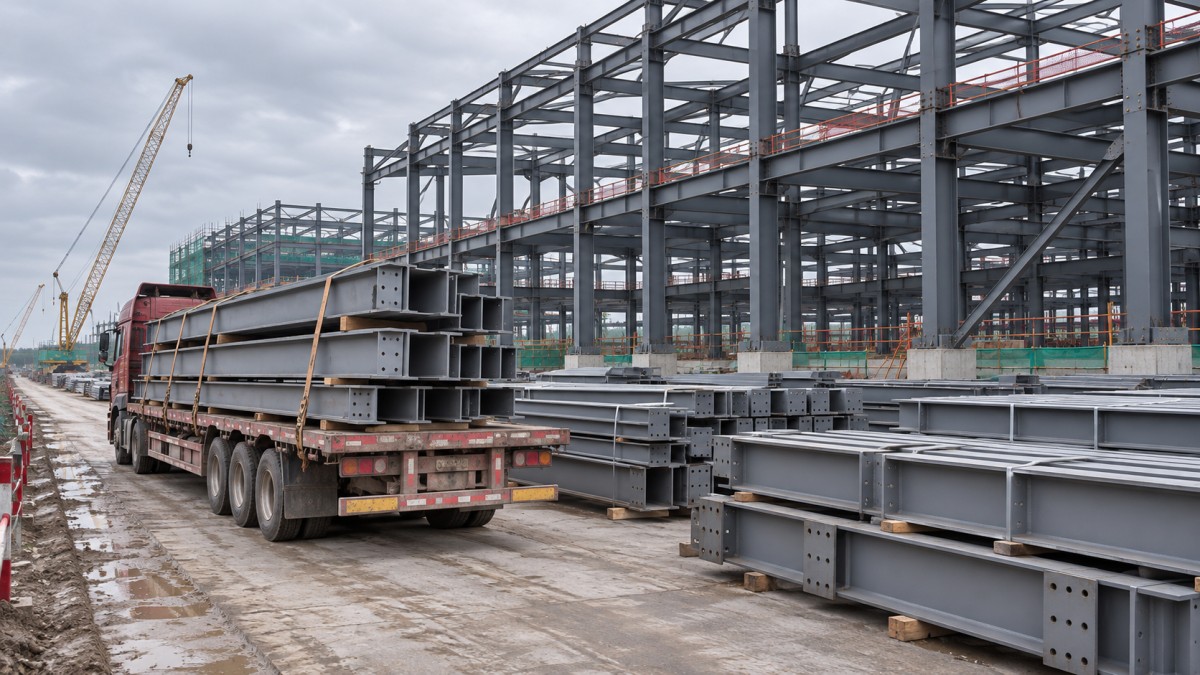
The most damaging delays often begin before a truck is booked. Unapproved drawings, missing materials, and fabrication capacity constraints can each prevent critical components from becoming available.
A late delivery matters most when it interrupts the erection sequence. One missing column, connection plate, or bracing member can leave crews unable to install otherwise available steel.
On large sites, the causes often overlap. A design revision may delay procurement, compress fabrication time, and leave too little flexibility to secure a suitable transport slot.
Start by identifying the components that control upcoming work fronts, then trace their status from design approval through fabrication, inspection, dispatch, and site receipt.
Measure risk against the required erection date, not just the supplier’s promised dispatch date. Transport, unloading, inspection, and movement to the work area all consume time.
A useful early question is whether the next planned erection sequence can be completed with the components already approved, manufactured, and scheduled for delivery.
If the answer is uncertain, focus the next coordination meeting on missing evidence and named actions, rather than relying on an overall percentage complete.
How do design and approval problems delay structural steel?
Structural steel fabrication depends on coordinated design information. Late changes to member sizes, connection details, openings, or interfaces can invalidate drawings and disrupt production.
For example, a revised equipment load may require heavier beams and different connections. The fabricator may need new calculations, material, cutting programs, and approvals.
Approval delays can be just as disruptive as design changes. Shop drawings may remain in review because architectural, mechanical, and structural interfaces have not been resolved.
Even when most drawings are approved, a small number of unresolved connections can hold back an entire shipping lot or make the planned erection sequence impractical.
Maintain a drawing and approval register that shows the responsible reviewer, submission date, required return date, revision status, and affected fabrication packages.
Prioritize reviews according to the production and erection sequence. A drawing needed for next month’s critical columns deserves faster attention than one for a later area.
Set a clear process for late changes: identify affected components, agree who can authorize work, and record the schedule and cost implications before release.
Where practical, freeze information for each fabrication package before production starts. A controlled release gives suppliers a reliable basis for ordering material and allocating capacity.
Why do fabrication and material shortages affect delivery dates?
Fabricators must coordinate cutting, drilling, welding, assembly, coating, inspection, and packing. A delay at one operation can block completed work from moving downstream.
Capacity becomes a particular concern when several projects compete for the same production lines, specialist welders, coating facilities, or quality inspectors.
A supplier may report substantial tonnage fabricated while critical pieces remain incomplete. Overall progress can therefore look healthy even when the next erection sequence is at risk.
Ask for progress by component mark, building area, and operation. Compare that information with the installation sequence to expose gaps that a tonnage report can conceal.
Material availability also varies by section size, grade, thickness, and required certification. Uncommon heavy sections or specialty plate may have longer procurement lead times.
Imported material adds exposure to port congestion, customs processing, and documentation problems. A mill delivery date alone does not establish when material will reach the fabricator.
Confirm whether critical material is physically available, allocated to the project, or merely covered by a purchase order. These are different levels of supply certainty.
Request evidence of material status and key production dates for critical packages. Agree on recovery actions early if a planned operation or material arrival is missed.
Possible responses include resequencing fabrication, reserving capacity with another qualified facility, or reviewing an alternative section. Any substitution requires the appropriate engineering approval.
Can inspection, coating, or documentation hold up dispatch?
Yes. Steel can appear finished on the shop floor but remain unavailable because inspection, testing, coating, or required release documentation is incomplete.
Weld inspection, dimensional checks, and any specified non-destructive testing should be coordinated with fabrication. Late discovery of defects can require repair, retesting, and rescheduling.
Coating and galvanizing introduce further dependencies. Surface preparation, coating application, curing conditions, and transport to an external facility can each affect the dispatch date.
Make hold points visible in the schedule and confirm inspector availability in advance. The inspection plan should reflect contractual requirements and the critical shipping sequence.
Check that material certificates, inspection records, packing lists, and component identification will be ready when each load is released, especially for cross-border shipments.
Do not treat documentation as an administrative task at the end. Missing or inconsistent records can delay acceptance, customs clearance, or installation on site.
What transport and site conditions cause steel deliveries to arrive late?
Large or heavy members may require specialist vehicles, route surveys, permits, escorts, or restricted travel windows. These arrangements can take longer than ordinary freight booking.
Transport constraints become more serious when a late fabrication change alters member dimensions or weight. An approved route or vehicle may no longer be suitable.
Confirm the maximum transport envelope early, including length, width, height, and weight. Check bridges, turning radii, overhead restrictions, and local delivery rules with the carrier.
Weather, road closures, port disruption, and driver or equipment shortages can also affect delivery. The appropriate allowance depends on the route, season, and available alternatives.
Arrival at the gate is not the same as successful delivery. A congested entrance, unavailable crane, or full laydown area can prevent unloading and delay subsequent vehicles.
Coordinate delivery slots with site access, unloading equipment, lifting plans, and receiving crews. Confirm that the truck can reach the intended unloading point safely.
On constrained sites, sequence loads to match the erection plan and available storage. Poorly ordered loads can force repeated handling or bury urgently needed components.
Check that foundations, anchor bolts, access roads, and work fronts are ready before calling steel forward. Early deliveries can create congestion when the site cannot use them.
Agree what happens when a slot is missed, including who contacts the carrier, whether off-site holding is available, and how rebooking costs are handled.
How can project managers spot delays before they reach the site?
Build a forward view around the next erection milestones. For each critical package, track approved drawings, material allocation, fabrication status, inspection release, and transport booking.
Use planned and actual dates for each stage, with a named owner for every outstanding action. A missed intermediate date should trigger review before dispatch is threatened.
Ask suppliers to report exceptions as well as progress: missing information, unavailable material, failed inspections, capacity conflicts, and changes to estimated completion dates.
Check whether reported dates are supported by evidence. For example, a confirmed vehicle booking is more informative than a statement that transport will be arranged.
Review the sequence at component level for near-term work. A package marked nearly complete may still lack a small connection item needed to start erection.
Hold a regular coordination meeting involving the designer, fabricator, carrier, site team, and relevant subcontractors. Focus on decisions that remove constraints and protect upcoming milestones.
Escalate issues according to their effect on the critical path or available schedule float. A delay on a noncritical package may be manageable through resequencing.
Keep a shared risk register, but connect each risk to a specific response, deadline, and owner. Review whether earlier actions actually reduced the exposure.
What should you do when a delivery is already at risk?
First, establish the earliest realistic delivery date and the reason for the shortfall. Separate confirmed facts from assumptions about production, transport, and site readiness.
Next, identify the affected erection activities and their remaining float. Determine whether the missing steel blocks a critical work front or can be installed later.
Ask the fabricator whether complete, usable subpackages can ship earlier. Partial delivery helps only when the site has the matching components, equipment, and access to install them.
Consider resequencing work to another available area, subject to engineering, safety, and temporary stability requirements. Confirm the effect on cranes, crews, and following trades.
Expedited fabrication, premium freight, additional shifts, or temporary storage may recover time, but each option carries cost and may move the bottleneck elsewhere.
Compare the cost of recovery with the likely cost of waiting, including idle crews, crane standby, downstream disruption, and any relevant contractual exposure.
Record the agreed recovery plan with dates, responsibilities, and decision points. Update the project schedule and communicate changes to everyone whose work depends on the delivery.
If recovery depends on an alternative material or connection, obtain the required approvals before committing to manufacture. An unapproved substitution can create another delay.
What should be agreed with suppliers before fabrication starts?
Define delivery milestones by usable erection package, not only by total project tonnage. Include component identification, required documents, unloading assumptions, and the intended delivery sequence.
Agree how schedule updates will be reported, when emerging problems must be escalated, and who has authority to resolve drawing, quality, and logistics issues.
Check supplier capacity against other known commitments and establish how critical material will be allocated. A promised completion date is stronger when supported by a credible production plan.
Set out the responsibilities and commercial treatment for changes, waiting vehicles, failed deliveries, and recovery measures. Contract terms should reflect the project’s actual delivery arrangements.
Reserve appropriate contingency for packages with limited alternatives or long transport routes. The amount should follow the project’s risk assessment, rather than a uniform allowance.
Conclusion
What causes steel structure delivery delays on large sites is usually a chain of connected problems across design, procurement, fabrication, quality control, transport, and site readiness.
Project managers can reduce disruption by tracking critical components through each stage, resolving constraints early, and measuring progress against the sequence crews need to erect.
When a delay emerges, act on its effect on the schedule: verify the facts, compare recovery options, assign owners, and coordinate the revised plan across all parties.
Please give us a message
Tianjin Kaichuang Metal Material Co., Ltd
Add: No. 41, District 6, First Street, Huanghuadian Town, Wuqing District, Tianjin
Tel: + 86 137 9101 9833
E-mail: boss@kaichsteel.com