Steel Hub

On July 29, 2026, the U.S. Department of Commerce announced the start of an anti-dumping administrative review covering hot-rolled steel sheet products (HRSS) from China. For exporters, importers, manufacturers, and supply chain service providers connected to U.S.-bound steel shipments, this matters because the review will revisit duty rates, exporter and producer status, and transaction compliance for shipments made between April 1, 2025 and March 31, 2026, with practical implications for pricing, customs preparation, and delivery planning over the next 6 to 12 months.
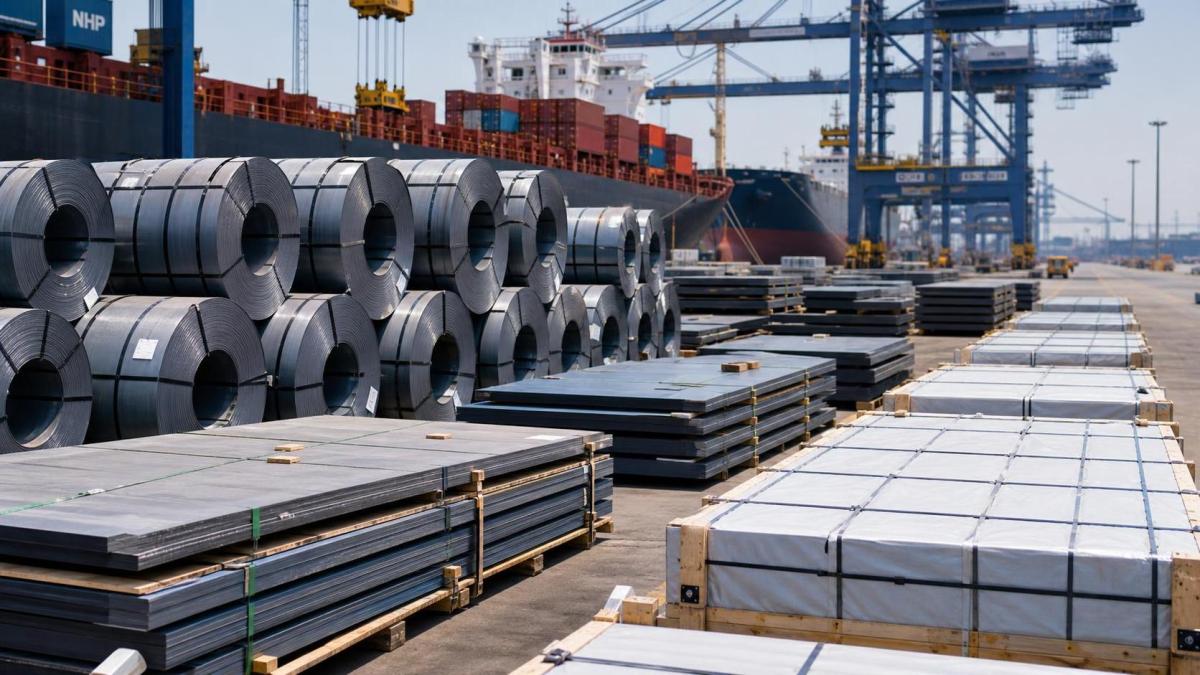
What the new review formally covers
The confirmed development is that the U.S. Department of Commerce (DOC), acting on an application from the domestic industry, has initiated an anti-dumping administrative review on HRSS originating in China. The review covers export shipments made from April 1, 2025 through March 31, 2026. According to the information provided, the review will re-examine applicable duty rates, assess exporter and producer qualifications, and review the compliance of export transactions.
Where the pressure may appear across the chain
Export transactions facing renewed scrutiny
From an industry perspective, Chinese exporters and related trading companies may feel the most immediate impact because the review directly touches future U.S. pricing and the compliance basis behind past shipments. The business pressure is likely to center on quotation strategy, document consistency, and the handling of shipment records tied to the review period.
Import and customs-facing operations under tighter timing requirements
U.S.-bound import operations and customs-facing teams may also be affected because any re-examination of rates and transaction compliance can influence document preparation and clearance planning. What deserves closer attention is whether internal workflows are ready to support more careful alignment between commercial documents, shipment files, and counterpart information.
Supply chain coordination and delivery planning may become less flexible
Observably, logistics and supply chain service providers connected to these shipments may need to adjust response speed and communication routines. The reason is not that a final outcome is already known, but that a live review process can alter the pace at which pricing decisions, customs paperwork, and order execution are handled over the coming 6 to 12 months.
Downstream buyers may focus more on execution certainty
For downstream manufacturers, distributors, and procurement teams that rely on HRSS supply into the U.S. market, the likely impact is operational rather than theoretical. They may need to pay closer attention to whether suppliers can maintain documentation quality, shipment timing, and pricing clarity while the review is underway.
What companies should monitor now
Watch how official language develops
Analysis shows that the first practical task is to monitor subsequent official wording and procedural updates tied to this review. The launch itself is confirmed, but the way requirements are expressed in follow-up notices can matter for document handling, timing, and transaction preparation.
Recheck shipment files within the covered period
Companies involved in shipments between April 1, 2025 and March 31, 2026 should focus on the completeness and consistency of records linked to those exports. Because the review explicitly covers exporter and producer status as well as transaction compliance, file readiness is likely to become a core operational issue.
Separate policy signal from immediate business execution
It is more appropriate to understand this as a live procedural development rather than a final commercial outcome. Businesses should avoid treating the announcement alone as a settled result, while still preparing for its effect on quotations, customs documentation, and supply chain timing.
Prepare customer and supplier communication in advance
From a practical standpoint, companies may need clearer communication with suppliers, customers, brokers, and service partners about lead times, documentation, and possible changes in processing rhythm. This is especially relevant where delivery schedules or price validity depend on smooth customs and compliance handling.
Why this matters beyond the notice itself
Observably, this update is important less because it resolves an issue today and more because it reopens a period of scrutiny around rates, qualifications, and transaction compliance. Analysis shows that the market should read it as a near- to medium-term operating signal: it can influence how companies quote, prepare, and coordinate, but it does not by itself establish a final commercial outcome.
How to read the current signal
At this stage, the development is best understood as a procedural move with direct operational consequences. It points to potential changes in export pricing, customs preparation, and supply chain response for the next 6 to 12 months, while still requiring continued observation before firmer conclusions can be drawn about long-term trade effects.
Basis of this article and what still needs verification
This article is based on the user-provided news title, event date, and event summary. For developments of this kind, relevant source categories typically include official government notices, company disclosures, industry association updates, authoritative media reporting, and related trade or standards documentation. A specific official source link was not provided in the input, so the underlying notice and any subsequent procedural updates should continue to be verified. The next points to watch are any further official statements, changes in procedural wording, and developments that affect duty rate review, qualification assessment, and transaction compliance handling.
Please give us a message
Tianjin Kaichuang Metal Material Co., Ltd
Add: No. 41, District 6, First Street, Huanghuadian Town, Wuqing District, Tianjin
Tel: + 86 137 9101 9833
E-mail: boss@kaichsteel.com