Steel Hub

On July 9, 2026, the U.S. Department of Commerce opened a formal anti-circumvention investigation into hot-rolled steel coil linked to China and routed through third countries such as Vietnam, Malaysia, and Thailand before entering the U.S. market. For steel trade participants, importers, distributors, and supply chain service providers, the immediate significance lies less in the filing itself than in what it could mean for customs compliance, shipment timing, and the viability of Southeast Asia-based transit or processing arrangements.
What the filing confirms at this stage
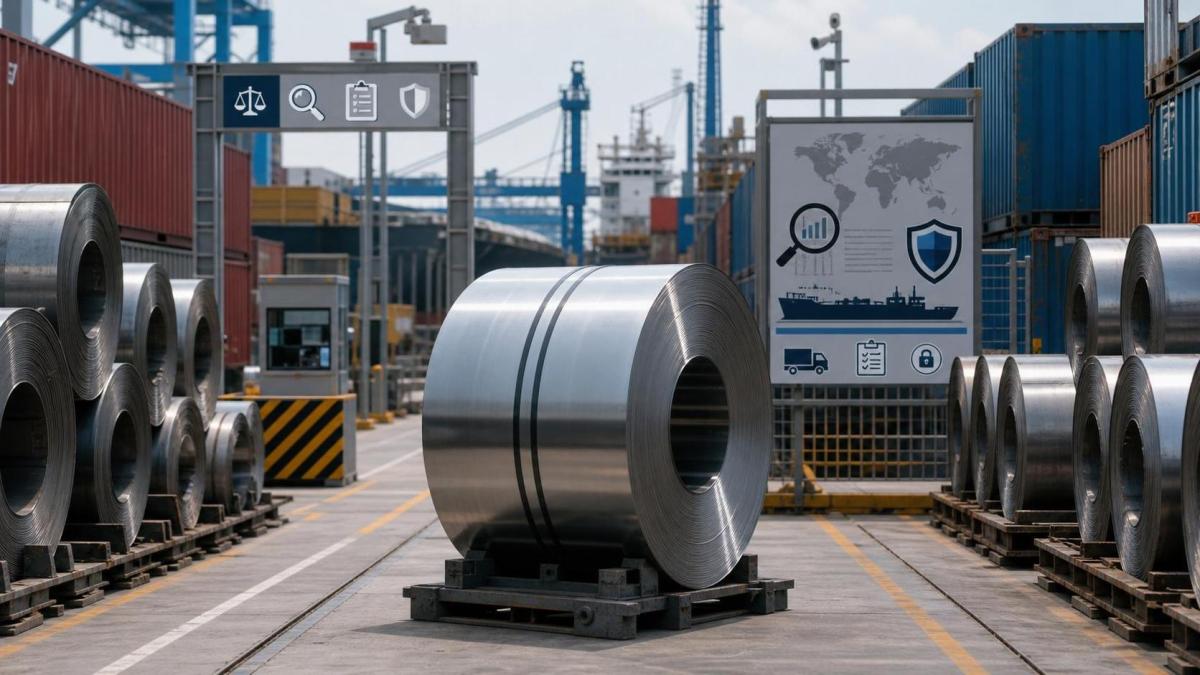
According to the information provided, the case was formally initiated by the U.S. Department of Commerce on July 9, 2026. The investigation focuses on whether hot-rolled steel coil exported from China, then further processed in third countries including Vietnam, Malaysia, and Thailand, and subsequently shipped to the United States, constitutes circumvention of anti-dumping and countervailing duties.
The same information indicates that temporary measures could be decided within 90 days. The development is described as having direct relevance for overseas distributors and importers that rely on Southeast Asian transit channels, particularly in relation to customs clearance compliance and delivery timelines.
Where the pressure may appear across the supply chain
Transit-dependent trading flows face the earliest compliance pressure
From an industry perspective, trading companies and distributors using third-country processing or rerouting structures may feel the first operational impact. The reason is straightforward: once a circumvention review is opened, transaction structures that previously functioned as standard routing arrangements may face closer scrutiny in customs and documentation review. The business impact would likely appear in shipment planning, declaration preparation, and counterpart risk assessment.
Importers may need to reassess clearance and delivery assumptions
For U.S.-bound importers, the practical issue is not only duty exposure but also process uncertainty. What deserves closer attention is whether current inbound cargoes, pending orders, or near-term arrivals depend on the same supply paths now under review. Even before any final outcome, tighter examination can affect customs handling rhythm, internal compliance checks, and customer delivery commitments.
Supply chain service providers could see more documentation demands
Logistics coordinators, customs-related service providers, and other execution-side partners may also be affected because this type of investigation can make origin, processing, and routing records more sensitive in day-to-day operations. The key concern is whether existing paperwork, handoff records, and supplier-side declarations are robust enough to support consistent customs treatment if scrutiny increases.
What companies should watch now
Follow official wording and procedural changes closely
Companies exposed to hot-rolled coil shipments into the U.S. should closely track how the investigation is described in official updates and whether any temporary measures are introduced within the referenced 90-day window. Analysis shows that the exact scope and wording of procedural steps can matter as much as the headline itself when businesses assess whether a shipment path remains workable.
Review which orders rely on Southeast Asia processing or transshipment
Businesses should identify which active contracts, purchase orders, or cargo movements depend on processing or routing through Vietnam, Malaysia, Thailand, or similar third-country structures. The immediate value of that review is operational clarity: it helps teams distinguish between theoretical exposure and actual shipment-level exposure.
Check whether documentation can support the declared trade path
Importers, distributors, and their service partners should pay attention to supplier qualifications, processing records, and shipment documentation. Observably, the issue here is not a generic paperwork exercise but whether the transaction file can withstand a stricter review of how goods were processed and how they entered the U.S. supply chain.
Prepare for customer and delivery communication needs
Where supply to the U.S. market depends on affected routes, companies may need contingency communication for lead times, customs clearance expectations, and contract execution. This is especially relevant for businesses that have committed delivery dates or inventory plans tied to Southeast Asia-based intermediate processing.
Why this matters beyond the filing
Analysis shows that this development should not yet be treated as a final market outcome, because the investigation has only been opened and the provided information points to possible temporary measures rather than a concluded decision. At the same time, it would be too narrow to view it as a routine procedural event with no broader significance.
It is more appropriate to understand this as a policy and compliance signal. The signal is that third-country processing and re-export structures involving hot-rolled steel coil are now under more direct examination in the U.S. trade enforcement context. For companies operating in this corridor, the practical question is not only what the final ruling may be, but how quickly commercial assumptions may need to change while the case is still developing.
How the market should read the current stage
At this point, the development is best understood as an active trade-compliance risk event rather than a settled shift in market rules. The confirmed facts are limited but commercially relevant: a formal investigation has begun, it concerns hot-rolled coil linked to China and processed through certain Southeast Asian countries, and temporary measures could arrive within a relatively short period. That combination is enough to justify closer review by affected businesses, even though the final direction still requires continued observation.
Basis of this article and what still needs verification
This article is based on the user-provided news title, event date, and event summary. For developments of this type, relevant source categories typically include official government notices, company disclosures, industry association updates, authoritative media reports, and related trade or standards documentation.
No specific official source link was provided in the input, so the precise official documentation still needs ongoing verification. The main follow-up points to watch are whether temporary measures are announced within the referenced timeline, how the investigated scope is framed in subsequent official language, and whether customs compliance expectations change for trade flows routed through Southeast Asia.
Please give us a message
Tianjin Kaichuang Metal Material Co., Ltd
Add: No. 41, District 6, First Street, Huanghuadian Town, Wuqing District, Tianjin
Tel: + 86 137 9101 9833
E-mail: boss@kaichsteel.com