Steel Hub

On August 1, 2026, the EU began the third phase of its Carbon Border Adjustment Mechanism for steel products, extending the requirement to submit embedded carbon emissions data to direct exports of hot-rolled and cold-formed steel sections. For exporters of products such as H-beams, angles, and channels, this is not just a reporting update; it directly affects customs clearance, documentation readiness, third-party verification work, and delivery timing, which is why the change now deserves close attention across the steel export chain.
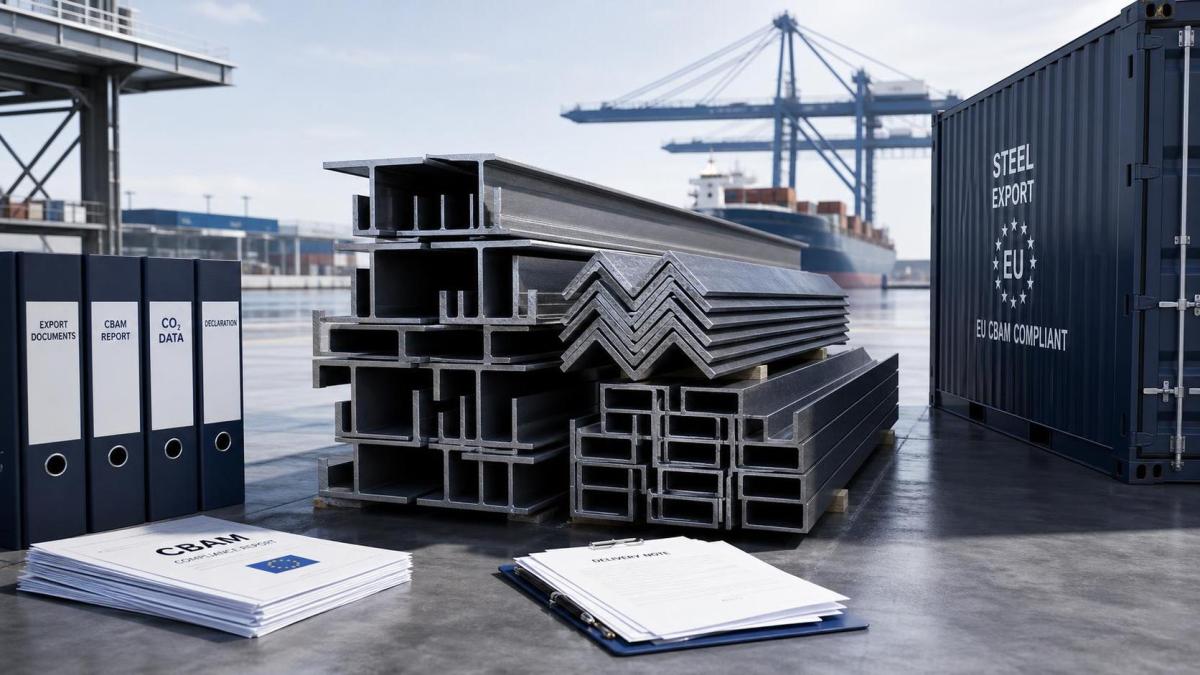
A new filing requirement now applies to steel section exports
According to the provided event summary, from August 1, 2026, the EU CBAM entered its third phase and now covers direct exports of all hot-rolled and cold-formed steel sections, including products such as H-beams, angles, and channels. Exporters are required to submit certified embedded carbon emissions data through the EU CBAM portal, expressed as tCO2e/ton. If this information is not submitted, the goods may be refused at the border or become subject to a compensatory carbon tariff. The summary also states that this requirement directly affects compliance preparation, third-party verification costs, and delivery lead times for Chinese steel exporters.
Where the pressure is likely to appear in the export chain
Export transactions move from product shipment to data-backed shipment
From an industry perspective, direct exporters are the first group exposed to the practical effect of the rule. The immediate issue is that shipment eligibility is now tied not only to product and trade documents, but also to certified embedded carbon emissions information submitted through the designated portal. What deserves closer attention is the risk of disruption at the border if the required data is missing, delayed, or not properly prepared.
Manufacturing and processing operations face new documentation demands
For processing and manufacturing companies supplying steel sections for export, the change may extend beyond sales support into technical and compliance record preparation. Analysis shows that where export orders are involved, product output may now need to be matched with emissions-related data and verification materials in a more structured way. The operational effect is likely to appear in document collection, internal coordination, and the timing needed before goods are ready to ship.
Verification and compliance service work becomes part of delivery planning
Certification-related firms and testing or verification service providers may also see a more central role in export execution. The event summary already indicates an impact on third-party verification costs, which suggests that compliance support is becoming a practical part of transaction preparation rather than a secondary administrative step. For supply chain service providers, the likely pressure point is schedule management, especially where customs timing and cargo release depend on completed carbon data submission.
Buyers and procurement teams may pay closer attention to supplier readiness
Observably, procurement teams and overseas buyers involved in covered steel section categories may need to look more closely at whether suppliers can provide the required certified emissions data on time. The change may therefore influence supplier selection, delivery commitments, and document review before shipment. This is particularly relevant where the commercial risk of rejection at the border or added carbon charges must be managed in advance.
What companies should watch in current execution practice
Check whether covered product lines are tied to direct EU export business
Companies dealing in hot-rolled or cold-formed steel sections should first identify whether the relevant product lines are part of direct export flows to the EU. Analysis shows that this matters because the rule is linked to covered product categories and direct export activity, making product scope review an immediate compliance task rather than a later legal check.
Prepare emissions records and supporting files early in the shipment cycle
What deserves closer attention is the timing of documentation. Because exporters must submit certified embedded carbon emissions data through the EU CBAM portal, emissions figures, supporting records, and verification materials may need to be assembled earlier than many conventional shipping files. Where internal preparation starts too late, the impact may show up in dispatch delays rather than only in paperwork corrections.
Build verification time and cost into export planning
Observably, the requirement should be treated as both a compliance issue and a transaction-cost issue. The provided summary already points to third-party verification costs and delivery lead-time effects. It is therefore more appropriate to understand current preparation as including budget review, service coordination, and scheduling adjustments, even where detailed implementation practices may still require further confirmation.
Monitor how the requirement appears in trade and tender documents
If covered exports are tied to contracts, bids, or purchase orders, companies should watch for changes in document requirements, technical submissions, and delivery conditions. The provided information does not specify detailed enforcement wording beyond portal submission and border consequences, so this remains an area for continued attention rather than a confirmed uniform practice across all transactions.
Why this looks like an execution signal, not a theoretical policy discussion
Analysis shows that this development is better understood as an implemented compliance threshold for covered steel section exports, because the event summary provides a clear start date, identifies the affected product range, and links non-submission directly to border refusal or compensatory carbon duties. At the same time, it would be premature to treat all downstream enforcement details as fully settled, since the input does not provide further detail on operational interpretation, supporting document standards, or transaction-level practice. For the industry, the practical takeaway is that the rule has moved into an execution stage, while the exact working rhythm still merits observation.
How the market is likely to read this stage
In summary, the August 1, 2026 shift under EU CBAM Phase III matters because it turns embedded carbon data for covered steel sections into a live export condition rather than a background compliance topic. For exporters, manufacturers, procurement teams, and service providers, the main issue is not abstract policy direction but whether data certification, filing, and shipment scheduling can stay aligned. It is more appropriate to understand this update as a landed rule change with immediate trade implications, while keeping a close watch on how detailed execution standards and market responses continue to develop.
Basis of this article and what still needs verification
This article is based on the user-provided news title, event date, and event summary. For developments of this type, commonly relevant source categories may include official announcements, regulatory releases, customs or trade authority information, industry association updates, standards-related documents, and reporting by established industry media. No specific official source link was provided in the input, so the exact official reference still needs to be verified on an ongoing basis. Further observation is also needed on detailed policy interpretation, certification practice, filing requirements in execution, changes in tender or contract documentation, industry feedback, and how companies are handling implementation in actual export operations.
Please give us a message
Tianjin Kaichuang Metal Material Co., Ltd
Add: No. 41, District 6, First Street, Huanghuadian Town, Wuqing District, Tianjin
Tel: + 86 137 9101 9833
E-mail: boss@kaichsteel.com