Steel Hub

From July 1, 2026, the EU moves the transitional period of CBAM for steel into a new compliance stage: importers must begin quarterly reporting of embedded carbon emissions for selected steel products originating in China, including hot-rolled coil, H-beams, and galvanized steel sheet, with submissions subject to verification by EU-authorized declarants. For steel exporters, importers, customs-facing teams, and supply chain service providers, this is not just a documentation update; it directly touches data readiness, verification coordination, and clearance timing.
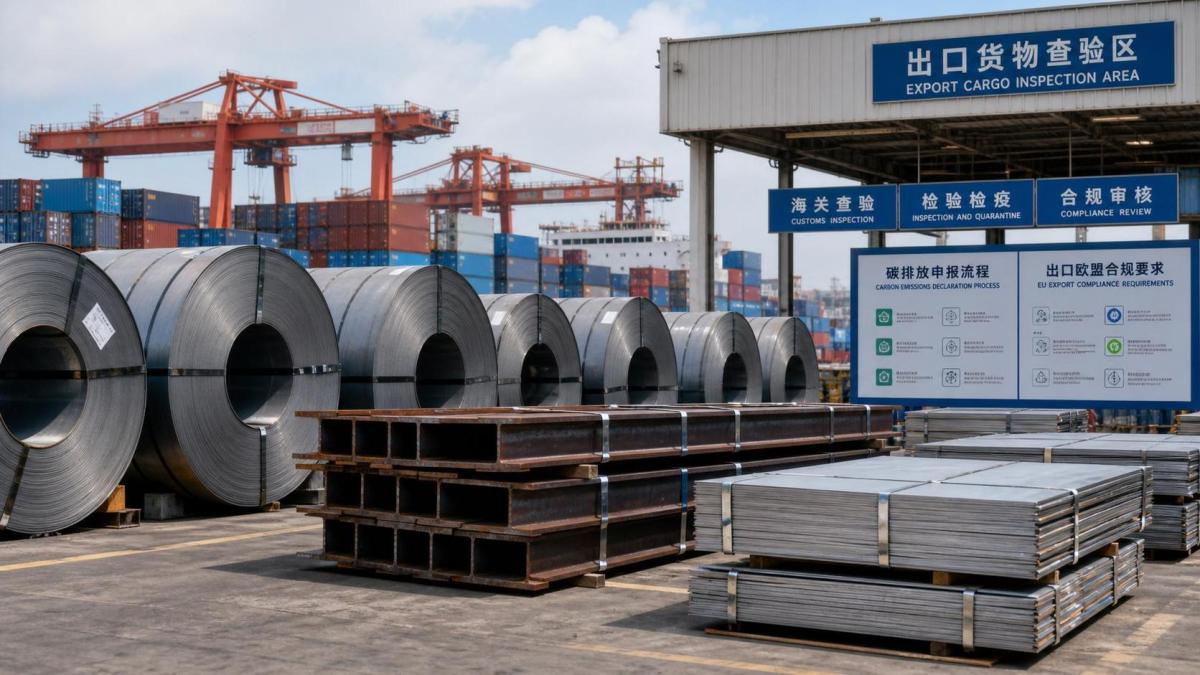
What Has Changed in the Third Transitional Stage
According to the information provided, the third stage of the EU CBAM transitional period takes effect on July 1, 2026. In this stage, importers are for the first time required to submit quarterly embedded carbon emissions data for certain steel products originating in China. The products referenced include hot-rolled coil, H-beams, galvanized steel sheet, as well as other section steel and long steel categories.
The same information states that these submissions must undergo verification by EU-authorized declarants. It also indicates that the requirement directly affects the data collection capability of Chinese steel exporters, arrangements with third-party verification partners, and customs clearance efficiency. Where reporting is not compliant, delayed release or additional guarantee requirements may follow.
Where the Operational Pressure Is Likely to Appear
Export-facing steel suppliers will feel the data burden first
From an industry perspective, Chinese steel exporters tied to the covered product categories are likely to face the earliest operational pressure because the new requirement centers on embedded carbon reporting. The immediate impact is likely to fall on internal data gathering, document preparation, and coordination with counterparties handling EU import procedures.
EU importers and customs-facing teams will need tighter coordination
Analysis shows that importers are directly exposed because the quarterly submission obligation sits with them. That makes communication with upstream Chinese suppliers more time-sensitive, especially where product-level emissions information must be assembled in time for reporting and verification. The main business risks here relate to filing completeness, verification handoff, and customs release timing.
Verification and trade support providers may become critical workflow links
Observably, third-party verification arrangements become more important under a system that requires review by EU-authorized declarants. For logistics coordinators, customs brokers, compliance teams, and related service providers, the issue is less about market demand and more about whether reporting, review, and shipment timelines can stay aligned without creating clearance delays.
What Companies Should Watch Now
Whether product-level emissions data can be assembled consistently
What deserves closer attention is the practical ability to collect quarterly embedded carbon emissions data for the covered steel products. The issue is not only whether data exists, but whether it can be organized in a form that supports repeated reporting without disrupting shipment schedules.
How verification arrangements affect delivery timing
Companies should watch how cooperation with third-party verification counterparts is structured in practice. Based on the information provided, verification is now part of the reporting chain, so any mismatch between data readiness and verifier review timing may affect customs handling and downstream delivery commitments.
Which shipments and customers carry the highest compliance sensitivity
Analysis shows that businesses involved in exports of hot-rolled coil, H-beams, galvanized steel sheet, and related section or long steel products to the EU should review which contracts, customers, and shipment windows are most exposed to reporting friction. The key concern is where incomplete preparation could translate into delayed release or requests for additional guarantees.
How policy language translates into actual trade execution
It is more appropriate to understand this development not only as a policy requirement on paper, but as a change in day-to-day trade execution. Procurement teams, sales teams, document teams, and customer-facing staff may need closer alignment on data provision, filing expectations, and communication with EU-side counterparties.
Why This Matters Beyond a Single Filing Cycle
Observably, this update signals that CBAM compliance for covered steel trade is moving from broad transitional framing toward more operational verification. That does not by itself establish every long-term market outcome, but it does indicate that reporting quality and process discipline are becoming more consequential in actual transactions.
Analysis shows that the development is best read as both a near-term procedural change and a longer-term signal. In the short term, the pressure is on reporting, verification, and clearance. In the longer term, the market will continue watching whether these requirements reshape how exporters and importers organize data flows and compliance responsibilities across the supply chain.
How to Read the Current Signal
At this stage, the most balanced interpretation is that the July 1, 2026 requirement creates a concrete compliance checkpoint for China-origin steel exports covered by the stated product scope. It does not, on the information provided, justify broader claims about final market outcomes. What it clearly does show is that embedded carbon reporting, third-party verification coordination, and customs timing now deserve closer operational attention from affected trade participants.
Basis of This Article and What Still Needs Verification
This article is based on the user-provided news title, event date, and event summary. For this type of development, commonly relevant source categories may include official announcements, company disclosures, industry association updates, authoritative media reporting, and standards or compliance documents. A specific official source link was not provided in the input, so the underlying wording and any later implementation details still require continued verification. Areas that merit follow-up include any later official clarification on reporting practice, verification procedures, and operational handling during customs clearance.
Please give us a message
Tianjin Kaichuang Metal Material Co., Ltd
Add: No. 41, District 6, First Street, Huanghuadian Town, Wuqing District, Tianjin
Tel: + 86 137 9101 9833
E-mail: boss@kaichsteel.com