Steel Hub

On August 5, 2026, the European Commission moved the steel-related CBAM transition period into its third reporting stage, adding a stricter weekly electronic filing requirement for Chinese suppliers exporting steel products and sections to the EU. For companies dealing in products such as hot-rolled coil, H-beams, and seamless pipe, the immediate issue is not only compliance formality but also its effect on customs handling, third-party verification costs, and shipment timing. This makes the update relevant across export operations, documentation teams, supply chain service providers, and EU-facing buyers that depend on predictable delivery.
What Has Changed From August 5
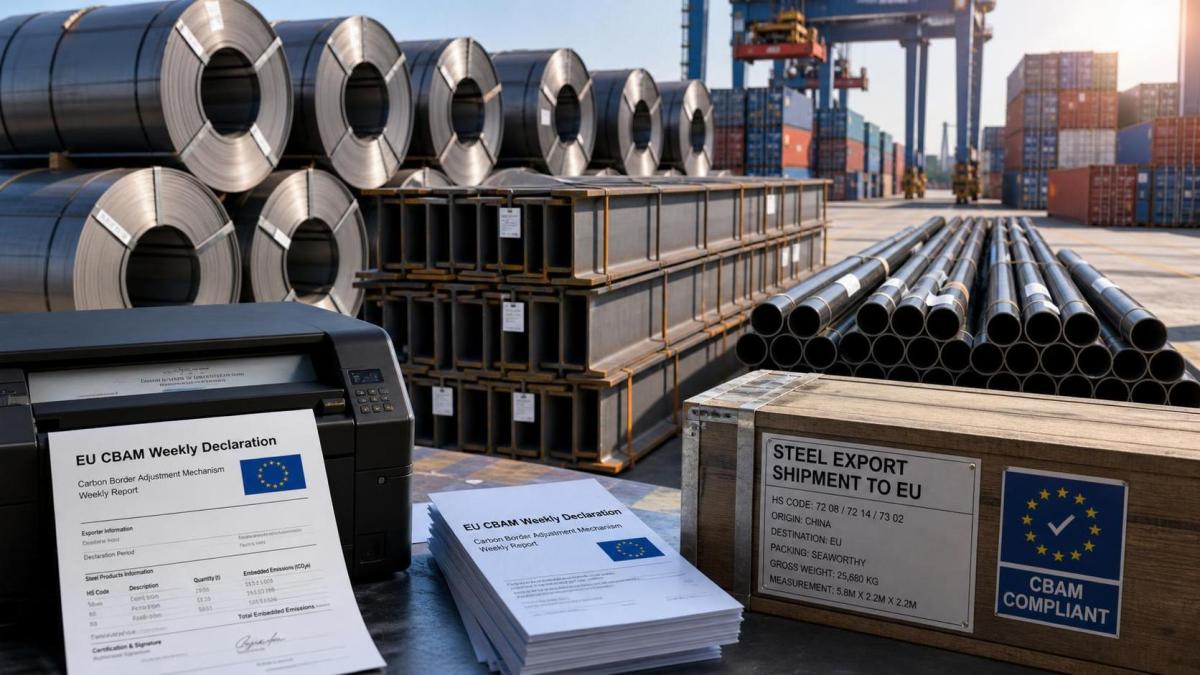
According to the provided event information, the third stage of the EU CBAM transition period took effect on August 5, 2026. From that date, all Chinese suppliers exporting steel and structural steel products to the EU are required to submit weekly electronic declarations that include embedded carbon emissions data in EU ETS format. The reported scope includes major product categories such as hot-rolled coil, H-beams, and seamless pipe. The same information indicates that this requirement directly affects export customs procedures, third-party verification costs, and delivery lead times, while non-compliant reporting may result in customs clearance delays or refusal of acceptance.
Where The Pressure Is Likely To Appear First
Exporters face a tighter documentation cycle
From an industry perspective, direct trading companies and steel exporters are likely to feel the first operational impact because the reporting frequency shifts compliance into a recurring weekly task. The main pressure point is the export declaration process, where carbon-related data now becomes part of the filing rhythm rather than a one-off administrative step. What deserves closer attention is whether internal teams can align shipment scheduling with the new reporting cadence.
Processors and manufacturers may see added coordination demands
For processing and manufacturing businesses supplying covered steel products, the likely impact is on upstream data preparation and cross-department coordination. Analysis shows that where products such as hot-rolled coil, H-beams, and seamless pipe are involved, the reporting requirement may increase the need for consistent emissions-related records to support export filings. The business issue is less about headline policy language and more about whether documentation can move at the same speed as production and dispatch.
Logistics and customs service providers will be pulled into compliance timing
Supply chain service companies, including customs and shipment support providers, may be affected because clearance timing now depends more directly on the completeness of CBAM-related submissions. Observably, if weekly filings are incomplete or non-compliant, the resulting delay or refusal risk does not stay with the exporter alone; it can extend into booking, handover, and delivery arrangements. For service providers, the key change to watch is how reporting status influences customs progress and cargo release timing.
EU buyers and procurement teams may focus more on delivery certainty
For downstream buyers and procurement teams relying on Chinese steel supply, the practical concern is continuity of delivery rather than policy interpretation itself. Analysis shows that when filing errors can lead to delayed clearance or rejected acceptance, buyers may place greater attention on supplier readiness, document completeness, and lead-time buffers. The affected business link is contract execution and inbound supply planning.
What Companies Should Watch In Daily Operations
Weekly filing discipline will matter more than occasional compliance checks
The reported change points to a higher operating frequency. Companies involved in EU-bound steel shipments should closely track how weekly declarations are prepared, reviewed, and submitted in EU ETS format, because the risk described in the event summary is tied directly to non-compliant reporting.
Product scope should be checked against active export orders
Another immediate practical point is product coverage. Since the provided information specifically mentions hot-rolled coil, H-beams, and seamless pipe among the major categories involved, businesses should focus attention on whether current and near-term shipments in those lines are supported by the required emissions data and related documents.
Verification cost and lead-time planning need nearer-term review
What deserves closer attention is the operational link between reporting and third-party verification cost, as well as the impact on delivery timing. Even without adding assumptions beyond the provided facts, the event clearly signals that compliance is no longer separate from fulfillment planning. Procurement, logistics, and customer-facing teams should therefore treat reporting readiness as part of shipment preparation.
Customer communication may become part of risk control
Because non-compliant filings may lead to delayed customs clearance or refusal of acceptance, exporters and traders should watch the gap between policy requirements and delivery commitments. In practice, this makes communication with EU customers, forwarders, and customs-related service partners a more important part of order management during this stage.
How This Update Is Best Understood Right Now
Analysis shows that this is more than a routine reporting adjustment, because the requirement now connects carbon data submission directly with weekly export execution. At the same time, it is more appropriate to understand this as an operational and compliance signal rather than a complete statement about long-term market outcomes. The confirmed facts already show immediate effects on customs procedures, verification cost, and delivery timing, but broader commercial consequences still require continued observation rather than assumption.
Why The Market Will Keep Watching This Stage
At this point, the update is best read as a concrete short-term procedural change with potential longer-term significance. The immediate reality is clear: exporters of covered steel products to the EU face a more frequent reporting obligation, and failure in that process may interrupt clearance or acceptance. The broader industry meaning lies in how quickly companies can absorb this into normal trade operations without creating delays, added friction, or avoidable cost.
Basis Of This Article And Ongoing Verification
This article is based on the user-provided news title, event date, and event summary concerning the European Commission's implementation of the third-stage reporting requirement during the CBAM transition period for steel exports. For this type of development, relevant source categories typically include official announcements, company disclosures, industry association updates, authoritative media reporting, and standard-setting or regulatory documents. No specific official source link was provided in the input, so continued verification remains necessary. Follow-up attention should focus on any further official wording, implementation detail, or procedural clarification affecting reporting practice, covered products, customs handling, and delivery execution.
Please give us a message
Tianjin Kaichuang Metal Material Co., Ltd
Add: No. 41, District 6, First Street, Huanghuadian Town, Wuqing District, Tianjin
Tel: + 86 137 9101 9833
E-mail: boss@kaichsteel.com