Steel Hub

As of June 28, 2026, the European Union has begun enforcing a transitional reporting obligation under CBAM for steel and structural steel products exported to the EU from third countries, including Chinese manufacturers. The change matters not only because it introduces quarterly carbon emissions reporting through the CBAM portal, but also because it directly affects customs clearance, later market access, procurement documentation, and coordination duties between overseas importers and upstream suppliers.
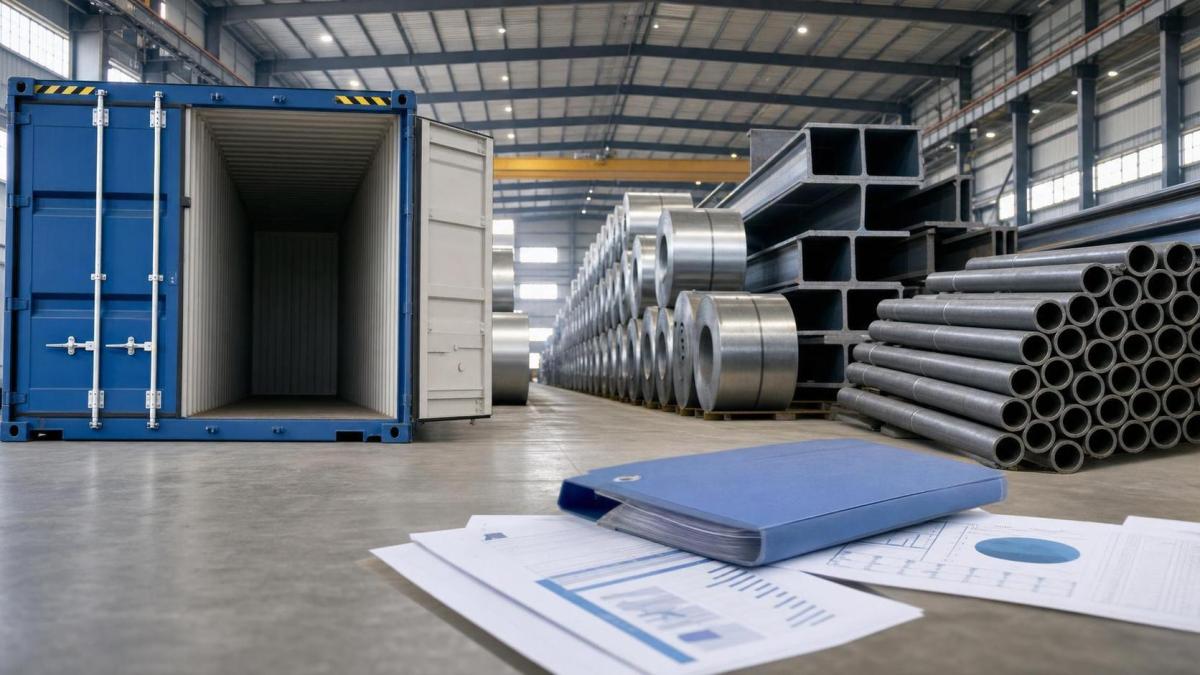
What the new reporting obligation now requires
The confirmed change is that, from June 28, 2026, all third-country suppliers exporting steel and structural steel products to the EU must submit quarterly carbon emissions data through the CBAM portal. The products covered include major export categories such as hot-rolled coil, H-beams, and seamless pipe. The information provided also makes clear that non-compliant reporting may affect customs clearance and eligibility for entry in the later formal phase. The obligation directly affects supply chain compliance preparation for overseas importers, documentation requirements in procurement, and the coordination responsibilities of Chinese suppliers.
Where the pressure appears first in the supply chain
Import-side procurement and customs preparation
For overseas importers and buyers, the immediate impact is likely to appear in supplier onboarding, order documentation, and customs-facing compliance preparation. Because quarterly emissions reporting is now mandatory for covered steel products, procurement teams will need to pay closer attention to whether suppliers can provide the data and supporting materials needed for CBAM portal submission. The practical change is not limited to purchasing price or delivery timing; it also touches document completeness and supplier coordination before shipment and clearance.
Export manufacturers and product-level data readiness
For exporters and manufacturers, especially those shipping hot-rolled coil, H-beams, and seamless pipe to the EU, the change creates a more direct reporting-related responsibility in cross-border transactions. The requirement raises the importance of preparing emissions-related information in a form that can support quarterly declarations. From an operational perspective, this may affect internal document handling, customer response workflows, and coordination with import-side compliance teams.
Supply chain service and documentation support roles
Supply chain service providers and other parties involved in export documentation may also be affected because the reporting duty changes what transaction files may need to contain. What deserves closer attention is that the summary provided by the user links CBAM reporting directly to customs clearance and later-stage admission eligibility. That means service providers involved in filing, document review, and delivery coordination may face new expectations around the completeness and timing of compliance-related paperwork.
What companies should watch in current operations
Quarterly reporting capability for covered steel products
Companies involved in EU-bound steel trade should first determine whether their product lines fall within the covered categories referenced in the event summary. Analysis shows that the key operational issue is whether quarterly carbon emissions data can be prepared and transmitted in a way that matches CBAM portal reporting needs. Where execution details are not provided in the input, this should be treated as a current compliance checkpoint rather than an already settled workflow.
Procurement files and supplier coordination duties
Another immediate point is the likely expansion of procurement file requirements. Because the obligation is described as directly affecting overseas importers' compliance preparation and procurement documentation, buyers and exporters should closely review whether contract files, technical documents, declaration support materials, and supplier communications are sufficient for the new reporting context. Observably, this is as much a coordination issue as a reporting issue.
Clearance risk linked to non-compliant filing
The event summary explicitly states that failure to report in compliance may affect customs clearance and later formal-stage access. For that reason, companies should pay attention to whether shipment planning, customer acceptance steps, and delivery scheduling now depend more heavily on reporting readiness. It is more appropriate to understand this as a trade execution risk signal tied to compliance performance, rather than as a purely administrative update.
Further changes in execution language and market documents
Because the input does not provide detailed implementation language beyond the reporting obligation itself, companies should continue monitoring how this requirement is reflected in customer document requests, tender files, supplier qualification checks, and ongoing transaction terms. Analysis shows that the reporting rule may begin to reshape commercial expectations before all execution details become fully standardized in practice.
Why this looks like an execution signal, not just a policy headline
From an industry perspective, this development is better understood as an operational rule entering day-to-day trade practice, not merely as a broad policy statement. The reason is that the obligation is tied to quarterly reporting through a designated portal and is connected to customs clearance and future admission status. At the same time, observably, some aspects still require continued attention, especially how market participants interpret documentation thresholds, supplier coordination duties, and practical filing expectations in real transactions.
How the market should read this development now
The most balanced reading is that the CBAM transitional reporting duty for steel products has moved into a concrete execution stage for affected exporters and importers dealing with the EU market. The event should not be overstated as a complete outcome in itself, but it should also not be treated as a distant policy signal. At present, it is more appropriate to understand it as a landed compliance requirement with immediate implications for reporting discipline, procurement documentation, and cross-border supply chain coordination.
Basis of this article and points that still need verification
This article is based on the user-provided news title, event date, and event summary. For developments of this kind, market participants would usually continue to review source types such as official announcements, regulatory releases, customs or trade authority information, industry association updates, standards-related documents, and reporting by authoritative media. No specific official source link was provided in the input, so the exact official reference still needs to be verified on an ongoing basis. Further observation is also needed regarding implementation details, compliance interpretation, procurement document changes, tender wording, industry feedback, and how companies are carrying out the reporting obligation in practice.
Please give us a message
Tianjin Kaichuang Metal Material Co., Ltd
Add: No. 41, District 6, First Street, Huanghuadian Town, Wuqing District, Tianjin
Tel: + 86 137 9101 9833
E-mail: boss@kaichsteel.com