Steel Hub

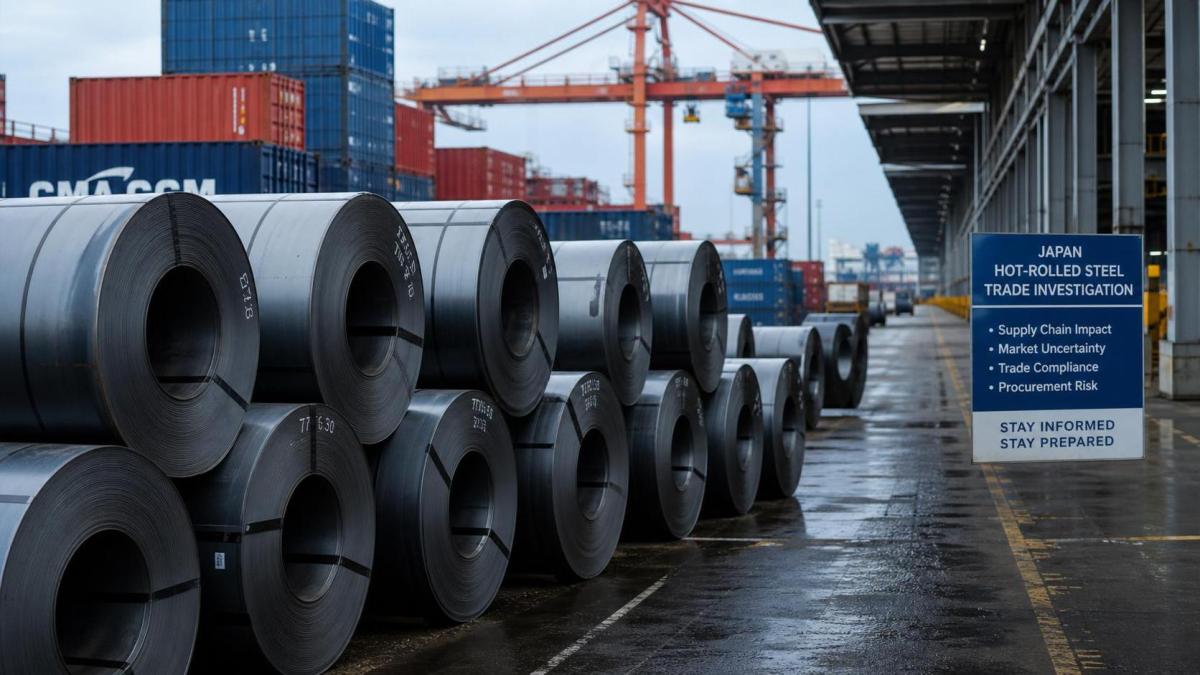
On June 1, 2026, Japan opened a one-year anti-dumping investigation into hot-rolled steel products from mainland China, Taiwan, and South Korea. The move matters beyond steel mills themselves: import-dependent manufacturers, construction buyers, distributors, and supply chain operators now face a period of higher uncertainty, because any eventual tariffs could raise input costs and disrupt purchasing and delivery planning in the Japanese market.
What Japan has formally initiated
According to the provided information, the investigation was launched on June 1, 2026 and covers hot-rolled steel products from mainland China, Taiwan, and South Korea. The case was jointly requested by four major Japanese steelmakers, including Nippon Steel and JFE. The investigation is set to last one year. If Japan reaches an affirmative final determination, additional duties may be imposed on the products under review.
The stated context in the provided summary is that the action is intended to protect domestic production capacity. At the same time, the same summary notes that downstream importers in Japan, including automakers and construction companies, may face rising raw material costs if tariffs are ultimately applied.
Where the pressure could emerge across the chain
Importers may need to manage cost and timing risk at the same time
From an industry perspective, direct importers of hot-rolled steel are among the first to feel the impact of this development because the investigation itself creates uncertainty around future landed cost. The key business pressure is not only possible price increases if duties are imposed, but also the need to reassess ordering cycles, inventory decisions, and the compliance documentation tied to cross-border shipments.
Manufacturers using steel face exposure in procurement planning
Analysis shows that companies using hot-rolled steel as an input, especially downstream manufacturers in Japan, may need to watch procurement budgets more closely. The provided information specifically points to automakers and construction-related buyers, where a rise in raw material costs could affect purchasing terms and potentially feed through into end-market pricing. What deserves closer attention is how purchasing teams balance short-term continuity of supply with the risk of higher future import costs.
Distributors and overseas trading partners may need to revisit sourcing options
For overseas distributors and import-oriented channel businesses, the issue is broader than one investigation. The provided summary indicates a need to reassess supply chain resilience, compliance-oriented stocking cycles, and alternative sources of supply. In practice, the main concern is whether existing sourcing structures remain workable if duty exposure changes the economics of shipments into Japan.
Supply chain service providers could see higher coordination demands
Observably, logistics, trade compliance, and related service providers may also face greater coordination demands if customers seek clearer lead-time control, documentation readiness, and shipment planning during the investigation period. The core issue here is operational predictability rather than a confirmed market outcome.
What companies should watch during the investigation period
Follow official language, not only market reaction
Analysis shows that companies should distinguish between the formal scope of the investigation and broader market speculation. The immediate practical focus is whether later official communications clarify product coverage, procedural timing, or decision milestones that affect purchasing and delivery planning.
Review exposure by product flow and customer commitment
Businesses tied to Japan-bound hot-rolled steel trade should map where exposure sits in current contracts, order pipelines, and customer delivery commitments. This matters because the commercial effect of a tariff risk is often different for spot purchases, rolling procurement arrangements, and shipments already aligned to delivery schedules.
Check document readiness and compliance lead times
For importers and distributors, the provided information points to compliance stocking cycles as an important issue. What deserves closer attention is whether supplier documentation, order timing, and internal approval processes are robust enough to handle a more sensitive trade environment if scrutiny increases during the case.
Prepare supplier and customer communication early
From a practical standpoint, companies may need clearer communication with both upstream suppliers and downstream customers. The reason is straightforward: even before any final determination, uncertainty itself can affect quoting, delivery expectations, and contingency planning for substitute supply.
Why this matters as a signal, not yet a final outcome
This development is more appropriate to understand as an active policy and trade signal rather than a completed market result. The confirmed fact is that Japan has started a one-year anti-dumping investigation. The potential for higher tariffs is real within that process, but it is still conditional on the final determination described in the provided summary.
From an industry perspective, the significance lies in the combination of two forces already visible in the information provided: protection of domestic capacity on one side, and procurement cost pressure for downstream users on the other. That tension is why the case deserves continued attention from companies whose business depends on imported steel or on customers sensitive to raw material inflation.
How to read the current stage of the story
At this stage, the most balanced reading is that Japan's action introduces a meaningful period of commercial uncertainty for hot-rolled steel trade into its market. It does not yet confirm a final tariff outcome, but it does create a near-term need for importers, distributors, and steel-consuming industries to reassess sourcing flexibility, procurement timing, and customer communication. In that sense, this is best treated as a developing industry dynamic that requires monitoring rather than a settled conclusion.
Basis of this article and what still needs verification
This article is based on the user-provided news title, event date, and event summary. For this type of development, relevant source categories typically include official trade remedy announcements, corporate disclosures, industry association updates, authoritative media reporting, and related regulatory documents. A specific official source link was not provided in the input, so the formal wording, later procedural updates, and any final determination timeline still require ongoing verification through subsequent official and industry disclosures.
Please give us a message
Tianjin Kaichuang Metal Material Co., Ltd
Add: No. 41, District 6, First Street, Huanghuadian Town, Wuqing District, Tianjin
Tel: + 86 137 9101 9833
E-mail: boss@kaichsteel.com