Steel Hub

On July 31, 2026, the U.S. Department of Commerce formally moved forward with the first sunset review of the anti-dumping order on hot-rolled steel sheet from China and indicated that the current duty levels, reaching as high as 265.48%, will remain in place. For exporters, importers, buyers, and supply chain operators tied to HRSS trade with the U.S. market, this is not just a procedural update; it directly affects market access compliance, landed cost calculations, supplier screening, and sourcing decisions over the next five years.
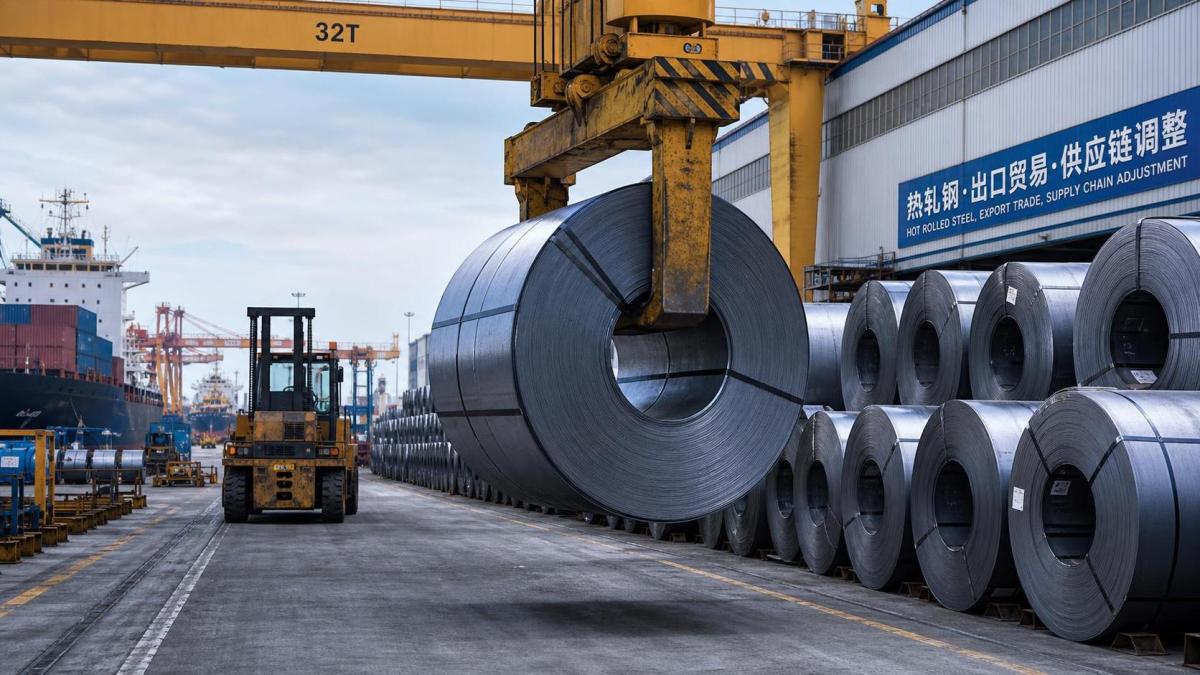
What the July 31 Announcement Confirmed
The confirmed facts are limited but commercially significant. The U.S. Department of Commerce announced on July 31, 2026 that it had initiated the first sunset review of the anti-dumping duty order covering hot-rolled steel sheet originating in China. According to the provided information, the existing duty rates will continue to apply, with the highest rate reaching 265.48%.
The same information also makes clear that the review has direct implications for compliance access and pricing strategy for exports of hot-rolled steel sheet to the United States over the coming five years. Importers are expected to reassess customs clearance costs, supplier qualifications, and alternative sourcing options.
Where the Pressure Is Likely to Be Felt First
Export transactions face renewed pricing constraints
From an industry perspective, companies directly involved in exporting HRSS to the U.S. are likely to feel the impact first because the continuation of current duty levels affects whether shipments remain commercially viable. The main pressure points are export quotation logic, customer negotiations, and the ability to maintain compliant market entry under existing trade remedy conditions.
Importers must revisit total clearance cost assumptions
For U.S.-side importers and trading companies, the issue is not only tariff visibility but the full landed cost structure. What deserves closer attention is how the continued duty framework may alter procurement economics, supplier selection, and order planning. Businesses in this position need to watch for any mismatch between assumed import cost and actual clearance exposure.
Supply chain service providers may see changes in sourcing patterns
Logistics, customs, and broader supply chain service providers may also be affected because importers are being pushed to reassess supplier qualifications and alternative procurement channels. Observably, the operational impact is likely to show up in documentation review, origin-related compliance checks, and adjustments to shipping and sourcing arrangements tied to U.S.-bound steel flows.
Downstream buyers may need more cautious procurement timing
Processing manufacturers and other downstream buyers that rely on stable HRSS procurement may not be the immediate target of the review, but they can still be affected through price pass-through, supplier reshuffling, or changed delivery planning. Their main concern is whether supply continuity and cost predictability can still be maintained under the existing duty environment.
What Companies Should Track Now
Separate the official action from broader market assumptions
Analysis shows that the confirmed development is the initiation of a sunset review together with the continuation of current duty rates. Companies should avoid treating this as a signal for unrelated policy conclusions that are not stated in the provided information. Internal decision-making should stay tied to what has actually been announced.
Recheck supplier qualification and document readiness
Because the provided information specifically highlights supplier qualifications, companies involved in U.S.-bound HRSS business should review whether current suppliers meet internal compliance expectations and whether transaction documents are sufficient for customs and trade remedy review processes. This is especially relevant where procurement decisions were made under older cost or risk assumptions.
Update pricing and sourcing models for the next five years
The information provided indicates a five-year relevance for compliance access and pricing strategy. In practical terms, businesses should revisit quotation models, contract assumptions, and sourcing alternatives with that time horizon in mind, rather than treating the matter as a short-term administrative notice.
Prepare for customer communication and delivery planning
Importers and exporters should also pay attention to how this development is explained to customers and counterparties. Where pricing, lead times, or sourcing options are under review, early communication may help reduce disputes around delivery expectations, cost allocation, and supplier substitution.
How This Development Is Best Understood
As an editorial observation, this development is more appropriate to understand as a durable policy and compliance signal rather than a short-lived trade headline. The provided information does not support broad claims about immediate market restructuring, but it does support the view that companies exposed to U.S.-China HRSS trade need to plan around a continued high-duty environment.
At the same time, this should still be treated as a development that warrants continued monitoring. The reason is that the practical effect on individual businesses will depend less on the headline alone and more on how companies translate it into sourcing, pricing, customs, and customer-management decisions.
Why the Announcement Matters Beyond the Headline
The industry significance of this announcement lies in its operational consequences. It confirms that existing anti-dumping duty pressure on Chinese-origin HRSS entering the U.S. remains a live factor in trade planning, and it reinforces the need for disciplined cost review and supplier due diligence. Current conditions are best read as a medium- to long-horizon business signal, not as a one-day market event.
A rational conclusion at this stage is that the announcement should be viewed as a compliance and commercial planning issue with ongoing relevance. It does not, based on the provided information, justify definitive claims beyond that, but it clearly merits continued attention from companies whose procurement or sales exposure includes U.S.-bound hot-rolled steel sheet.
Basis of This Article and Ongoing Verification
This article is based on the user-provided news title, event date, and event summary concerning the U.S. Department of Commerce sunset review related to Chinese-origin hot-rolled steel sheet. No additional unverified data, company names, market figures, or policy details have been introduced.
For this type of industry update, source categories that are commonly relevant include official government announcements, company disclosures, industry association releases, authoritative media reporting, and standard or regulatory documents. A specific official source link was not provided in the input, so continued verification remains necessary. The main follow-up direction is to monitor any later official wording, implementation detail, or related compliance clarification that may affect actual trade execution.
Please give us a message
Tianjin Kaichuang Metal Material Co., Ltd
Add: No. 41, District 6, First Street, Huanghuadian Town, Wuqing District, Tianjin
Tel: + 86 137 9101 9833
E-mail: boss@kaichsteel.com