Steel Hub

Why price alone is a weak way to compare a steel profile offer
A low quote can look attractive until the steel profile reaches your line and starts creating fit-up issues, extra machining, scrap, or schedule slippage. For a business evaluator, the real comparison starts with two questions: how tightly can the supplier hold the required tolerance, and how reliably can they ship within the promised lead time?
Those two factors are linked. Tight tolerances usually mean more process control, more inspection, and sometimes slower throughput. Fast delivery may be realistic for standard sections already in production, but much less realistic for special dimensions, tighter straightness limits, or extra downstream work such as cutting, drilling, or surface treatment. When you compare offers side by side, treat tolerance capability and delivery speed as cost drivers, not as footnotes.
Which tolerances matter most before ordering?
Not every tolerance carries the same business risk. Buyers often focus on nominal size and miss the dimensions that actually drive assembly performance. The key is to identify which deviations will create downstream cost.
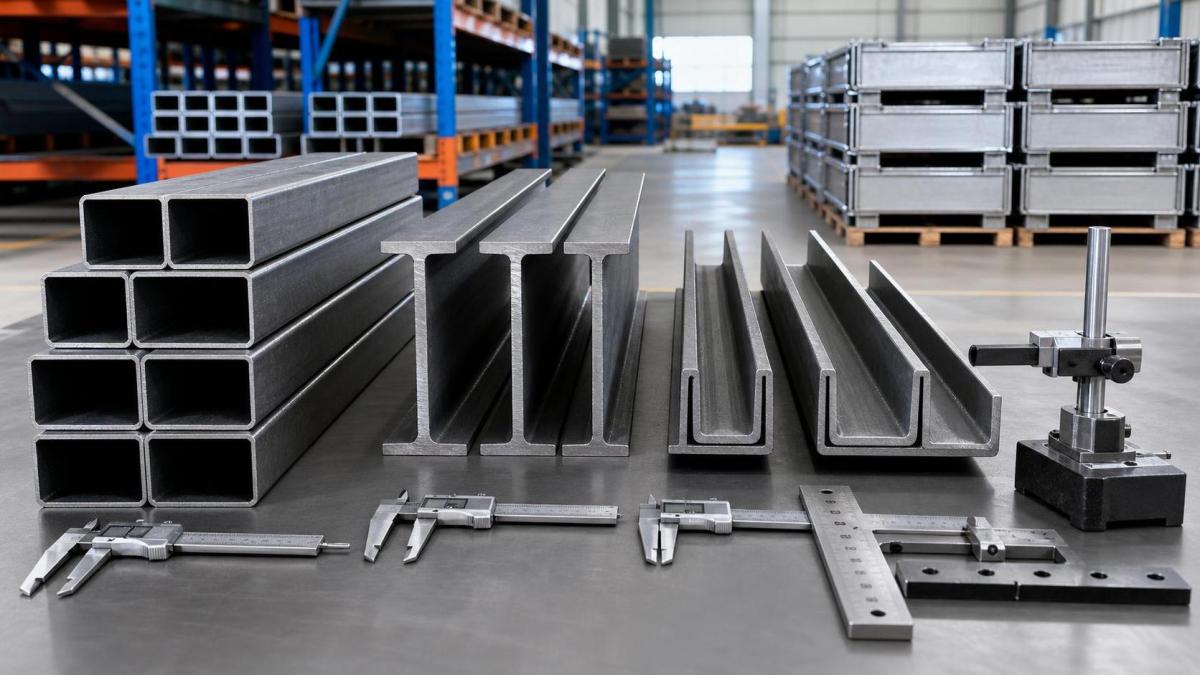
For most steel profile purchases, these are the first items worth comparing:
- Overall dimensions such as height, width, wall thickness, or flange thickness
- Length tolerance, especially if parts go directly into cutting or welding fixtures
- Straightness and twist, which often affect installation more than buyers expect
- Squareness or symmetry where mating parts depend on accurate geometry
- Weight per meter or section consistency if yield and freight cost matter
If the steel profile will be welded into a frame, straightness and twist can be more expensive than a small thickness variation. If it will be machined after receipt, thickness and edge condition may matter more. The right comparison starts with the next process, not the mill catalog.
How do you compare tolerance claims from different suppliers without getting lost in the details?
Use one comparison sheet and force every quotation into the same structure. If one supplier says “standard tolerance” and another lists actual values, you do not yet have comparable offers.
Ask each supplier to quote against the same drawing, the same material grade, the same profile type, and the same tolerance reference. Then compare the commercial impact, not just the technical wording.
This approach keeps the evaluation commercial and operational. It also exposes when two suppliers are pricing two very different quality assumptions under the same part name.
Is tighter tolerance always the better buying decision?
No. Tighter tolerance is only better when your application actually benefits from it. Over-specifying a steel profile is a common purchasing mistake because it quietly raises cost and can extend lead time without improving performance.
A practical test is simple: if the profile arrives at the wider tolerance range, what happens next? If nothing changes in fabrication, installation, or final use, you are probably paying for precision you do not need. If a deviation causes fixture interference, misalignment, excessive weld gap, or extra machining, then the tighter requirement has a real value.
Business evaluators should ask engineering or production teams to mark only the dimensions that are function-critical. That avoids applying premium tolerances to the whole steel profile when only a few features matter.
What usually makes lead time longer on a steel profile order?
Lead time is rarely just “mill time.” It is usually a chain of constraints, and the slowest step decides the schedule. Buyers get better answers when they ask what is driving the promise.
Typical causes of longer lead times include non-standard dimensions, limited rolling schedules, tooling changes, tighter dimensional control, added cutting or fabrication, testing requirements, and export packing or transport arrangements. Material availability also matters. A standard profile in a commonly used grade may move quickly, while a less common combination of grade, size, and tolerance can wait for the next production slot.
When a supplier gives a short delivery promise, ask whether it is based on stock, open rolling capacity, or an assumption that your order will fit into an existing run. Those are very different risk levels.
How can you test whether a quoted lead time is realistic?
Ask for the timeline in pieces. A single total number hides too much. Once the schedule is broken down, weak points become obvious.
- Request the production window for the steel profile itself.
- Separate any secondary processing such as cutting, drilling, blasting, or coating.
- Ask when inspection documents will be ready.
- Check packing readiness and shipment booking time.
- Match the promised dispatch date against your required arrival date, not just ex-works completion.
A realistic supplier can usually explain where the time goes. A risky offer often stays vague, especially around finishing steps and logistics handoff. That is where many delays appear.
What documents should be checked before comparing offers?
The quotation alone is not enough. To compare steel profile offers properly, you need the documents that define what is being supplied and how acceptance will work.
- Drawing or dimensional specification with marked critical features
- Material grade requirement
- Tolerance reference, if one is specified in your sourcing package
- Required order quantity and delivery split
- Inspection or acceptance criteria
- Packing and shipping terms
If any of these are missing, suppliers may fill the gap with their own assumptions. That creates fake price differences. One quote may include tight straightness control and full-length inspection; another may assume standard mill practice only. On paper, both appear to cover the same steel profile.
Where do buyers most often misread cost when evaluating tolerance and delivery?
The biggest mistake is treating tolerance as a quality issue only, instead of a total cost issue. A profile that is cheaper per ton can still cost more after rework, sorting, extra machining, delayed installation, or line stoppage.
The second mistake is ignoring the cost of schedule uncertainty. A supplier with a slightly higher price but a more credible lead time may be the lower-risk choice if your downstream project has liquidated damages, crane bookings, labor scheduling, or assembly slots tied to delivery.
It helps to compare offers in three layers:
- Purchase price
- Expected processing or rejection cost caused by tolerance variation
- Schedule exposure if the quoted lead time slips
That is usually where the lowest true-cost option appears.
Should you ask for samples, inspection records, or first-article checks?
For standard steel profile orders with low downstream sensitivity, not always. For custom sizes, tight fit-up requirements, or suppliers new to your approval system, some form of pre-shipment dimensional evidence is worth the effort.
That does not have to mean a formal, expensive qualification process. Sometimes a first-piece measurement report on the critical dimensions is enough. The point is to verify the supplier is quoting a tolerance they can actually hold in production, not just in a sales document.
This is especially useful when the order includes special cuts, fabricated lengths, or assembly-sensitive profiles. Catching a dimensional mismatch before the full batch ships is far cheaper than sorting material after arrival.
What is the best way to compare two suppliers when one is faster and the other is more precise?
Tie the choice to the cost of failure in your own process. If minor dimensional variation is manageable but a late delivery will stop a project, the faster supplier may be the better commercial decision. If a tolerance miss will trigger rework across a full assembly run, precision deserves more weight.
A simple internal scorecard works well. Rate each offer against critical tolerance capability, lead time reliability, price, and downstream impact. Do not score all categories equally by default. A construction project with fixed site dates will weight timing differently from a fabrication plant with flexible inventory buffers.
The useful question is not “Who is best overall?” It is “Which supplier creates the lower total business risk for this specific steel profile order?”
What should be written into the purchase order to avoid disputes later?
If the requirement matters, put it in the order. Verbal alignment during quotation is not enough. The purchase order or attached specification should identify the steel profile, required dimensions, the tolerance basis, any critical features subject to inspection, delivery schedule, quantity split if applicable, and the documents expected at shipment.
It also helps to state how non-conformance will be judged. For example, is acceptance based on batch sampling, piece-by-piece measurement for certain dimensions, or receipt inspection against defined checkpoints? Clear wording reduces arguments over whether the supplier met the deal or merely shipped something close.
A practical rule for making the final call
Before approving a steel profile order, compare each offer against the cost of being wrong in two directions: the cost of receiving material that does not fit your downstream process, and the cost of receiving acceptable material too late to use it. The stronger quote is the one that controls both risks with the least total cost, even if it is not the cheapest line item on the sheet.
When buyers frame the decision that way, tolerance and lead time stop being separate technical notes. They become what they really are: purchasing variables that directly affect waste, capacity, and schedule reliability.
Please give us a message
Tianjin Kaichuang Metal Material Co., Ltd
Add: No. 41, District 6, First Street, Huanghuadian Town, Wuqing District, Tianjin
Tel: + 86 137 9101 9833
E-mail: boss@kaichsteel.com