Steel Hub

On August 1, 2026, the EU put the third phase of the CBAM transition period into effect for steel products, expanding import declaration coverage to major categories including hot-rolled sheets, cold-rolled sheets, and H-beams. For steel exporters shipping into Europe, and for importers managing customs clearance and supplier compliance, the development is worth close attention because it links carbon reporting more directly to delivery execution, documentation readiness, and transaction timing.
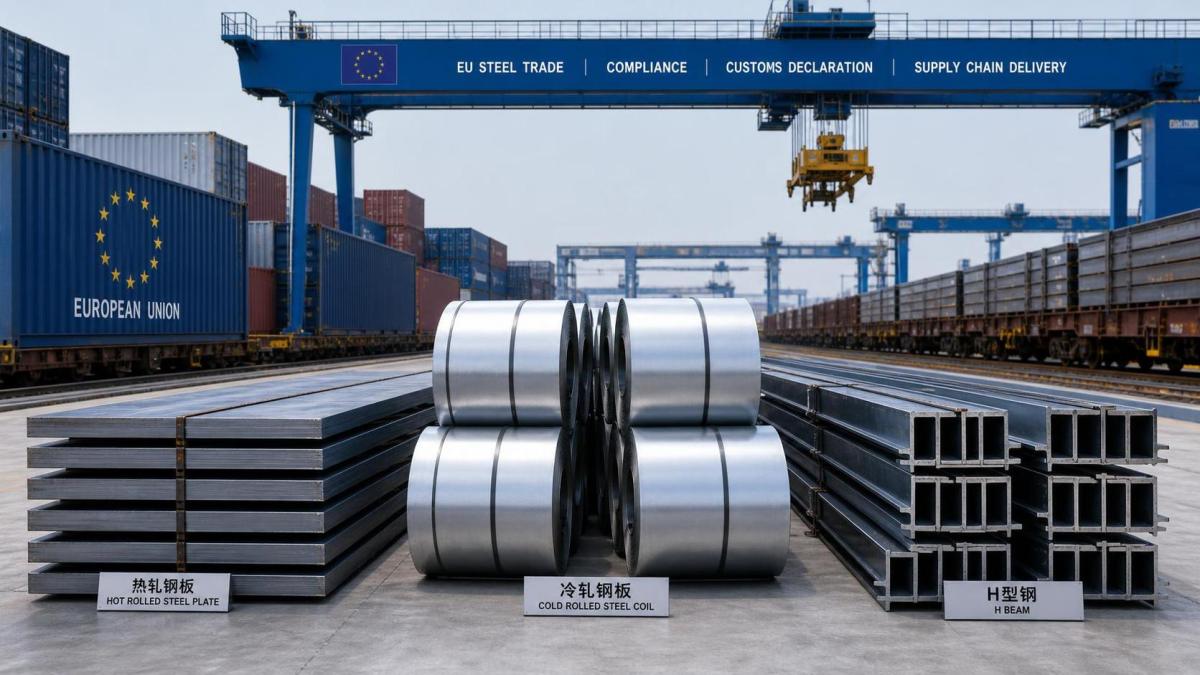
What the new phase now covers
According to the provided information, the third phase of the EU CBAM transition period took effect on August 1, 2026. It applies to import declarations for major steel product categories, including hot-rolled steel sheets, cold-rolled steel sheets, and H-beams. Exporters are required to submit monthly data on embedded carbon emissions, and those disclosures must undergo third-party verification. The adjustment directly affects compliance costs and customs clearance timing for Chinese steel exporters delivering to the EU. Importers are also required to verify in advance whether supplier carbon data is traceable and whether the relevant MRV system is fit for the reporting requirement.
Where the pressure is likely to show first
Export transactions tied to EU delivery schedules
From an industry perspective, direct trading companies are likely to feel the impact first because the new requirement sits close to shipment execution. The main pressure points are likely to appear in document preparation, monthly emissions reporting, and the coordination needed before goods move through EU customs. What deserves closer attention is whether compliance preparation begins early enough to avoid affecting delivery windows.
Importer-side supplier screening becomes more operational
Importers are not only receiving goods under the new phase; they also need to validate whether supplier carbon data can be traced and whether the supplier's MRV arrangements can support the required declarations. Analysis shows this shifts part of the compliance burden upstream into supplier qualification, transaction review, and pre-shipment checks rather than leaving it solely to customs-stage handling.
Supply chain service providers may face tighter coordination demands
Observably, logistics coordinators, customs-related service providers, and other supply chain intermediaries may be affected where reporting completeness influences clearance timing. The immediate issue is less about broad market direction and more about whether supporting documents, verification status, and reporting cycles align with shipment schedules.
Processing and manufacturing links may be drawn into data preparation
Where exporters rely on production-side emissions data, processing and manufacturing participants connected to EU-bound orders may need to support the traceability of carbon information. From an industry perspective, the practical concern is whether data collection and reporting can match the monthly cadence now required under the new phase.
What companies should check now
Whether covered product lines are mapped clearly
Companies with EU-facing steel business should first confirm which hot-rolled, cold-rolled, and structural steel shipments fall within the reporting scope described in the provided information. The key issue is not only classification, but whether internal teams treat these shipments as compliance-sensitive from order acceptance through customs filing.
Whether carbon data can withstand verification
The requirement for third-party verification means the quality of embedded carbon data becomes a practical business issue rather than a background reporting matter. What deserves closer attention is whether reported data can be traced back through the relevant records in a form that external verification can use without delaying shipment preparation.
Whether MRV arrangements match transaction reality
Importers and exporters should pay attention to the fit between existing MRV arrangements and actual monthly reporting needs. Analysis shows that even where data exists, timing, format, and traceability may still become bottlenecks if the reporting workflow does not match the cadence of regular deliveries.
Whether customer communication and lead times need adjustment
Given the stated effect on compliance cost and customs timing, companies should review how they communicate with EU customers and counterparties on documentation readiness, verification status, and lead-time assumptions. This is especially relevant where delivery commitments were previously built around conventional customs preparation rather than carbon-related reporting cycles.
Why this reads as more than a procedural update
Analysis shows this development is best understood as an operational tightening within the CBAM transition process rather than as a standalone policy headline. The confirmed facts already point to a more demanding reporting rhythm, broader product coverage within the specified steel categories, and a stronger link between carbon data quality and trade execution. At the same time, it is more appropriate to understand this as a continuing compliance signal than as a complete picture of final long-term market outcomes, because the provided information centers on scope, reporting frequency, verification, and immediate trade effects.
How the industry may need to read it now
For the steel trade connected to the EU market, this update should be read as a near-term compliance change with longer-term signaling value. In the short run, the most visible effects are likely to be on reporting workload, supplier validation, and customs-related timing. In a broader industry sense, the development indicates that carbon data management is becoming more closely tied to day-to-day trade performance. A neutral reading is that the impact is already concrete at the transaction level, while the wider structural consequences still require continued observation.
Basis of this article and points for continued verification
This article is based on the user-provided news title, event date, and event summary. For this type of development, relevant source categories would typically include official announcements, company statements, industry association updates, authoritative media reporting, and standards-related documents. No specific official source link was provided in the input, so the underlying text should continue to be verified against formal disclosures. Further attention should remain on any later official clarifications regarding reporting practice, verification details, covered declarations, and implementation at the operational level.
Please give us a message
Tianjin Kaichuang Metal Material Co., Ltd
Add: No. 41, District 6, First Street, Huanghuadian Town, Wuqing District, Tianjin
Tel: + 86 137 9101 9833
E-mail: boss@kaichsteel.com