Steel Hub

Steel Fabrication Cost Drivers: What Really Moves Price and Lead Time?
For steel fabrication, price rarely comes from one single line item. Material grade, part geometry, processing depth, and shop capacity all pull in different directions. For teams buying plate, section, pipe/tube, or long products, that means a quote can change fast, and so can delivery.
The steel industry sits upstream of construction, machinery, energy, rail, and shipbuilding. When raw steel supply tightens or rolling schedules shift, fabrication timelines feel the effect immediately. Understanding these drivers helps control budget, reduce sourcing risk, and avoid unrealistic lead-time commitments.
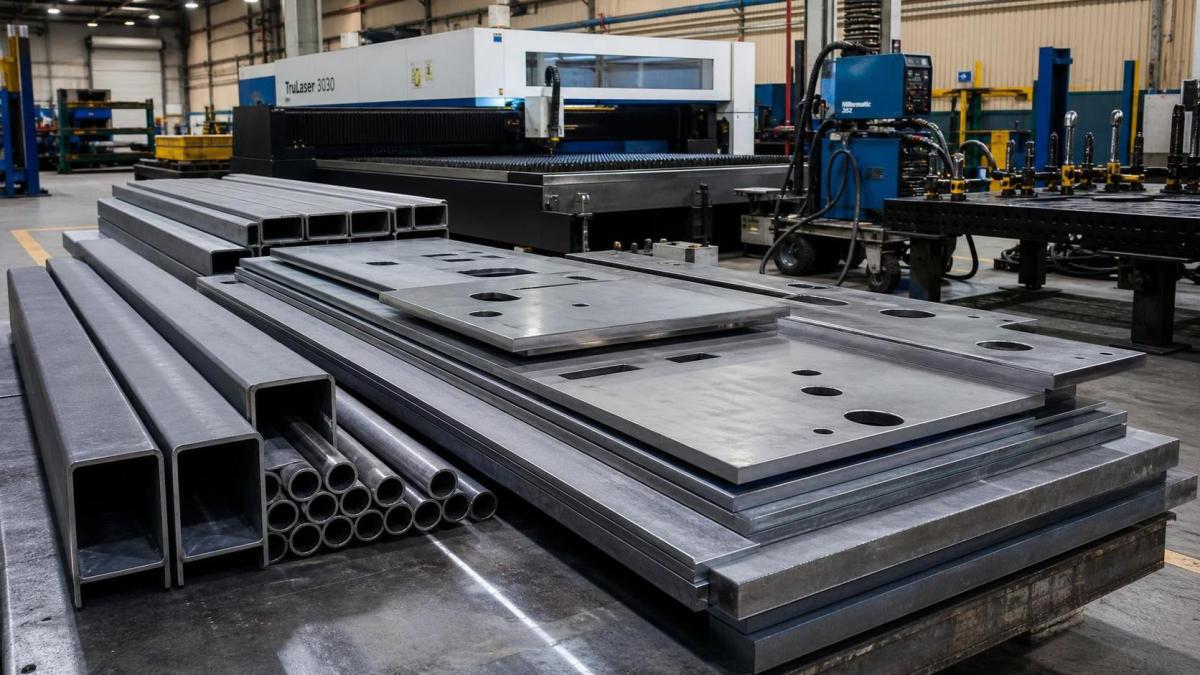
Why does one steel fabrication quote look cheap and another look high?
The short answer is scope. A low quote may cover cutting only, while a higher one includes nesting, forming, welding, surface treatment, inspection, and packing. In steel fabrication, every added operation creates labor time, tooling wear, and scheduling pressure.
Material choice is usually the first cost signal. Standard carbon steel is generally easier to source and process than alloy grades, wear-resistant plates, or thick sections. Special grades may require tighter mill control, slower cutting, or extra traceability, which raises both price and lead time.
Design complexity matters just as much. Parts with many holes, tight tolerances, curved forms, or heavy weld content consume more machine time and inspection time. When drawings are unclear, suppliers often add risk buffers, and those buffers show up in the final number.
Which buying choices have the biggest impact on lead time?
Lead time is often driven by the slowest step, not the longest one on paper. Material availability, machine queue, secondary processing, and third-party testing all compete for calendar days. If one item is missing, the order may wait even when fabrication itself is simple.
A practical way to judge lead time is to separate “ready-to-cut” jobs from “needs-prep” jobs. Ready stock in common sizes can move quickly. Hard-to-source dimensions, special rolling tolerances, or imported material usually need more buffer, especially when the steel market is volatile.
Capacity also matters. A workshop with enough welding bays may still be delayed if cutting, shot blasting, or coating is outsourced. That is why a supplier’s true turnaround time should be checked across the full chain, not just the fabrication floor.
A quick comparison helps separate price from schedule
How do drawings, tolerances, and finishing details change steel fabrication costs?
Drawings with incomplete dimensions or inconsistent notes slow down every stage. The shop may need clarification before cutting starts, and that pause is rarely free. In steel fabrication, clean drawings reduce rework risk and usually improve the accuracy of the first quote.
Tolerances are another hidden driver. Tight tolerances may require additional machining, more careful fixturing, or extra inspection points. For structural parts, that may be unnecessary cost; for precision assemblies, it may be unavoidable. The key is matching tolerance to function.
Finishing details can also shift pricing sharply. Shot blasting, galvanizing, painting, deburring, and edge treatment each add time and handling. If corrosion resistance or appearance matters, it is better to specify the finish clearly at the inquiry stage rather than negotiate it after production starts.
What should be checked before comparing suppliers?
A fair comparison starts with the same scope. If one supplier quotes only fabrication and another includes raw material, surface treatment, and delivery, the numbers will not tell the same story. Steel fabrication pricing is easiest to compare when the request package is normalized.
The most useful checks are capacity, material traceability, process range, and quality documentation. A shop that handles heavy plate well may not be the best fit for thin-wall tube assemblies. Likewise, a low-cost offer is less useful if it cannot support stable delivery or acceptable inspection records.
- Confirm the exact material grade and size availability.
- Ask what operations are included in the unit price.
- Check whether lead time includes coating, testing, and packing.
- Review tolerance, inspection, and certification requirements.
Where do the most common cost mistakes happen?
One common mistake is treating steel fabrication like a simple material purchase. In reality, the material is only part of the cost. Labor, tooling, yield loss, setup, and logistics can become larger than the steel itself on complex jobs.
Another issue is underestimating schedule risk. Buyers sometimes compare promised dates without asking how the supplier handles rush orders, material substitutions, or rework. That creates a false sense of certainty, especially when downstream production depends on a fixed arrival window.
A better approach is to separate must-have requirements from optional ones. If a drawing can tolerate a wider spec, standardizing the part often lowers cost and shortens cycle time. If traceability or special testing is essential, then it should be accepted as a real cost driver, not treated as a surprise.
A practical FAQ view for faster decisions
The table below summarizes the questions that usually matter most when reviewing steel fabrication offers. It is useful when the goal is to spot hidden cost drivers quickly and avoid comparing unrelated quotes.
What is the smartest next step when evaluating steel fabrication?
Start with a clean request package: material grade, quantity, dimensions, tolerance, finish, inspection needs, and required date. That single step usually improves quote quality more than adding more suppliers to the list.
Then compare price and lead time together. A slightly higher offer may be the better option if it removes material uncertainty or shortens the delivery window. In steel fabrication, the cheapest quote is not always the lowest-risk choice.
When the application is tied to construction, machinery, energy, or transport, stable supply matters as much as unit price. The strongest decisions come from matching the fabrication scope to the real demand, then choosing the supplier that can hold both cost and schedule within a predictable range.
Please give us a message
Tianjin Kaichuang Metal Material Co., Ltd
Add: No. 41, District 6, First Street, Huanghuadian Town, Wuqing District, Tianjin
Tel: + 86 137 9101 9833
E-mail: boss@kaichsteel.com