Steel Hub

Steel Product Cost Drivers: Material, Finish, and MOQ Explained
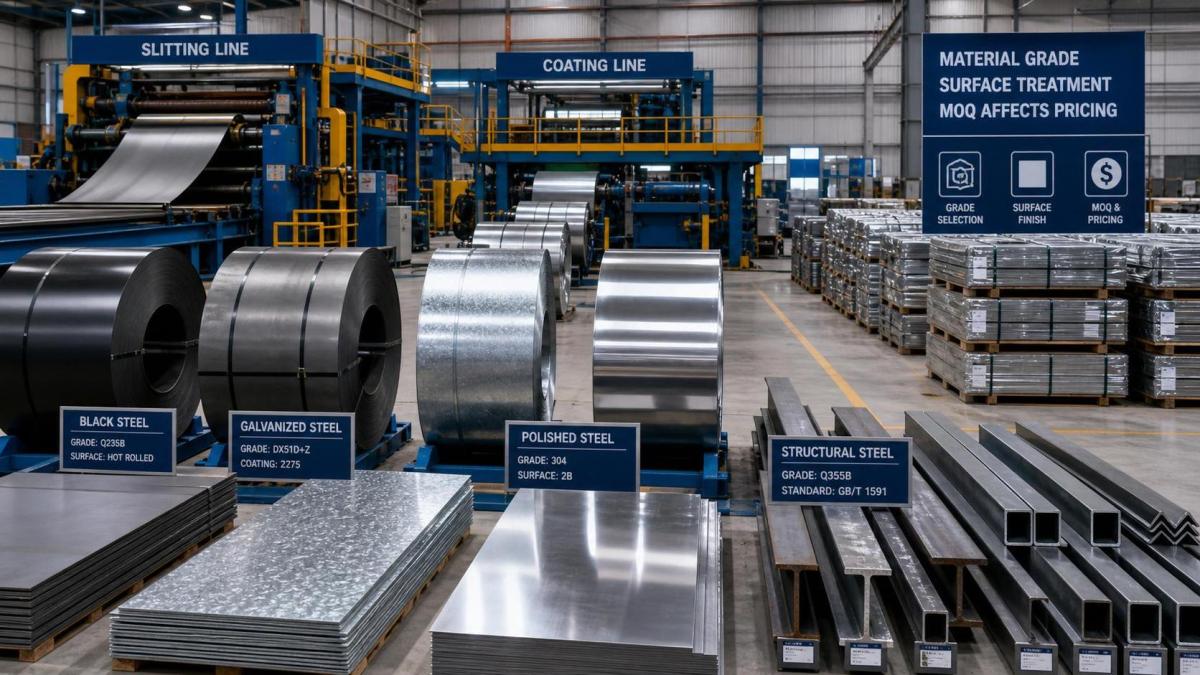
When reviewing a steel product quote, cost rarely moves for one reason alone.
A steel product price usually reflects material grade, finish requirements, order volume, processing loss, and delivery commitments.
For purchasing decisions, the challenge is not just getting a lower unit price.
The real question is how each quote affects total landed cost, cash flow timing, and supply risk.
That is why a steel product quote needs to be read beyond the headline number.
In practice, three drivers matter most early in approval: material, finish, and MOQ.
These three items often explain why similar-looking offers can differ by a meaningful margin.
They also shape whether a steel product purchase stays flexible when demand changes.
Why Material Grade Changes Steel Product Cost So Quickly
Material is usually the largest cost component in any steel product quote.
Even small grade changes can shift the price because chemistry, strength, and process control are different.
A basic carbon steel product costs differently from alloy, high-strength, or corrosion-resistant alternatives.
That gap is not only about raw material inputs.
It also reflects tighter melting control, extra testing, yield loss, and certification requirements.
From a cost review angle, the first step is confirming whether the specified grade is truly necessary.
Many projects keep a higher grade because it was used before, not because the application still needs it.
That creates avoidable cost in every steel product order.
What to check in the material line
- Grade standard, such as ASTM, EN, JIS, or GB
- Mechanical property requirements and tolerance levels
- Heat treatment, testing, or traceability requirements
- Substitution flexibility approved by engineering or quality teams
A supplier may price the same steel product differently if standards allow broader substitution.
This matters because broader substitution can reduce sourcing pressure and shorten replenishment time.
On the other hand, a highly specific grade can limit mill options and increase schedule risk.
How Surface Finish Affects the Real Cost of a Steel Product
Finish is often underestimated because it looks like a secondary specification.
In reality, finish can materially change the final steel product cost and lead time.
Common finish options include black, pickled, oiled, galvanized, painted, polished, or precision-coated surfaces.
Each option adds processing steps, energy use, inspection time, and sometimes rework risk.
For example, galvanized steel product pricing depends on coating thickness, zinc consumption, and bath capacity.
A polished finish may seem simple, yet it can reduce line speed and increase scrap rates.
More importantly, finish requirements influence packaging, storage, and transit protection.
That means the steel product cost impact continues after production.
Questions that expose hidden finish cost
- Is the finish functional, cosmetic, or both?
- What coating thickness or roughness level is actually required?
- Can the finish be completed by the steel product supplier or downstream processor more efficiently?
- Does the finish create additional handling, wrapping, or storage controls?
In many buying situations, the lowest quote hides thinner coating or looser finish consistency.
That creates a false comparison between one steel product offer and another.
A better review compares usable output, not just nominal price per ton.
MOQ and Why It Matters Beyond Unit Price
MOQ is one of the most important financial drivers in a steel product purchase.
It affects working capital, warehouse exposure, forecast accuracy, and purchasing flexibility.
Suppliers set MOQ because mills need efficient production runs, stable setup conditions, and shipment economies.
So a low-volume steel product order may carry a surcharge, even when the base material is standard.
From a finance perspective, MOQ should be reviewed against total demand confidence.
A lower unit price can still be expensive if excess stock sits for months.
This is especially true for custom steel product specifications with limited resale value.
Common MOQ trade-offs
This is why MOQ should never be reviewed in isolation.
The right steel product decision balances price, demand certainty, and stock carrying cost together.
How to Compare Steel Product Quotes More Accurately
A useful comparison starts by standardizing the quote structure.
If one steel product supplier includes testing, packaging, and cutting, another may show them separately.
Without normalization, the cheapest offer may only appear cheaper.
In actual procurement work, a side-by-side review should include the following points.
- Base steel product price by grade and size
- Finish cost and measurable finish standard
- MOQ, surcharge threshold, and batch flexibility
- Yield loss from slitting, cutting, or forming
- Testing, certification, and traceability cost
- Lead time, delivery term, and penalty exposure
- Payment terms and total cash flow effect
The stronger signal is often outside the price column.
For example, a steel product supplier offering shorter lead time may reduce urgent spot buys later.
That benefit does not always appear in a unit price comparison, but it affects total cost.
Risk Signals That Should Slow Down Approval
Some steel product quotes look attractive because important assumptions are left vague.
That usually becomes expensive later through claims, delays, or replacement purchases.
Several warning signs deserve closer review before approval.
- The steel product grade is listed broadly, without exact standard or revision level.
- Finish requirements are described loosely, with no measurable acceptance criteria.
- MOQ exceptions are verbal, not written into the commercial offer.
- Lead time assumes mill slots that are not yet secured.
- Freight, protective packaging, or inspection fees are excluded.
- The supplier cannot explain scrap rate or processing yield assumptions.
These gaps matter because steel product cost overruns often come from omitted details, not obvious price inflation.
A disciplined review process helps prevent repeated exceptions and emergency approvals.
A Practical Approval Framework for Better Steel Product Buying
A solid decision does not require perfect market timing.
It requires a consistent framework that separates necessary cost from avoidable cost.
Start with the material grade and confirm whether the specification is still justified.
Then check whether the finish requirement is functional enough to defend its added cost.
After that, evaluate MOQ against realistic demand and stock tolerance.
Finally, normalize each steel product quote using the same commercial assumptions.
This approach makes supplier comparisons cleaner and approval decisions more defensible.
In a volatile market, that discipline matters even more.
Steel product pricing can change with raw material moves, mill capacity, and delivery pressure.
But clear review of material, finish, and MOQ still provides the strongest basis for control.
Before approving the next steel product order, ask one simple question: which quoted cost creates value, and which only adds avoidable burden?
Please give us a message
Tianjin Kaichuang Metal Material Co., Ltd
Add: No. 41, District 6, First Street, Huanghuadian Town, Wuqing District, Tianjin
Tel: + 86 137 9101 9833
E-mail: boss@kaichsteel.com