Steel Hub

Why does steel structure cost vary so much from one project to another?
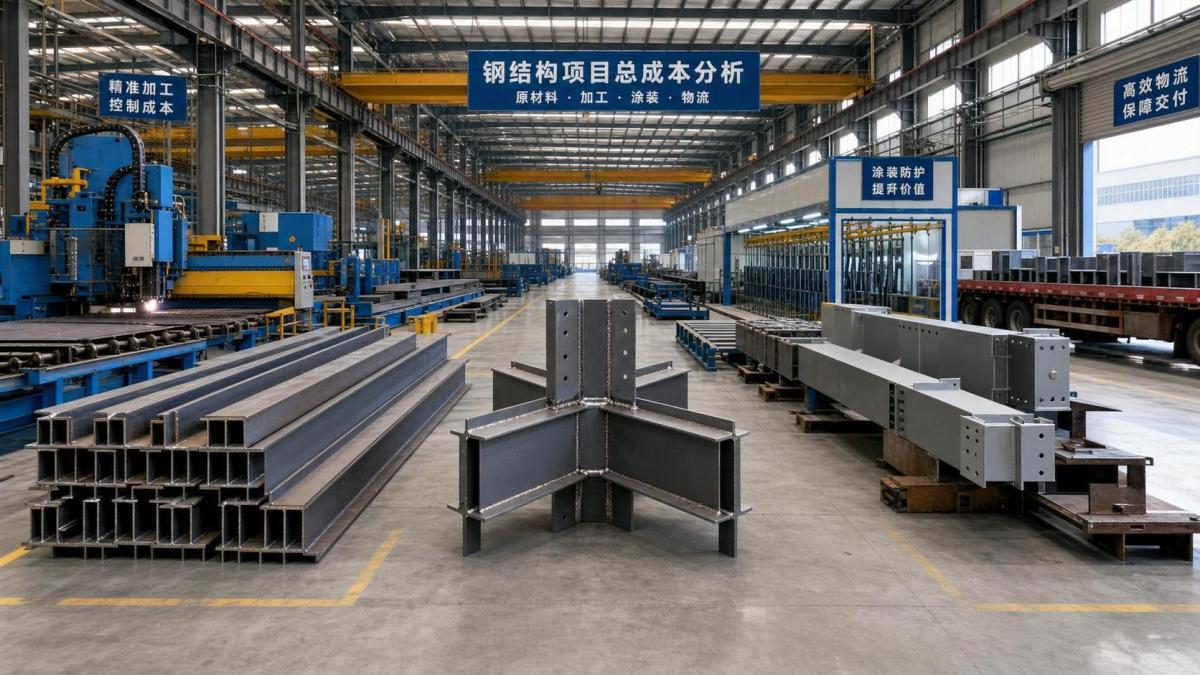
Steel structure cost is rarely driven by tonnage alone. Total project value depends on material choice, fabrication depth, logistics, erection difficulty, and timing.
That matters because steel sits upstream of construction, manufacturing, energy, transport, and equipment supply chains. Price changes travel quickly across project budgets.
In practical terms, two buildings with similar weight may show very different totals. One may use standard sections. The other may require special grades, tight tolerances, and complex connections.
A useful starting point is to separate direct steel structure cost from total delivered cost. The first covers steel members. The second includes processing, coating, transport, installation, and contingency.
This distinction helps when comparing suppliers. A lower ex-works price can still lead to a higher final project cost if delivery risk or site work expands later.
Is raw material the biggest driver, or do fabrication details matter just as much?
Raw material is important, but it is not the whole story. Steel structure projects are shaped by both steel price and conversion complexity.
Most steel products begin with iron ore or scrap steel, then pass through ironmaking, steelmaking, and rolling. That upstream chain affects grade availability, lead time, and base pricing.
However, fabrication can change the economics fast. Cutting, drilling, welding, cambering, trial assembly, and dimensional inspection all add labor and equipment hours.
More complex structures usually cost more for three reasons. They consume more shop time, create more scrap loss, and increase quality control requirements.
- Standard beams and columns are easier to source and process.
- Built-up sections often raise welding, straightening, and inspection cost.
- High-strength grades may reduce weight, but they can increase procurement and fabrication controls.
The more accurate question is not, “What is the steel price?” It is, “What does this steel structure require before it reaches the site ready to install?”
Which cost items are often missed during early project evaluation?
Early estimates often focus on weight and unit rate. That works for screening, but it misses items that later become budget pressure points.
Connections are a frequent blind spot. A steel structure with many bolted nodes, stiffeners, base plates, and gusset plates may carry moderate tonnage but high detailing cost.
Surface treatment is another one. Primer, galvanizing, fireproofing, or multi-layer coating systems can materially change total project value, especially in marine or industrial environments.
Transport and site conditions also deserve closer attention. Long members, oversize loads, restricted access, crane availability, and phased delivery all affect the final steel structure cost.
The table below highlights where estimates often drift.
A better estimate asks where cost can move after award, not just where the current quote looks attractive.
How should steel structure quotes be compared without being misled by the lowest number?
The lowest number is only useful when scope is aligned. In many steel structure bids, the real issue is not price level but scope definition.
Start by checking what each quote includes. Some suppliers price only rolled sections and basic fabrication. Others include shop drawings, blasting, coating, packing, and delivery.
Then review yield assumptions and wastage. A quote based on optimistic nesting or reduced scrap can look competitive, yet fail once production begins.
Lead time should be reviewed beside price. If a steel structure supplier offers a low rate but has unstable mill allocation or long queue times, schedule cost may outweigh the apparent savings.
More reliable comparisons usually include these checkpoints:
- Steel grade, section type, and origin of supply
- Shop drawing responsibility and revision terms
- Fabrication tolerance, weld standard, and inspection scope
- Surface treatment system and repair provisions
- Packaging, inland freight, port handling, or site delivery terms
- Commercial exposure to steel price fluctuation
When these items are normalized, the real steel structure cost becomes easier to judge and easier to defend internally.
Where do schedule, market swings, and supply chain conditions affect cost most?
Schedule pressure usually raises steel structure cost in less visible ways. Expedited rolling slots, overtime fabrication, split shipments, and site resequencing all come with premiums.
Market conditions matter because steel is tied to raw materials, energy pricing, capacity utilization, and downstream demand. Plate, section, pipe, and long products do not move identically.
For example, a project using heavy plate for box columns may face different volatility than one built mainly from standard hot-rolled sections. Availability can matter as much as nominal price.
Imported steel structure supply can add another layer. Exchange rates, freight swings, trade controls, and customs timing may widen the gap between quoted and landed cost.
In actual evaluation, it helps to track three signals together: mill lead times, section availability, and coating or fabrication bottlenecks. Looking at only the spot steel price is too narrow.
What reduces steel structure cost without creating long-term risk?
Cost control works best when it simplifies the structure instead of stripping out necessary performance. The aim is lower total value erosion, not lower initial price at any cost.
One effective move is standardization. Repeating member sizes, connection types, and hole patterns shortens detailing time and improves fabrication efficiency.
Another is matching specification to actual service conditions. Over-specifying coating systems, tolerances, or steel grades often inflates steel structure cost without delivering measurable project benefit.
Design for transport and erection is equally valuable. Slight changes in member length, splice location, or lift weight can reduce freight restrictions and crane time.
A practical review list often includes:
- Can standard rolled sections replace custom built-up members?
- Are connection details more complicated than the structural demand requires?
- Can coating and fire protection be adjusted by exposure zone?
- Does the delivery plan fit transport limits and site lifting logic?
- Is there a clear mechanism for handling steel price changes?
These questions usually uncover savings that remain durable through fabrication, shipping, and installation.
What is the most reliable way to judge total project value before commitment?
The most reliable method is to treat steel structure cost as a full-chain decision. Material, fabrication, delivery, installation, and commercial risk must be reviewed together.
A good comparison is not just supplier versus supplier. It is also scheme versus scheme, grade versus grade, and faster delivery versus lower unit price.
Before moving ahead, clarify the required sections, standards, coatings, lead times, and site constraints. Then align all quotes to the same commercial and technical basis.
If uncertainty remains, build a short sensitivity check around steel price, fabrication scope, freight, and erection productivity. That usually shows where the true exposure sits.
In the end, steel structure decisions are strongest when the budget reflects the whole route from mill and workshop to final assembly. That is where total project value becomes clear.
Please give us a message
Tianjin Kaichuang Metal Material Co., Ltd
Add: No. 41, District 6, First Street, Huanghuadian Town, Wuqing District, Tianjin
Tel: + 86 137 9101 9833
E-mail: boss@kaichsteel.com