Steel Hub

On June 16, 2026, the announced U.S.-Iran agreement introduced an immediate change in transit conditions for the Strait of Hormuz by authorizing the lifting of the naval blockade and permitting free passage. For steel trade participants, this is not only a geopolitical development but also a practical shift in shipping risk, insurance cost expectations, delivery scheduling, and procurement planning across Middle East- and Southeast Asia-linked import flows.
What Has Been Confirmed So Far
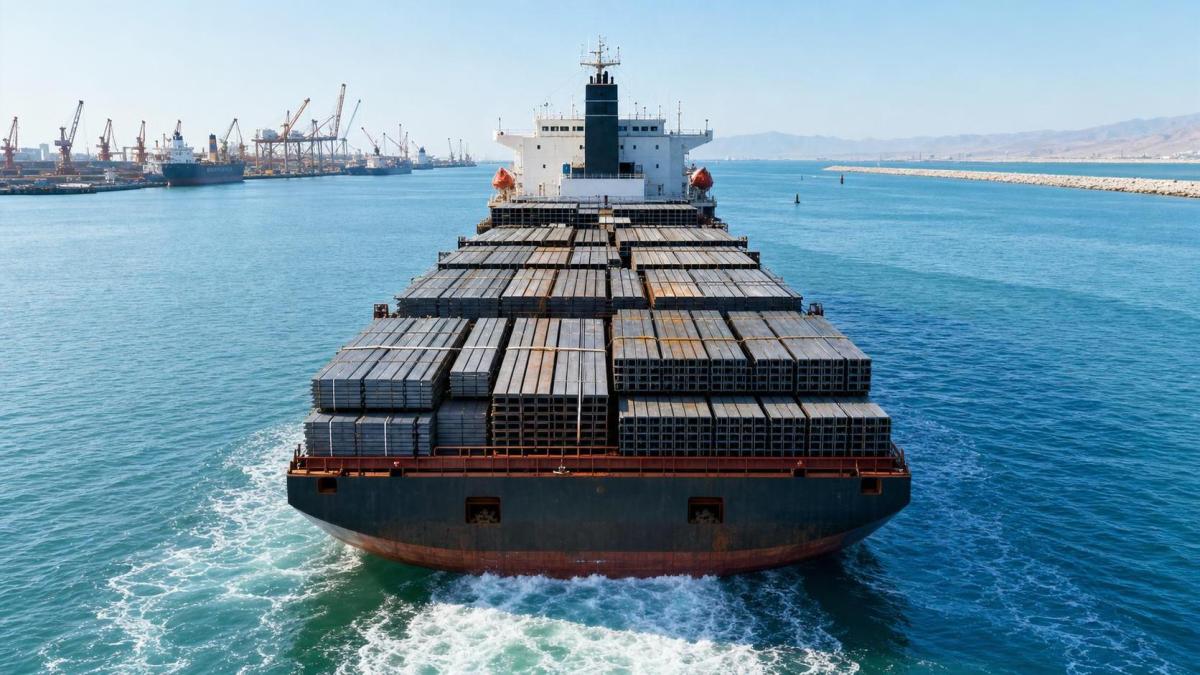
According to the provided event summary, the United States and Iran formally announced on June 16, 2026 that they had reached agreement on a comprehensive deal, with signing scheduled in Switzerland on June 19. The U.S. authorization includes the immediate removal of the naval blockade on Iran and approval for free passage through the Strait of Hormuz. The stated effect is a significant reduction in shipping risk and insurance costs on the Red Sea-Gulf route, together with improved logistics stability for steel imports in the Middle East and Southeast Asia. For overseas buyers, shipments of Chinese steel sections, including I-beams and square tubes, to markets such as Iran, the UAE, and Saudi Arabia may see lead times shortened by 5-10 days, while port demurrage and surcharge pressure may also ease.
Where the Rule Change Reaches the Steel Trade Chain
Export contracts and shipment planning face a more stable routing environment
From an industry perspective, exporters and direct trading companies are likely to feel the first operational impact because transit conditions affect booking decisions, freight quotations, and delivery commitments. What deserves closer attention is whether contract terms, shipment schedules, and logistics clauses still reflect the higher-risk assumptions used during restricted passage conditions. Even where transport becomes easier, companies still need to review how delivery promises, freight adjustments, and destination documentation are handled in active orders.
Overseas buyers may reassess procurement timing and inventory buffers
For buyers sourcing steel sections into Middle Eastern markets, the main effect may appear in procurement timing rather than only in freight cost. Analysis shows that shorter and more predictable transit can influence when purchase orders are placed, how much safety stock is kept, and how delivery windows are negotiated with suppliers. Buyers should pay attention to whether updated shipping conditions affect tender timing, technical document submission schedules, and acceptance planning tied to arrival dates.
Supply chain service providers need to track execution details, not only headline relief
Freight forwarders, logistics coordinators, and related supply chain service providers may benefit from lower route pressure, but their operational focus should remain on execution evidence. This includes reviewing voyage arrangements, insurance treatment, port handling assumptions, and any changes in surcharges or delay-related charges. The practical issue is not simply that passage has reopened, but how quickly carriers, insurers, and counterparties reflect that change in actual operating terms.
What Companies Should Watch in the Near Term
Check whether transaction documents need updating
Observably, companies with ongoing or recently negotiated orders should revisit delivery schedules, freight components, and Incoterm-related responsibilities where routing assumptions were built around earlier disruptions. If lead time expectations improve, supporting documents and commercial terms may also need to be aligned.
Monitor official wording and execution practice after signing
It is more appropriate to understand this as a meaningful execution signal, while still watching how the June 19 signing is followed by practical implementation. Businesses should therefore track whether the language used in subsequent notices, shipping practice, and trade execution remains consistent with the announced reopening and free transit arrangement.
Focus on steel categories most exposed to schedule sensitivity
For products such as I-beams and square tubes referenced in the provided summary, the key issue is delivery certainty in export-oriented transactions. Companies involved in these categories should pay closer attention to revised production sequencing, vessel booking coordination, and destination-side receipt planning, especially where project timing or tender compliance depends on narrower arrival windows.
Keep compliance and traceability files ready despite logistics relief
Lower transport pressure does not remove the need for disciplined document control. Exporters, buyers, and service providers should continue maintaining product specifications, inspection records, shipping papers, and quality traceability materials so that any faster movement of goods does not create gaps in verification, acceptance, or after-sales handling.
Why This Still Requires Measured Reading
Analysis shows that this development is best read as a rule and execution change with immediate commercial relevance, especially for route access and shipping conditions, rather than as a final answer to every trade-risk question in the region. The signal is concrete enough to matter for freight, insurance, and delivery planning, but market participants still need to observe how quickly operational practices, contract behavior, and procurement documents adjust in response.
How the Market May Best Interpret This Stage
At this stage, the event can reasonably be treated as a strong easing signal for steel logistics linked to the Strait of Hormuz, particularly for cargo flows serving Middle Eastern destinations and connected Southeast Asian import stability. A neutral reading is more appropriate than a sweeping conclusion: the announced change improves supply chain certainty, but the full industry effect still depends on how trade execution, shipping practice, and buyer-seller coordination develop after the agreement is formally signed.
Basis of This Article and What Still Needs Verification
This article is generated from the user-provided news title, event date, and event summary. For developments of this kind, relevant source types typically include official announcements, regulatory releases, customs or trade authority updates, industry association information, standard-setting documents, and reporting by established media. No specific official source link was provided in the input, so further verification remains necessary. What still deserves continued attention includes follow-up policy detail, implementation wording, tender document adjustments, logistics execution practice, and market feedback from companies participating in steel trade and delivery.
Please give us a message
Tianjin Kaichuang Metal Material Co., Ltd
Add: No. 41, District 6, First Street, Huanghuadian Town, Wuqing District, Tianjin
Tel: + 86 137 9101 9833
E-mail: boss@kaichsteel.com