Steel Hub

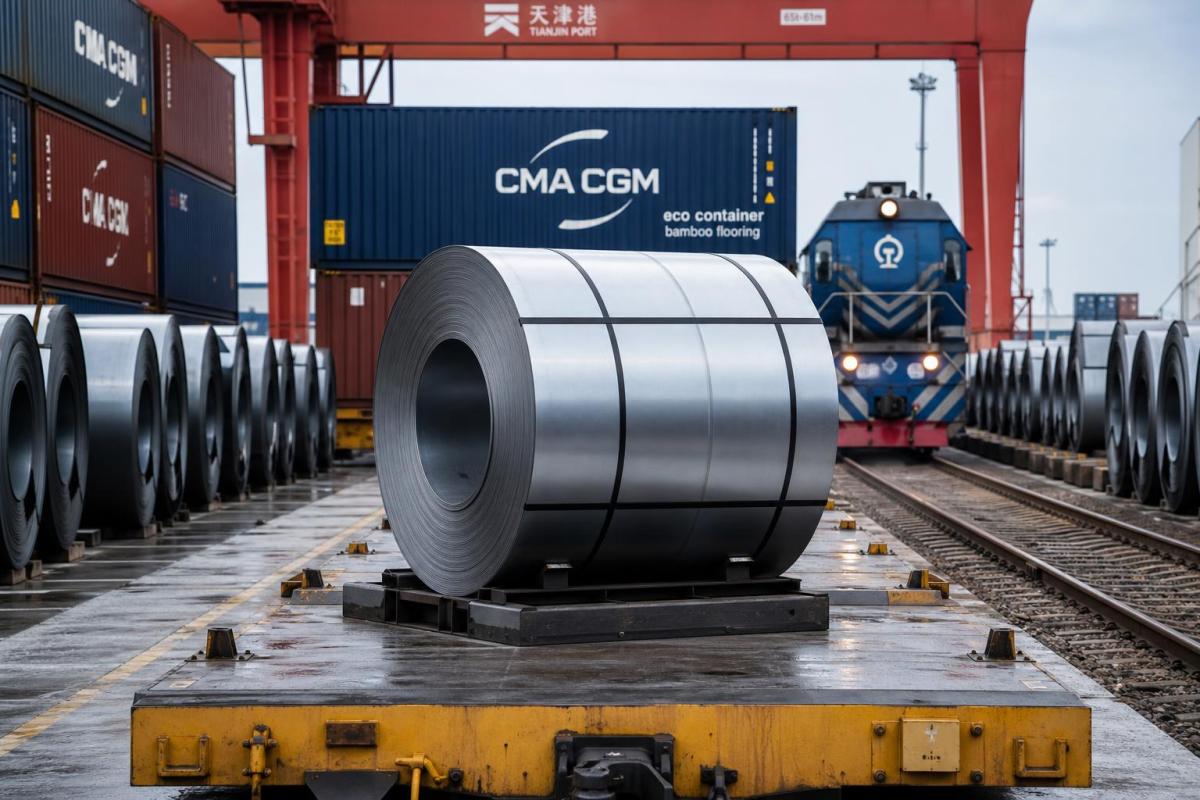
On July 11, 2026, the U.S. Department of Commerce announced the first annual administrative review of the antidumping duty order on hot-rolled steel coil (HRC) from China. The review covers export entries from April 1, 2025 to March 31, 2026 and matters because it can reset dumping margins for exporters and producers, with direct implications for future cash deposit rates, final import costs, customs timing, and procurement risk for importers, distributors, and downstream manufacturers serving the U.S. market.
What the announcement confirms
The confirmed facts are limited but commercially important. The U.S. Department of Commerce formally initiated the first annual administrative review on July 11, 2026 following an application from the domestic industry. The product involved is hot-rolled steel coil originating in China. The review period covers export batches from April 1, 2025 through March 31, 2026. According to the event summary, the review will recalculate the dumping margins applicable to exporters and producers, and the outcome may affect cash deposit rates for exports to the United States over the following 12 months as well as the ultimate cost of customs clearance.
The same confirmed information also indicates that U.S.-side importers, distributors, and downstream manufacturers may face higher compliance exposure in procurement, longer clearance cycles, and greater price uncertainty during the review process.
Why the pressure is spreading across the trade chain
For exporters and producers, margin review becomes an immediate compliance issue
From an industry perspective, the core impact on exporters and producers is not only pricing but review exposure. Because the proceeding will recalculate dumping margins, the practical focus shifts to whether shipment records, transaction documents, and product-related trade files can support a consistent compliance position. What deserves closer attention is that any change in calculated margins may feed directly into future cash deposit requirements and alter the landed cost structure of U.S.-bound business.
For U.S. importers and distributors, purchasing risk becomes harder to price
Analysis shows that importers and distributors are exposed at the point where trade compliance and commercial execution meet. If deposit rates and final clearance costs become less predictable, contract pricing, resale planning, and inventory timing may all become more difficult to manage. The issue is not simply a higher cost possibility; it is also the need to control document accuracy, entry filing consistency, and timing assumptions during customs processing.
For downstream manufacturers, delivery planning may become less stable
Observably, downstream manufacturers that rely on HRC as an input may feel the impact through procurement scheduling and material cost visibility. If clearance takes longer or pricing becomes more volatile, production planning and supplier coordination may require closer monitoring. In this context, the review functions as a trade-rule development that can affect delivery reliability even before any final recalculation is known.
For supply chain service providers, execution risk is moving upstream
Logistics, customs, and trade-support service providers may also face a more demanding operating environment. From an industry perspective, when an antidumping review is underway, the sensitivity of shipment records, declarations, and supporting trade documents increases. The practical consequence is that service providers may need tighter coordination with sellers, buyers, and brokers to reduce avoidable delays or mismatches during clearance.
What companies should watch now
Check shipment scope against the review period
Analysis shows that one immediate task is to identify whether relevant export batches fall within the April 1, 2025 to March 31, 2026 review window. Businesses involved in sales, purchasing, or import processing tied to that period should confirm internal records and transaction mapping early, because the review is linked to a defined entry period rather than to future shipments alone.
Review trade documentation for consistency
What deserves closer attention is the consistency of commercial and customs-facing documents. Companies directly involved in exports, imports, or distribution should review whether order files, shipment records, product descriptions, and clearance materials align across the transaction chain. The event summary does not provide detailed enforcement mechanics, so this should be understood as a precautionary compliance focus rather than a confirmed new filing requirement.
Reassess procurement and delivery assumptions
Observably, procurement teams and downstream users should revisit assumptions around landed cost, lead time, and supplier commitments. Because the review may affect deposit rates and final clearance cost over the next 12 months, businesses may need to build greater tolerance into delivery schedules and purchasing budgets. This is not yet a confirmed cost outcome, but it is a reasonable operational risk signal based on the announced review.
Track official wording and market execution signals
From an industry perspective, companies should continue monitoring how the review is described and implemented in official communications and in market practice. The current information confirms the initiation and the possible business effects, but it does not establish a final rate outcome or a full execution timeline. For that reason, legal, trade, procurement, and sales teams should treat this as a live regulatory development rather than a settled commercial condition.
How this should be read at this stage
Analysis shows that this development is best understood as an execution-stage trade remedy signal rather than as a completed rule outcome. The important change is that the review process has formally started and has introduced a nearer-term compliance and cost-control issue for parties exposed to Chinese HRC shipments into the United States. At the same time, it would be premature to treat the review as a confirmed final cost change, because the recalculated dumping margins and their practical market effects have not been established in the information provided.
Observably, the significance for the industry lies in how quickly a procedural trade action can move into procurement, customs, and delivery decisions. That is why continued attention to official follow-up language, clearance practice, and commercial response across the supply chain remains necessary.
A rule signal with near-term operating consequences
In practical terms, this announcement matters because it links a formal trade review to real operating questions in pricing, customs clearance, procurement control, and shipment planning. It is more appropriate to understand this as a rule development that has already entered the execution environment, while the final commercial effect still requires further observation. For companies tied to Chinese HRC flows into the U.S. market, the prudent reading is not that outcomes are settled, but that compliance review and delivery risk management now need closer attention.
Basis of this article and points for follow-up
This article is based on the user-provided news title, event date, and event summary. For developments of this type, source categories usually relevant to verification include official announcements, releases from regulatory authorities, customs or trade administration information, industry association updates, standard-setting or compliance-related documents, and reporting by authoritative media. A specific official source link was not provided in the input, so further verification remains necessary.
What still needs continued observation includes later official wording, implementation approach, changes in trade documentation expectations, procurement and tender practice, market feedback from affected participants, and how companies adjust execution during the review period and after any subsequent outcome.
Please give us a message
Tianjin Kaichuang Metal Material Co., Ltd
Add: No. 41, District 6, First Street, Huanghuadian Town, Wuqing District, Tianjin
Tel: + 86 137 9101 9833
E-mail: boss@kaichsteel.com