Steel Hub

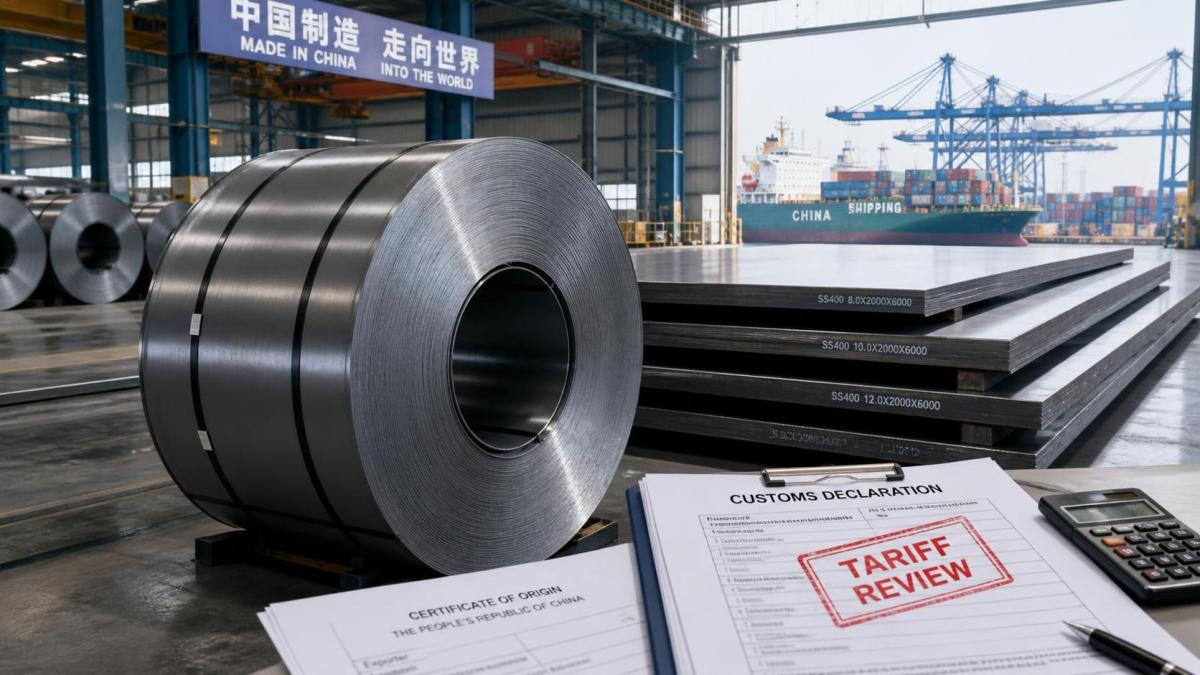
On August 8, 2026, the U.S. Department of Commerce announced the start of an anti-dumping duty order review covering hot-rolled steel strip from China under HS 7208.51. The review focuses on 2025 export data and pricing composition, making it immediately relevant for U.S. distributors, importers, and supply chain operators that must manage customs clearance costs, cash deposit obligations, and purchasing schedules over the next 12 months.
What the Commerce Department Has Formally Opened
According to the information provided, the U.S. Department of Commerce has initiated a review of the anti-dumping duty order on Chinese hot-rolled steel strip on August 8, 2026. The product identified in the notice is classified under HS 7208.51. The review covers 2025 export data and a verification of pricing composition.
The current duty range referenced in the input is 32.4% to 129.8%. The result of this review may lead to adjustments to those existing rates. The input also states that the process will directly affect customs clearance costs for distributors in the United States, importer cash deposit requirements, and procurement cycle planning for the coming 12 months. In addition, the outcome may influence compliance assessments related to Southeast Asia transshipment trade.
Where the Immediate Pressure May Appear
Imported steel distribution in the U.S.
From an industry perspective, U.S.-based distributors are among the first parties likely to feel the operational impact because customs clearance costs can change when a duty review is underway. What deserves closer attention is not only the headline rate range, but also how the review outcome may affect landed cost calculations and inventory turnover planning.
Importers managing deposits and entry filings
Analysis shows that importers need to watch the review closely because cash deposit requirements are specifically identified in the input as an affected area. This matters at the entry and financing stage of trade operations, where changes in duty expectations can alter margin assumptions, working capital needs, and shipment timing decisions.
Procurement and supply planning teams
Observably, companies arranging purchases over the next 12 months may need to reassess order cadence, contract timing, and supplier coordination. The practical issue is less about an immediate final outcome and more about how uncertainty around future rates can influence procurement calendars and delivery commitments.
Businesses using Southeast Asia trade routes
From an industry perspective, companies involved in Southeast Asia transshipment or route optimization should pay attention to the compliance dimension highlighted in the input. The review does not itself confirm any compliance conclusion, but it signals that route structure and supporting documentation may come under closer scrutiny in related trade assessments.
What Companies Should Track Now
Official wording and procedural updates
Companies should monitor how the review is described in subsequent official communications, especially if there are further clarifications on product scope, review methodology, or filing expectations. The current signal is procedural, but practical business exposure often depends on later details.
Exposure by product code and transaction structure
What deserves closer attention is whether internal trade records, customs declarations, and commercial documentation consistently align with HS 7208.51 and the underlying pricing structure referenced in the review. This is especially relevant for firms that rely on multiple entities or cross-border shipment arrangements.
Purchasing plans versus policy uncertainty
Analysis shows that procurement teams should distinguish between a review being opened and a rate change being finalized. That distinction matters for order timing, supplier negotiations, and customer commitments, because the current development introduces a live policy variable without yet establishing a final revised outcome.
Documentation and customer communication
Importers, distributors, and service providers should be prepared to review trade documents, pricing support materials, and transaction records tied to 2025 exports. At the same time, customer-facing teams may need to communicate more carefully around delivery schedules, cost assumptions, and quote validity where duty exposure could affect commercial terms.
Why This Matters Beyond the Headline
Observably, this development is more appropriate to understand as an active policy process rather than a settled market result. The confirmed fact is that a review has started; the commercial significance lies in the possibility of rate adjustments and in the immediate uncertainty this creates for import cost planning, compliance review, and purchasing decisions.
Analysis shows that the signal extends beyond one tariff line. The reference to Southeast Asia transshipment compliance suggests that some market participants may need to look not only at direct China-U.S. transactions, but also at how regional trade routes and supporting records will be evaluated going forward. That said, the input does not establish a final enforcement outcome, so the situation still requires continued observation.
How the Industry May Best Read This Stage
At this point, the review should be read as a near-term operational issue with possible longer-tail implications. In the short term, it affects customs cost assumptions, deposit management, and procurement scheduling. In the longer view, it may shape how companies assess supply chain compliance and route selection tied to Chinese hot-rolled steel strip. The most balanced conclusion is that this is not yet a final trade measure change, but it is already a material development for businesses exposed to the product category.
Basis for This Article and What Still Needs Verification
This article is based on the user-provided news title, event date, and event summary concerning the U.S. Department of Commerce review of anti-dumping duties on Chinese hot-rolled steel strip. For developments of this kind, relevant source types typically include official government notices, company disclosures, industry association updates, authoritative media reporting, and customs or standards-related documents.
A specific official source link was not provided in the input, so the underlying notice and any later procedural documents still need to be continuously verified. The main follow-up areas to watch are any official clarification on the review process, any change to the current duty range of 32.4% to 129.8%, and any further signals affecting Southeast Asia transshipment compliance assessment.
Please give us a message
Tianjin Kaichuang Metal Material Co., Ltd
Add: No. 41, District 6, First Street, Huanghuadian Town, Wuqing District, Tianjin
Tel: + 86 137 9101 9833
E-mail: boss@kaichsteel.com