Steel Hub

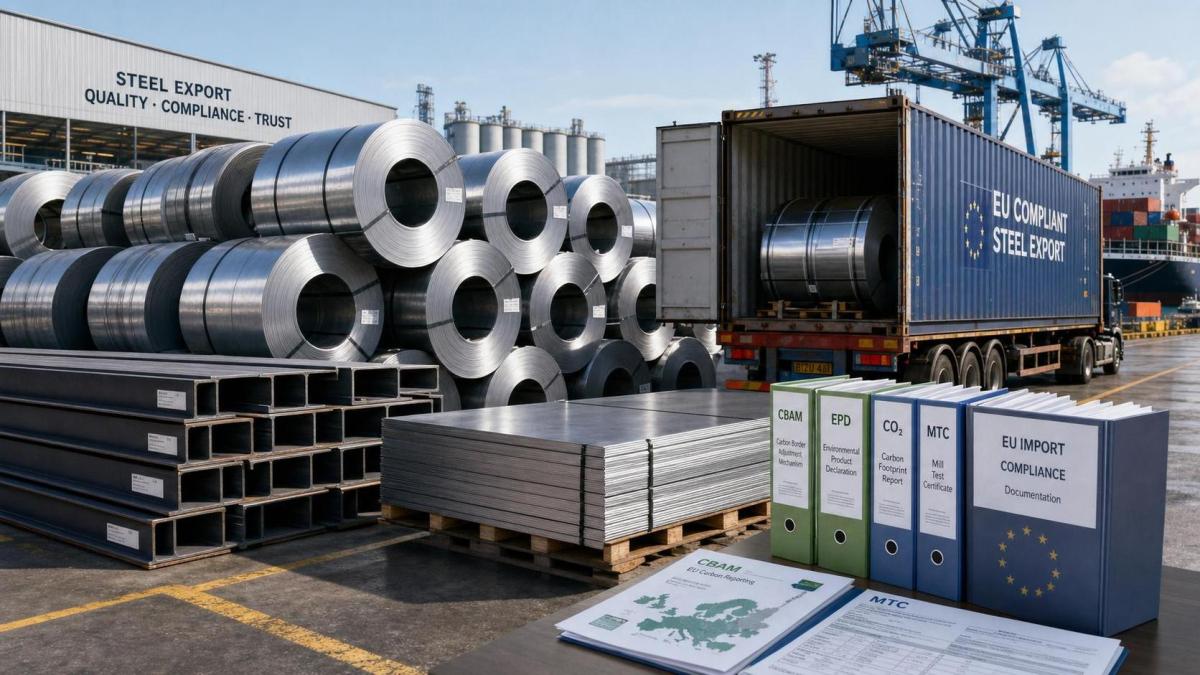
From July 1, 2026, the EU's CBAM transition reporting obligation is formally in effect for steel products, bringing a new compliance requirement to Chinese exporters shipping steel and structural sections into the European market. For companies dealing in products such as hot-rolled coils, H-beams, and galvanized sheets, the immediate issue is no longer only pricing or delivery, but also whether embedded carbon data can be reported quarterly online and verified by a third party in time for customs clearance and customer documentation.
What Has Taken Effect From July 1
The confirmed change is that, starting on July 1, 2026, the EU CBAM transition period has been fully launched for relevant steel exports. Chinese exporters selling steel products and sections to the EU are required to submit quarterly online declarations covering embedded carbon emissions. The reported data must also undergo third-party verification.
The products referenced in the event summary include hot-rolled coils, H-beams, and galvanized sheets. The reporting obligation directly affects export customs procedures, cost accounting, and the preparation of delivery documents for customers. According to the provided information, failure to complete compliant reporting may result in customs clearance delays or refusal of goods by the buyer.
Where The Immediate Pressure Falls In The Supply Chain
Exporters now face a documentation-driven delivery risk
From an industry perspective, direct trading companies are the first group affected because the new obligation is tied to quarterly reporting, customs handling, and buyer-facing paperwork. Their operational pressure is likely to center on whether shipment-related carbon data can be organized, submitted, and verified within the required timeline.
Manufacturers may feel the impact through cost and data preparation
Analysis shows that processing and manufacturing enterprises involved in EU-bound steel orders may be affected through embedded carbon data collection and cost calculation. Even where the exporter is the filing party, the practical burden may extend backward into production records, internal calculation methods, and coordination with verification arrangements.
Supply chain service providers will need tighter process alignment
Observably, logistics coordinators, customs service providers, and other supply chain support firms may be drawn into the compliance process because the event summary explicitly links the obligation to customs clearance and customer document preparation. What deserves closer attention is whether document flows, handoff timing, and verification readiness remain consistent across all parties involved in export execution.
EU buyers may increase scrutiny on acceptance conditions
For overseas purchasers, the reported risk of delayed clearance or refusal of goods means procurement teams may pay closer attention to document completeness before shipment or delivery acceptance. In practical terms, this can affect order confirmation, delivery scheduling, and supplier communication around compliance readiness.
Operational Priorities Companies Should Watch Now
Quarterly filing readiness needs to be treated as a routine task
Analysis shows that the reporting requirement should be understood as an ongoing operational obligation rather than a one-off filing matter. Companies exposed to EU steel exports need to pay close attention to whether internal reporting cycles, responsible teams, and submission materials are aligned with a quarterly schedule.
Third-party verification is now part of the delivery chain
What deserves closer attention is that verification is not presented as optional in the provided information. This means businesses should watch how verification work connects with shipment timing, export declaration preparation, and customer document packages, especially where multiple product categories or frequent shipments are involved.
Cost accounting and trade execution can no longer be separated
Observably, the event links carbon reporting directly with cost accounting. That makes it important for exporters and manufacturers to distinguish between commercial pricing discussions and the operational work required to prepare embedded carbon information, because weak coordination between the two may create avoidable friction during order fulfillment.
Customer communication may become a practical risk-control step
From an industry perspective, companies should also monitor how buyers in the EU handle acceptance requirements once reporting obligations are in force. The practical issue is not only whether a company can report, but whether it can present compliant supporting materials in a form that satisfies the purchaser's receiving and procurement process.
Why This Matters Beyond A Single Filing Requirement
Analysis shows that this development is more than a narrow administrative update for steel exporters. It signals that carbon-related reporting is now entering day-to-day trade execution for affected products. That does not by itself confirm broader market outcomes, but it does indicate that compliance capability is becoming part of normal export readiness for EU-bound steel business.
It is more appropriate to understand this as both an immediate operational change and a longer-term signal. The immediate change is clear: exporters must report quarterly and undergo third-party verification. The longer-term signal, based on the provided facts, is that customs, costing, and delivery documentation are becoming more closely tied to carbon-related reporting obligations.
How The Market Should Read This Development
At this stage, the most balanced reading is that the new obligation has already created a concrete compliance threshold for Chinese steel exports to the EU, especially in categories such as hot-rolled coils, H-beams, and galvanized sheets. The confirmed business impact lies in reporting, verification, customs handling, cost calculation, and delivery documentation. Broader competitive or pricing consequences still require continued observation rather than firm conclusions.
For industry participants, this is best understood as a live operational requirement with wider strategic implications still unfolding. The near-term priority is execution discipline; the longer-term significance will depend on how reporting obligations interact with trade practice over time.
Basis Of This Article And What Still Needs Verification
This article is based on the user-provided news title, event date, and event summary. The confirmed inputs are limited to the formal start of the EU CBAM transition reporting obligation for relevant steel exports on July 1, 2026, the quarterly online reporting requirement for embedded carbon emissions, the need for third-party verification, and the stated impact on customs clearance, cost accounting, and customer delivery documents.
For this type of industry update, source categories typically relevant to later verification may include official announcements, company notices, industry association information, authoritative media coverage, and standard-setting or regulatory documents. No specific official source link was provided in the input, so the exact source document still needs continued verification. Follow-up attention should remain on any official wording updates, implementation details, and operational guidance affecting reporting, verification, customs procedures, and buyer acceptance practices.
Please give us a message
Tianjin Kaichuang Metal Material Co., Ltd
Add: No. 41, District 6, First Street, Huanghuadian Town, Wuqing District, Tianjin
Tel: + 86 137 9101 9833
E-mail: boss@kaichsteel.com