Steel Hub

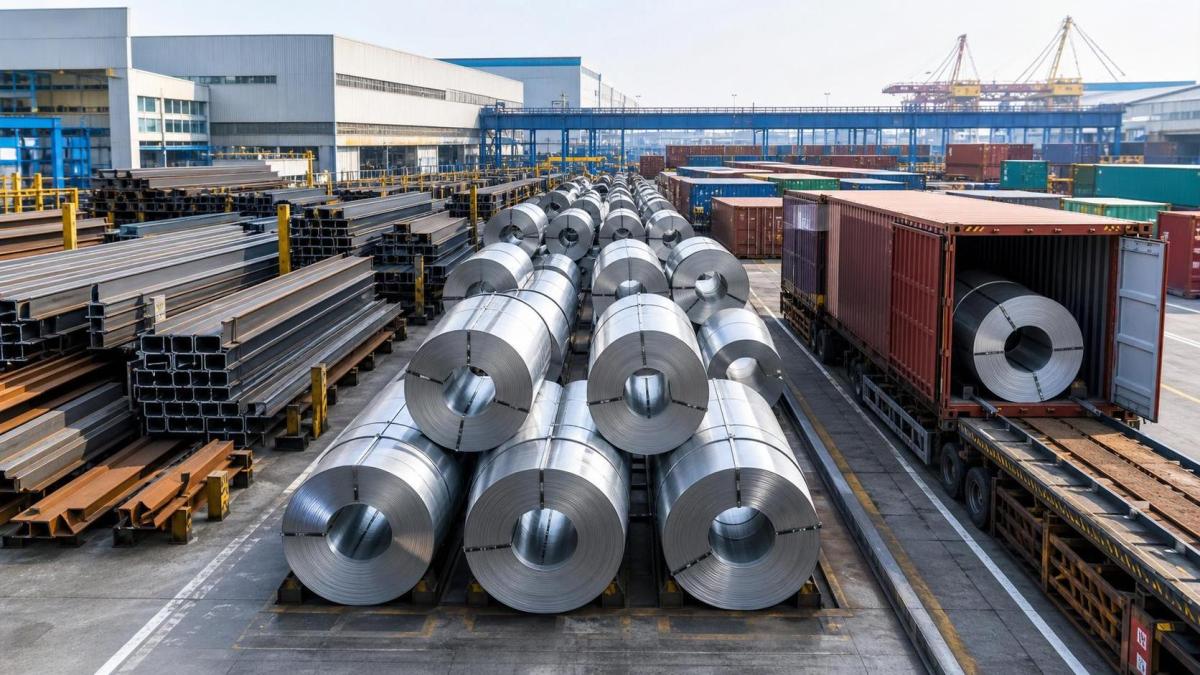
On July 7, 2026, the U.S. Department of Commerce initiated the first expedited sunset review of the antidumping duty order on hot-rolled coil (HRC) from China. For companies involved in HRC exports, customs handling, distribution, and inventory planning, this matters because the review will determine whether the current antidumping duty order, with rates of up to 122.3%, will remain in place. With the result expected in January 2027, the development is already relevant to commercial planning tied to the next 18 months.
What Has Been Confirmed So Far
The confirmed facts are limited but commercially significant. According to the information provided, the U.S. Department of Commerce issued a notice on July 7, 2026, formally launching the first expedited sunset review covering the 2021-2025 duty period for Chinese-origin HRC. The review concerns the existing antidumping duty order and will decide whether the current measures, including duties as high as 122.3%, should continue. The outcome is expected in January 2027.
No final decision has been announced at this stage. What is known is that the review process has started, the existing order remains the core issue under examination, and the result will affect export eligibility, customs compliance, and distributor inventory strategy for Chinese HRC in the U.S. market over the coming 18 months.
Why Different Parts of the Supply Chain Are Watching Closely
Export-facing trading businesses are dealing with market-access uncertainty
From an industry perspective, direct trading companies are among the first to feel the impact because the review goes to the question of whether existing antidumping treatment will continue. Their exposure is concentrated in quotation validity, shipment planning, customer commitments, and the practical feasibility of serving the U.S. market during the review window and after the expected decision date.
What deserves closer attention is whether commercial arrangements assume continuity or change before any formal result is published. For these businesses, the key issue is not only price competitiveness but whether U.S.-bound transactions remain workable under the current duty framework.
Customs and supply-chain service providers face a documentation and timing focus
Observably, customs brokers, logistics coordinators, and other supply-chain service providers may be affected through compliance workflow rather than through direct product ownership. The review has clear implications for customs handling, which means timing, document accuracy, and alignment between product origin declarations and transaction records become more important.
The practical concern here is operational: service providers need to track the review timetable and any official wording that could influence how clients prepare entries, shipments, or supporting files linked to Chinese-origin HRC.
Distributors and stockholders need to reassess inventory exposure
For distributors and inventory holders, the issue is tied to stocking strategy. The input information specifically notes that the result may directly influence distributor inventory decisions. Analysis shows this is less about immediate market outcome and more about how businesses position stock before the January 2027 result becomes known.
The main areas to watch are inventory turnover assumptions, order timing, and the extent to which current stock strategy depends on future U.S. market access for Chinese HRC remaining constrained or changing.
Operational Priorities for Companies Over the Review Period
Track official language, not just headlines
Analysis shows companies should focus on subsequent official wording and procedural updates rather than treating the initial notice as a final policy outcome. In trade remedy matters, the gap between the launch of a review and the eventual decision is commercially important. Internal teams should separate confirmed facts from assumptions when discussing sales, sourcing, or customer expectations.
Review product scope, paperwork, and transaction files
What deserves closer attention is the quality of internal documentation tied to Chinese-origin HRC business. Because customs compliance is explicitly identified as an impact area, companies involved in exporting, importing support, or distribution should verify whether product records, origin-related documents, and deal files are complete and consistent with current requirements.
Align delivery commitments with the review timeline
Observably, the expected January 2027 result creates a planning marker for contracts, shipment windows, and customer communication. Businesses should distinguish between transactions that will move under the current framework and those whose economics or feasibility may depend on the review outcome. This is especially relevant where lead times extend across the review period.
Prepare inventory and customer communication scenarios
From an industry perspective, the review should also be treated as a scenario-planning exercise. Distributors and sellers may need parallel assumptions for inventory positioning and customer communication, particularly where decisions depend on whether the existing antidumping order continues unchanged.
How This Development Is Best Understood at This Stage
Analysis shows this development is better understood as an active policy signal rather than a completed market outcome. The confirmed event is the launch of the expedited sunset review, not the continuation or removal of the existing order. That distinction matters because commercial decisions taken too early on the basis of assumed results could create avoidable compliance or inventory risk.
It is more appropriate to understand this as a medium-term trade-policy event that now deserves ongoing monitoring. The January 2027 timing gives the market a reference point, but the current stage still calls for disciplined observation rather than definitive conclusions about future U.S. access for Chinese HRC.
What the Industry Can Take From It Now
At this point, the significance of the case lies in its effect on planning rather than in any newly confirmed change to duty treatment. The review directly touches export eligibility, customs compliance, and inventory strategy, which means the relevant audience extends beyond exporters to intermediaries and downstream market participants handling HRC-related trade flows.
A neutral reading is that this is neither a short-lived headline nor a finished policy result. It is more appropriate to treat it as a developing trade measure with practical consequences during the review period and with a decision point expected in January 2027.
Basis of This Article and What Still Needs Verification
This article is based on the user-provided news title, event date, and event summary. The analysis above is limited to that provided information and does not rely on additional unverified details.
For this type of industry update, relevant source categories usually include official government notices, company disclosures, industry association releases, authoritative media reporting, and standard-setting or regulatory documents. A specific official source link was not provided in the input, so the exact notice text still requires continued verification against the relevant official release. The main follow-up point to watch is the review process through the expected January 2027 outcome and any official language that may affect export eligibility, customs compliance, or inventory planning.
Please give us a message
Tianjin Kaichuang Metal Material Co., Ltd
Add: No. 41, District 6, First Street, Huanghuadian Town, Wuqing District, Tianjin
Tel: + 86 137 9101 9833
E-mail: boss@kaichsteel.com