Steel Hub

Why does a steel inspection checklist matter so much?
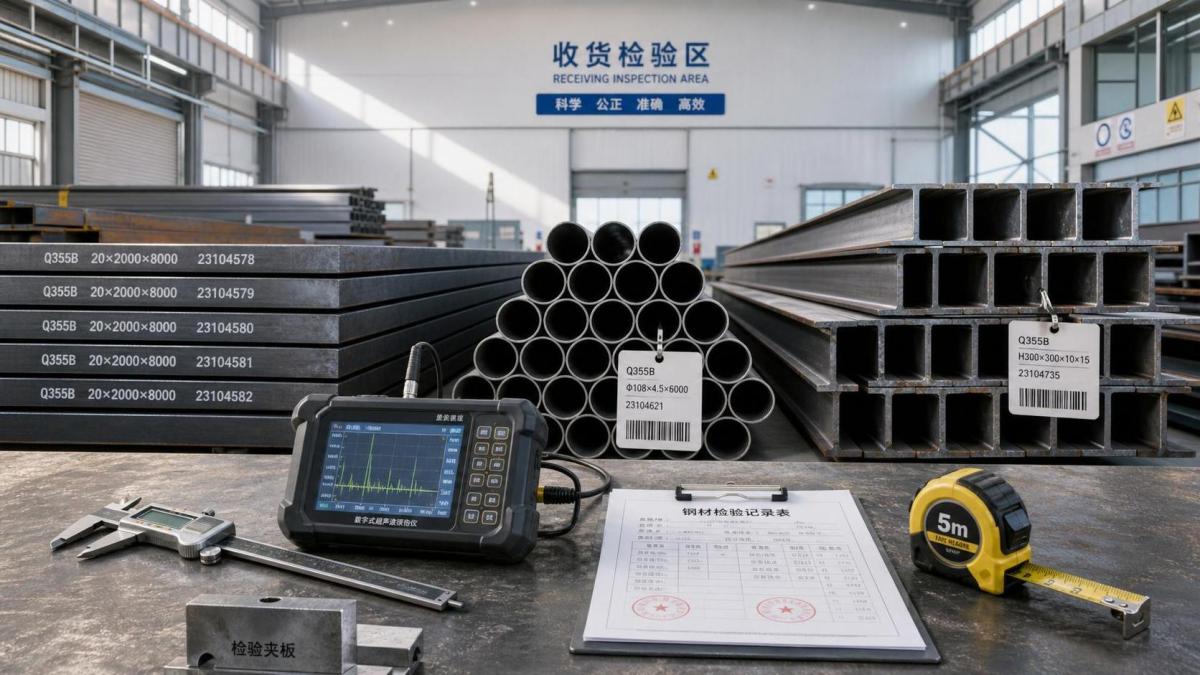
Steel moves through construction, transport, energy, appliances, and heavy equipment, so small defects rarely stay small for long.
A missed crack, wrong thickness, or poor weld can trigger rework, rejected shipments, shutdowns, or a safety incident later in service.
That is why steel inspection is not only a mill-side activity.
It also matters during receiving, storage, fabrication, and pre-installation checks.
In practical terms, a useful checklist helps confirm three things early.
- The product matches the order, drawing, and specification.
- Visible and hidden defects are screened before downstream use.
- Records exist for traceability when quality disputes appear later.
This matters even more because steel supply affects cost and delivery across wider manufacturing and infrastructure chains.
If one batch fails inspection, the impact often spreads beyond one line item.
A strong steel inspection routine reduces that risk by catching issues before cutting, welding, coating, or assembly begins.
What should be checked first when steel arrives on site or at the warehouse?
The first check is usually not the surface finish.
It starts with identity, quantity, and traceability.
If heat number, grade, size, or standard does not match paperwork, later inspection becomes less reliable.
A practical receiving sequence often looks like this.
- Verify purchase order, mill test certificate, tags, and heat numbers.
- Count bundles, pieces, or coils against delivery documents.
- Confirm grade, section type, dimensions, and length range.
- Check for transport damage, water exposure, and packaging failure.
- Segregate nonconforming material before it mixes with accepted stock.
This early step is especially important for plates, pipes, structural sections, and wire rod from multiple heats.
Once mixed, traceability becomes much harder to recover.
More common than many expect is the wrong specification arriving with acceptable appearance.
Good-looking steel can still be the wrong steel.
Which defects show up most often during steel inspection?
Most recurring problems fall into four groups: surface defects, dimensional issues, weld-related defects, and material inconsistencies.
The exact checklist changes by product form, but the risk logic stays similar.
Surface defects that should never be ignored
Rust is common, but not all rust carries the same risk.
Light surface oxidation may be manageable, while pitting can reduce section performance and coating life.
Other frequent findings include scale loss, laps, seams, gouges, dents, scratches, and edge cracks.
In steel inspection, cracks deserve the fastest escalation because they can grow under load or during forming.
Dimensional deviations that affect fit-up
Thickness below tolerance is often more serious than a cosmetic defect.
Width, length, straightness, flatness, camber, out-of-roundness, and wall thickness variation also matter.
For pipe and tube, ovality and end condition can disrupt welding and installation.
For sections, twist and sweep often create hidden fit-up delays.
Weld and joining risk points
If the steel arrives as fabricated members or welded pipe, inspect bead profile, undercut, porosity, incomplete fusion, and spatter.
The visual check should also review distortion, misalignment, and heat-affected discoloration.
When needed, visual findings should trigger NDT rather than closing the issue too quickly.
How do you judge whether a defect is cosmetic, repairable, or a rejection risk?
This is where steel inspection becomes a decision tool, not only a checklist exercise.
A defect should be judged against function, standard, location, severity, and process stage.
A small scratch on non-critical stock is not equal to a small crack near a welded joint.
The table below helps separate fast decisions from issues that need escalation.
In real projects, acceptance should not rely on visual opinion alone.
Use drawings, material standards, contract tolerances, and service conditions together.
That prevents inconsistent calls between batches and inspectors.
Where do steel inspection mistakes usually happen?
The biggest failures are often procedural, not technical.
Teams may know what a defect looks like, yet still miss the real risk point.
Several patterns appear again and again.
- Inspection starts after cutting or fabrication, when claims are harder to prove.
- Only visible surfaces are checked, while edges, ends, and contact areas are ignored.
- Sampling is too light for mixed lots or high-risk applications.
- Records note “acceptable” without measurements, photos, or standard references.
- Storage conditions create new corrosion after receipt, then confusion follows.
Another frequent issue is treating all steel products the same.
Plate, rebar, structural sections, wire rod, and tube do not fail in the same way.
For example, camber matters more for long products, while wall variation matters more for pipe.
A steel inspection checklist works best when product-specific checks are added to a shared core process.
How can the checklist be made more practical for daily use?
The most effective checklists are short enough to use and detailed enough to prevent missed decisions.
In daily work, a layered structure usually performs better than one long generic form.
A workable structure often includes
- Receiving checks for documents, identity, quantity, and transport condition.
- Visual steel inspection points for rust, cracks, dents, laminations, and weld defects.
- Dimensional checks with clear tools, tolerances, and sampling frequency.
- Disposition rules for accept, hold, rework, or reject decisions.
- Traceability records with heat number, photos, date, and location.
If the material serves bridges, pressure systems, rail, marine, or energy equipment, add tighter escalation rules.
Those applications carry higher consequences for hidden defects and specification errors.
It also helps to define when to stop and call for additional testing.
Visual inspection alone cannot confirm chemistry, internal flaws, or all mechanical properties.
When doubts remain, hardness checks, UT, MT, PT, or third-party review may be the safer path.
What is the smartest next step after defects are found?
Do not rush straight to rejection.
The better move is to classify, contain, and verify.
Start by separating affected material and protecting traceability.
Then document size, frequency, location, and batch details with photos and measurements.
After that, compare the finding against the agreed standard and intended application.
Some issues can be cleaned, repaired, or downgraded for non-critical use.
Others require full hold, supplier review, or replacement.
A disciplined steel inspection process does more than find defects.
It creates a repeatable basis for decisions on safety, compliance, cost, and delivery impact.
If the current checklist still feels too broad, refine it by product type, service risk, and claim history.
That usually reveals which inspection points deserve closer control, faster escalation, or tighter acceptance criteria.
A smaller, smarter checklist is often more valuable than a longer one nobody follows consistently.
Please give us a message
Tianjin Kaichuang Metal Material Co., Ltd
Add: No. 41, District 6, First Street, Huanghuadian Town, Wuqing District, Tianjin
Tel: + 86 137 9101 9833
E-mail: boss@kaichsteel.com