Steel Hub

On June 24, 2026, China formally restarted its steel export licensing regime, with the first round of quotas tilted toward lower-carbon steel products. The change is not only a trade administration update; it also introduces a clearer compliance threshold for exporters, overseas buyers, certification providers, and procurement teams that rely on steel shipments tied to customs clearance, market access, and long-term sourcing eligibility, especially where CBAM transition reporting and green infrastructure bidding requirements are already shaping purchasing decisions.
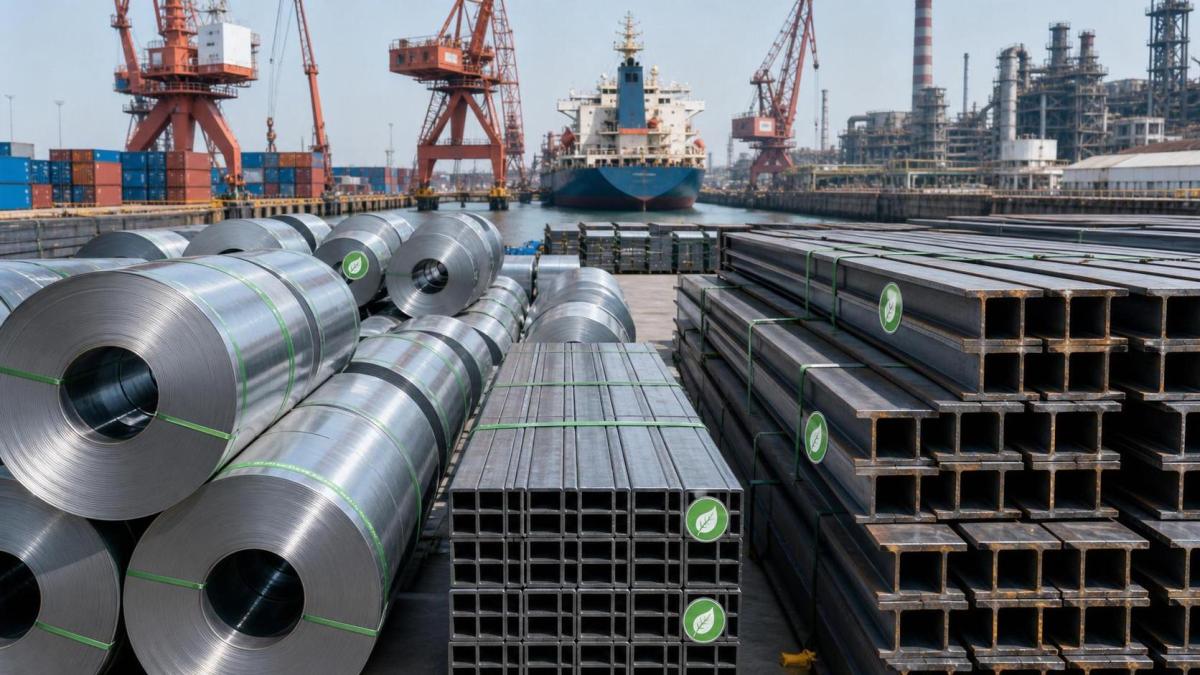
What the restart formally changes
The confirmed change is the resumption of China’s steel export license management system on June 24, 2026. According to the provided event summary, this step is positioned as a key measure at the opening of the 15th Five-Year Plan period and in the first compliance year after steel was brought into the national carbon market.
The first batch of export quotas is explicitly prioritized for steel suppliers that meet GB/T 39755-2021, hold third-party low-carbon certification such as EPD or PCF, and can show that the carbon intensity of their exported products is more than 15% below the industry benchmark value.
The same summary also confirms that the policy directly affects overseas importer eligibility, customs clearance efficiency, and long-term procurement compliance. It is described as particularly relevant to CBAM transition-period reporting in the European Union and to bidding qualification for green infrastructure projects in Southeast Asia.
Where pressure is likely to appear across the chain
Export sellers now face a tighter documentation threshold
From an industry perspective, exporters are the first group exposed to the practical effect of the restart because quota access is no longer a pure shipment issue. It is tied to whether products align with a recognized green product evaluation standard, whether low-carbon claims are supported by third-party certification, and whether carbon-intensity performance can be demonstrated against the stated benchmark condition.
That means the impact is likely to concentrate in export application preparation, product classification, technical file readiness, and coordination between commercial, compliance, and production teams. What deserves closer attention is whether supporting materials are consistent across license filings, customer-facing documents, and delivery records.
Overseas importers may need to reassess supplier eligibility
For overseas buyers, the immediate issue is not only supply continuity but also whether existing Chinese suppliers remain aligned with the new quota preference logic. If access to export quotas increasingly favors suppliers with green and low-carbon credentials, importers may need to recheck approved vendor lists, purchasing terms, and document requirements tied to customs handling and internal compliance review.
Observably, this matters more where importers must support CBAM-related reporting or participate in projects that screen suppliers through environmental qualification criteria. In those cases, supplier selection may become more dependent on whether export-side eligibility and carbon-related documentation can be evidenced in an orderly way.
Certification and testing functions move closer to the trade process
The policy signal also matters for certification-related firms and testing service providers because third-party low-carbon certification is named in the quota preference conditions. Analysis shows that certification is no longer peripheral marketing support in this context; it becomes more closely connected to export readiness, customer access, and transaction timing.
The business effect is likely to appear in document review cycles, consistency of carbon-related claims, and the linkage between technical evidence and trade paperwork. Companies involved in verification, declarations, and product documentation may therefore see a greater need for alignment across compliance, testing, and export teams.
Project procurement and distribution channels may need earlier screening
Distributors, project procurement teams, and supply-chain service providers may also feel the change earlier than expected where delivery schedules depend on licensed exports. This is particularly relevant for transactions connected to green infrastructure bidding or long-cycle procurement programs, where qualification review often begins before shipment.
What deserves closer attention is whether bid documents, procurement specifications, and supplier onboarding checks begin to reference low-carbon certification status, green product compliance, or carbon-intensity evidence more explicitly. The policy itself does not confirm those downstream adjustments, but it clearly creates a reason for market participants to watch for them.
What companies should review now
Check whether current product claims are evidentiary, not just descriptive
Analysis shows that exporters and suppliers should pay close attention to whether existing product files can actually support claims linked to GB/T 39755-2021, EPD, PCF, and carbon-intensity performance. Where commercial materials use green or low-carbon language without corresponding third-party support or traceable technical records, the gap could become more visible under a quota allocation regime that explicitly favors documented performance.
Track official wording and execution criteria closely
It is more appropriate to understand this development as a confirmed rule change with execution details that still deserve close monitoring. Companies should therefore watch for further official wording on how quota preference is applied in practice, how supporting materials are reviewed, and whether any product-specific or procedural clarifications emerge in follow-up guidance.
Prepare trade and technical files for cross-border use
For companies supplying into CBAM-related reporting chains or green infrastructure tenders, document preparation should be reviewed not only for export processing but also for downstream use by customers. Observably, technical documents, certification records, carbon-related statements, and shipment-linked materials may need to align more tightly so that procurement, customs, and compliance functions are not working from inconsistent files.
Revisit lead times and supplier qualification assumptions
What deserves closer attention is the possibility that procurement calendars and delivery planning may need adjustment if supplier access to early quotas depends on low-carbon qualification status. The provided information does not establish any universal delay outcome, but it does indicate that license access, customs efficiency, and long-term procurement compliance are now more directly connected than before.
Why this looks like both a landed rule and an execution signal
Analysis shows that this is best read in two layers. First, the restart of the licensing regime on June 24, 2026 is a confirmed policy action, not a market rumor. Second, the preference given to steel suppliers meeting green standard, certification, and carbon-intensity conditions sends a broader execution signal: trade administration and carbon-related product qualification are moving closer together in actual export access.
At the same time, it would be premature to treat every downstream market effect as already settled. Observably, the industry still needs to watch how official interpretation, buyer requirements, tender documentation, and day-to-day customs practice respond to the new quota logic.
How the market may need to interpret this stage
At this stage, the development is more appropriately understood as a concrete compliance shift with immediate relevance for export eligibility and procurement screening, rather than as a fully matured rule set with all practical questions resolved. The clear message is that lower-carbon steel credentials now matter more directly in export administration, while the exact pace of downstream adjustment still requires observation.
A rational reading for the market is therefore to treat the June 24 restart as both an implemented change and a signal to strengthen evidence-based compliance across licensing, certification, sourcing, and delivery preparation.
Basis of this article and what still needs verification
This article is generated on the basis of the user-provided news title, event date, and event summary. For events of this type, market participants would typically continue checking official notices, releases from regulatory authorities, customs or trade administration information, industry association updates, standard-related documents, and reporting by authoritative media.
No specific official source link was provided in the input, so the exact official source still needs to be verified on an ongoing basis. Observably, the areas that merit further follow-up include implementing details, certification review criteria, changes in tender documents, market feedback, and how companies execute the new requirements in actual export and procurement practice.
Please give us a message
Tianjin Kaichuang Metal Material Co., Ltd
Add: No. 41, District 6, First Street, Huanghuadian Town, Wuqing District, Tianjin
Tel: + 86 137 9101 9833
E-mail: boss@kaichsteel.com