Steel Hub

Why does one steel plate quote differ so much from another?
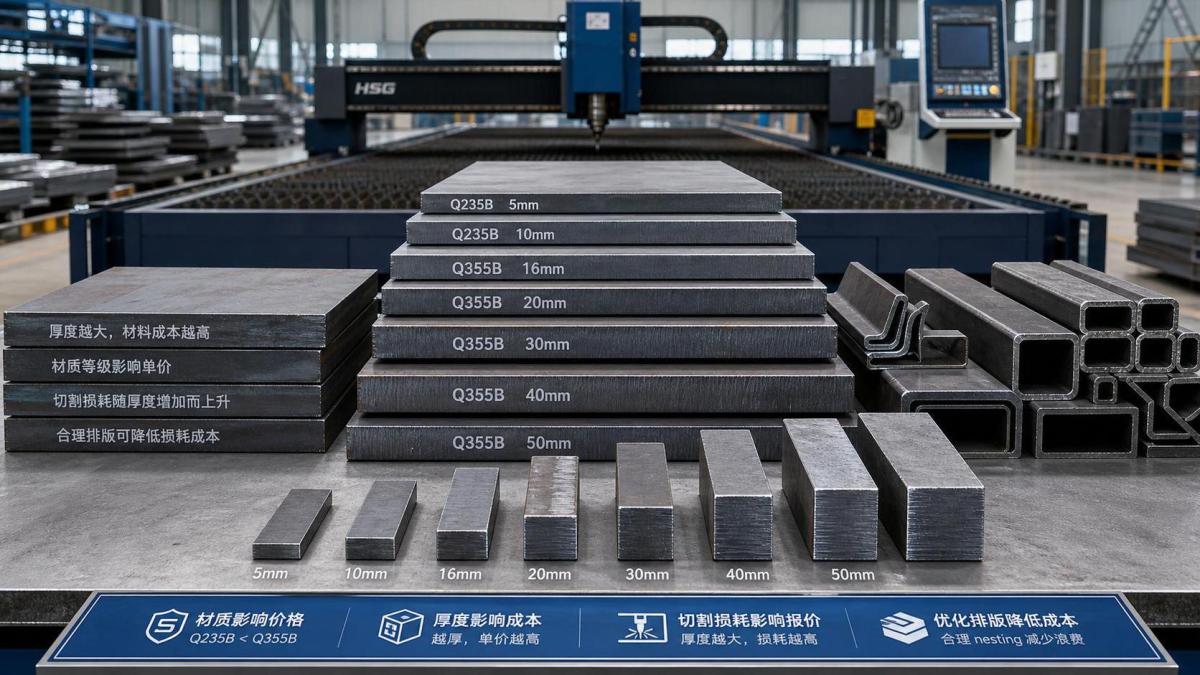
Steel plate pricing rarely moves on one factor alone. Market conditions matter, but the final quote is usually shaped by thickness, grade, dimensions, and processing loss.
That is why two seemingly similar orders can land at very different numbers. A thicker plate uses more material, a higher grade may require tighter chemistry control, and complex cutting raises waste.
In the broader steel supply chain, plate is only one category among section steel, pipe, tube, and long products. Even so, steel plate often carries higher cost sensitivity because size variation is wide.
For cost control, it helps to read a steel plate quote as a structure rather than a single price. The useful question is not only “How much?” but also “What exactly is driving it?”
Is thickness really the biggest cost driver in steel plate purchasing?
In many cases, yes. Thickness directly changes weight, and steel plate is commonly priced by weight before processing charges are added.
A move from 10 mm to 20 mm is not a small adjustment. It doubles the section thickness, increases tonnage, and can change cutting method, handling needs, and lead time.
Thicker steel plate can also reduce mill availability. Not every service center stocks heavy plate in the same width and grade, so supply becomes narrower.
In practical buying, thickness affects cost through four layers:
- Base steel weight per sheet or part.
- Processing speed during flame, plasma, or laser cutting.
- Handling, loading, and transport requirements.
- Inventory difficulty for uncommon thick sizes.
A common mistake is focusing only on price per ton. For fabricated parts, price per usable part is often the better comparison, especially when thicker plate reduces machining or welding later.
How much does material grade change the final steel plate cost?
Grade can shift cost more than expected, especially when the specification moves beyond standard structural steel into pressure vessel, shipbuilding, wear-resistant, or high-strength categories.
The reason is not only raw material value. Higher grades often need stricter chemical composition, better rolling control, added testing, and more complete certification.
This matters in industries such as energy, rail transit, equipment manufacturing, and shipbuilding, where steel plate performance affects safety, fatigue life, and downstream processing stability.
More importantly, grade should match application. Over-specifying grade can inflate cost without adding value. Under-specifying can create rejection risk, rework, and delivery delays.
A well-managed steel plate order usually starts with function, not habit. If the application allows equivalent grades, comparing alternatives can create both cost and scheduling advantages.
Where does cutting waste come from, and why is it often underestimated?
Cutting waste is one of the least visible parts of steel plate cost. It does not always appear as a separate line, but it is built into the total material consumption.
Waste appears when part geometry does not fit the mother plate efficiently. Narrow strips, irregular shapes, many holes, and mixed part sizes all reduce yield.
Kerf width also matters. Cutting method affects material loss, edge quality, and processing speed. For some thickness ranges, a cheaper cutting method can still produce a higher total cost.
More common causes of waste include:
- Part nesting that ignores standard plate size.
- Ordering many low-volume custom shapes.
- Late design changes after plate reservation.
- Very tight edge or grain direction constraints.
- Separating similar parts across multiple thicknesses.
In actual sourcing, waste can be reduced before ordering begins. Adjusting part dimensions slightly, grouping orders, or aligning with stock plate sizes often improves yield without changing function.
What should be compared before accepting a steel plate quote?
A low quote is not always the lowest landed cost. It helps to compare steel plate offers on a like-for-like basis, especially when processing and compliance are involved.
The cleanest approach is to break the quote into material, processing, waste assumption, certification, delivery, and payment terms. Hidden differences usually appear there.
A practical comparison checklist
- Confirm whether the steel plate price is based on theoretical or actual weight.
- Check grade, standard, and test document requirements line by line.
- Ask which plate size the nesting plan assumes.
- Review whether scrap retention or return is included.
- Verify edge condition, flatness tolerance, and surface quality expectations.
- Compare lead time by thickness and grade, not just by total order.
This is especially important in steel supply chains serving construction, heavy equipment, appliances, marine work, and energy projects. A small mismatch upstream often creates larger delays downstream.
How can steel plate buyers reduce cost without increasing supply risk?
The safest savings usually come from specification discipline, better nesting, and earlier coordination. Cutting price alone is less reliable than improving the order structure.
One useful move is to standardize thickness where possible. Reducing unnecessary thickness variation can simplify stock matching and improve cutting efficiency.
Another is to review grade selection against actual duty. Some jobs genuinely need premium steel plate, but many only need stable mechanical performance and good processability.
It also helps to share drawings early when cut parts are involved. Early nesting feedback may identify dimensions that create excessive scrap or awkward remnant pieces.
Actions that usually improve cost control
- Consolidate demand into fewer plate sizes and release batches.
- Allow equivalent steel plate grades when standards permit.
- Match part layout to common stock dimensions.
- Separate critical tolerances from non-critical features.
- Track yield rate, scrap rate, and rework rate by order.
Taken together, these steps improve more than price. They often stabilize delivery, reduce remake risk, and make future steel plate budgeting more predictable.
What is the smartest next step when a steel plate budget feels too high?
Start by separating market price from controllable cost. Thickness, grade, and cutting waste are often more adjustable than the monthly steel index.
Then review three things together: required performance, standard plate availability, and nesting efficiency. Looking at only one of them can lead to false savings.
When the steel plate application is clear, the better decision is usually obvious. Keep the grade as strict as needed, keep dimensions as efficient as possible, and keep waste visible in every quote review.
A disciplined comparison sheet for each steel plate order can help. Record thickness options, approved grade substitutes, expected yield, certification needs, and delivery impact before placing the order.
That approach turns pricing discussions into sourcing decisions grounded in data, not guesswork. In a supply chain where upstream steel choices affect downstream cost and timing, that clarity is valuable.
Please give us a message
Tianjin Kaichuang Metal Material Co., Ltd
Add: No. 41, District 6, First Street, Huanghuadian Town, Wuqing District, Tianjin
Tel: + 86 137 9101 9833
E-mail: boss@kaichsteel.com