Steel Hub

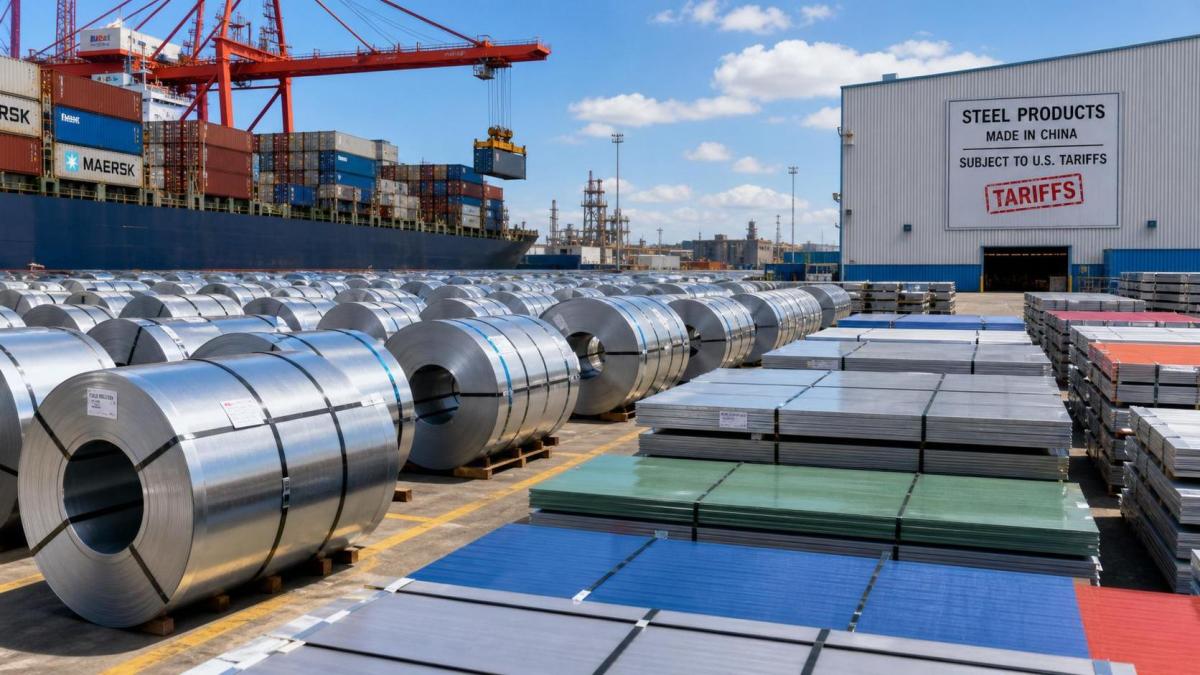
On June 15, 2026, Turkey moved from investigation to enforcement by issuing final anti-dumping duties on cold-rolled steel sheet, galvanized steel sheet, and pre-painted steel sheet from China, with rates ranging from 22.37% to 32.40% and taking effect immediately for a five-year period. For exporters, traders, processors, and buyers linked to these cold-rolled steel products, the development deserves close attention because, once combined with base tariffs, it sharply weakens the price competitiveness of standard Chinese material in the Turkish market and directly affects trade flows that have long carried meaningful export volume.
What the final ruling confirms
The confirmed facts are clear. Turkey’s Ministry of Trade announced the final anti-dumping decision on June 15, 2026. The measure applies to Chinese cold-rolled steel sheet, galvanized steel sheet, and pre-painted steel sheet. The duty rates were set at 22.37% to 32.40%, and the measure is effective immediately.
The decision is described as a five-year measure. Based on the information provided, when these anti-dumping duties are added to base tariffs, ordinary Chinese cold-rolled steel products largely lose price competitiveness in the Turkish market.
The Turkish market has also held a visible position in China’s export structure for these products. According to the provided information, Turkey has long accounted for 6% of China’s cold-rolled exports and 4.45% of its pre-painted exports, while galvanized exports to Turkey rank third within the Middle East. In total, annual export volume of more than one million tons is expected to face direct disruption.
Where the pressure may emerge across the chain
Export-facing steel trade is the first to feel the impact
From an industry perspective, companies directly exporting these products to Turkey are the most immediately exposed. The pressure is likely to appear in quotation viability, order conversion, and contract execution, because the additional duty burden changes the landed cost structure at once. What deserves closer attention is whether existing business tied to standard cold-rolled categories can still clear the market on a price basis.
Processors and manufacturers may need to reassess destination planning
For processing and manufacturing businesses producing cold-rolled, galvanized, or pre-painted products for overseas sales, the issue is not only market access but also order routing. Analysis shows that a market that has long absorbed a notable share of exports may become significantly harder to serve under current pricing conditions. This may affect production scheduling, product mix allocation, and customer delivery planning for firms with exposure to Turkey.
Channel and supply chain service providers face execution risk
Distributors, logistics participants, and other supply chain service providers may be affected through slower turnover, shipment uncertainty, or changes in transaction timing. The main point to watch is not only whether new orders proceed, but also how documentation, customs treatment, and delivery commitments are handled once the final measure is already in force.
Buyers and downstream users may review sourcing options
For purchasers and end-use businesses in the Turkish market, the development may influence supplier choice and procurement rhythm. Observably, if standard Chinese products lose much of their price advantage after duties and base tariffs are combined, procurement decisions may shift from price comparison alone to broader considerations around availability, timing, and alternative sourcing arrangements.
What companies should watch now
Follow the exact scope of implementation
Analysis shows that the practical effect of a trade remedy measure often depends on how the covered product scope is applied in real transactions. Companies involved in the affected categories should pay close attention to how the final ruling is described and implemented in official wording, especially where shipment classification and product coverage influence execution.
Separate policy language from transaction reality
What deserves closer attention is the distinction between a formal ruling and its business-level impact. The policy signal is already clear because the final decision has taken effect immediately, but the transaction-level consequences may differ by product line, customer relationship, and order stage. Firms should therefore review which business is exposed now, rather than treating all orders as equally affected.
Recheck delivery, documents, and customer communication
For exporters, traders, and service providers, near-term attention should focus on shipment timing, contract performance, and document readiness. Customer communication is also important, particularly where quotes, landed cost expectations, or delivery plans were based on prior assumptions that no longer hold after the final duty announcement.
Review exposure in key product and market segments
Because the measure covers cold-rolled, galvanized, and pre-painted sheet and affects a market that has represented a meaningful share of China’s exports, businesses should identify where their risk is concentrated by product and destination. Observably, the immediate issue is not broad management theory but whether specific Turkey-linked volumes, accounts, and supply arrangements can still proceed under the new duty structure.
How this development is best understood
This section is an editorial observation rather than a statement of fact. It is more appropriate to understand this development as both an immediate trade constraint and a longer-horizon policy signal. The immediate part is already visible: a final decision is in force, and the pricing position of standard Chinese cold-rolled steel products in Turkey is described as having been largely undermined once duties are combined with base tariffs.
At the same time, it should also be read as a signal that access to this market is no longer a short-term pricing issue alone. For the industry, the reason to keep watching is that the affected products cover several linked segments of cold-rolled steel trade, and the market involved has historically carried substantial export volume. That makes the issue more than a temporary headline, even though the full downstream adjustment still needs observation.
Why the market response matters more than the headline alone
In summary, the confirmed development is straightforward: Turkey has imposed final anti-dumping duties of 22.37% to 32.40% on Chinese cold-rolled, galvanized, and pre-painted steel sheet, effective immediately for five years. The broader industry meaning lies in the fact that this is not just a policy notice; it directly affects a market tied to more than one million tons of annual export volume according to the provided information.
From a neutral industry reading, this is better understood as a confirmed short-term trade barrier with possible longer-term implications for market allocation and business execution. The most reasonable current approach is to treat it neither as a passing disruption nor as a basis for sweeping conclusions, but as a material change that requires continued verification of market response and operational impact.
Basis of this article and what still needs verification
This article is generated based on the user-provided news title, event date, and event summary. The analysis relies only on the supplied information regarding Turkey’s final anti-dumping duties on Chinese cold-rolled steel sheet, galvanized steel sheet, and pre-painted steel sheet.
For this type of industry development, source categories commonly relevant include official government notices, company disclosures, industry association updates, authoritative media reporting, and standard-setting or trade-related documents. However, a specific official source link was not provided in the input, so continued verification remains necessary.
Further follow-up should focus on subsequent official wording, any clarifications on product scope or implementation, and how the measure translates into actual order, delivery, and sourcing changes across the affected trade chain.
Please give us a message
Tianjin Kaichuang Metal Material Co., Ltd
Add: No. 41, District 6, First Street, Huanghuadian Town, Wuqing District, Tianjin
Tel: + 86 137 9101 9833
E-mail: boss@kaichsteel.com