Steel Hub

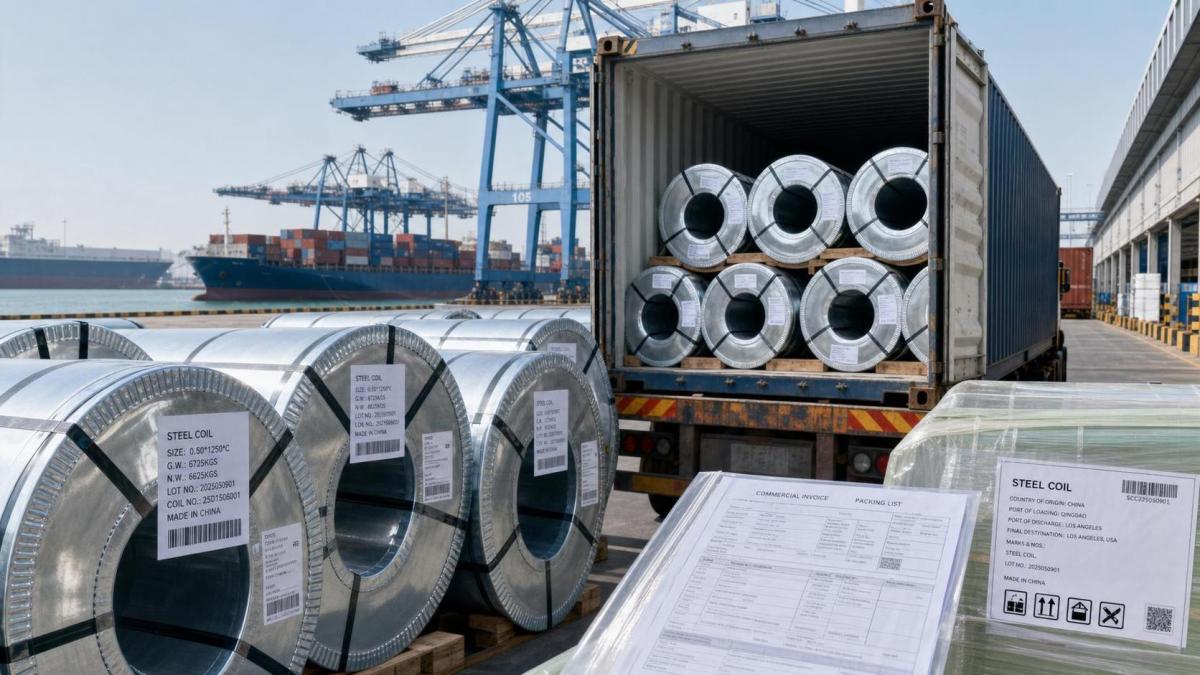
On July 5, 2026, the U.S. Department of Commerce announced the start of an annual administrative review of the antidumping duty order covering galvanized steel coils from China. The review applies to export shipments made between April 1, 2025 and March 31, 2026, and it matters because the outcome can affect duty rate calculations, import clearance costs, and compliance exposure for both sellers and buyers. For companies involved in direct exports, procurement, customs handling, and regional trading arrangements, the development is less about a headline event and more about how origin claims, transaction records, and shipment traceability may now face closer scrutiny.
What the announcement confirms
The confirmed facts are limited but commercially significant. The U.S. Department of Commerce announced on July 5, 2026 that, following an application from the domestic industry, it formally initiated an annual administrative review of the antidumping duty order on galvanized steel coils originating in China.
The review covers export batches shipped during the period from April 1, 2025 to March 31, 2026. According to the information provided, this review will directly affect exporters' duty rate determination, customs clearance costs, and the import compliance risk borne by buyers.
The provided event summary also makes clear that one of the more sensitive areas involves actual country-of-origin recognition and document traceability within transshipment trade chains linked to Southeast Asia.
Where pressure may build across the trade chain
Export-facing transactions may face tighter rate and record scrutiny
From an industry perspective, exporters and trading companies connected to the covered product are likely to feel the most immediate pressure because the review directly relates to duty rate determination. The practical impact may appear in contract pricing, customs documentation consistency, shipment history review, and the ability to explain product flow during the covered review period.
What deserves closer attention is whether internal export records, commercial invoices, shipping documents, and origin-related files are consistent enough to support review-stage examination. The issue is not only tax exposure but also whether records can withstand a document-based compliance check.
Importers and buyers may need to reassess clearance and sourcing risk
Buyers, importers, and procurement teams may be affected because clearance cost assumptions can change when an antidumping review is under way. Analysis shows that the immediate concern for these parties is not only landed cost, but also whether supplier documentation is sufficient to support import compliance, especially when sourcing routes involve multiple intermediaries.
In operational terms, this may influence supplier qualification checks, contract clauses on trade compliance, and the level of evidence buyers request before shipment. Where procurement decisions rely on route flexibility or indirect sourcing structures, the risk assessment may need to become more document-driven.
Transshipment-linked service providers may see higher origin verification demands
Supply chain service providers, including parties involved in routing, customs coordination, and trade document handling, may face higher expectations around traceability. Observably, the reference to Southeast Asia transshipment chains puts attention on how actual origin is identified and how complete the supporting document trail remains across multiple handling points.
For these participants, the relevant business impact may center on document retention, handoff accuracy, and the ability to reconstruct the path of goods if questioned. This is especially relevant where origin statements, shipment records, and commercial documents are prepared by different entities across the chain.
Operational issues companies should watch now
Check whether origin support files are complete and consistent
Analysis shows that companies connected to the covered exports should pay close attention to whether origin-related records can be matched across sales, logistics, and customs files. The event summary specifically highlights actual country-of-origin recognition and document traceability, which means weak file linkage could become a practical risk point.
Track official wording and any emerging execution approach
It is more appropriate to understand this as an active procedural step rather than a final commercial outcome. Because the provided information does not include detailed implementation results, companies should continue monitoring how the review is described in official communications and whether any execution language begins to shape expectations for documentation, timing, or compliance focus.
Review exposure in indirect trade and routed supply arrangements
Where shipments move through regional trading hubs or multi-party supply structures, companies should examine whether documentation clearly supports the commercial and physical path of the goods. This is particularly relevant for businesses using routed transactions, third-country handling, or layered distributor arrangements connected to galvanized steel coil exports.
Revisit procurement timing, delivery terms, and compliance allocation
For procurement teams and counterparties, the issue is not simply price. Observably, the possibility of higher clearance complexity or compliance checks can affect delivery planning, buffer inventory assumptions, and the allocation of documentary responsibility between seller, buyer, and service providers. Since no final review outcome is provided, the focus at this stage should remain on preparedness rather than assumed cost results.
Why this matters beyond the initial notice
From an industry perspective, this development is best read as a concrete enforcement signal tied to an existing trade remedy framework, not merely a routine notice with no operational effect. The confirmed facts already indicate direct implications for duty rate determination, customs costs, and importer compliance risk.
At the same time, this is still a rule-development moment that requires continued observation. Analysis shows that the market should avoid treating the initiation itself as a confirmed end result. What matters next is how documentation expectations, origin review intensity, and transaction-level scrutiny are reflected in actual execution and market responses.
How the market may need to frame this development
A balanced reading is that the review has already become relevant for business planning because it affects how exporters, importers, and service providers manage records, sourcing routes, and shipment compliance. However, it would be premature to treat the event as a settled commercial outcome beyond the confirmed initiation and review scope.
It is more appropriate to understand this development as a live compliance and trade-management signal: real enough to require immediate attention to files, origin support, and contract execution, but still dependent on subsequent procedural progress and market implementation.
Basis of this article and what still needs verification
This article is generated on the basis of the user-provided news title, event date, and event summary. The summary identifies the start of the U.S. Department of Commerce administrative review, the covered shipment period, and the stated areas of impact, including duty rate determination, customs costs, buyer compliance risk, and origin traceability concerns in Southeast Asia-linked transshipment chains.
For developments of this type, relevant source categories typically include official government notices, releases from trade or customs authorities, information issued by regulatory bodies, industry association updates, standard-setting documents where applicable, and reporting by authoritative media. A specific official source link was not provided in the input, so that part still requires ongoing verification.
Further observation should focus on any later official detail, compliance interpretation, documentation expectations, procurement file changes, market feedback, and how affected companies adjust their execution practices during the review process.
Please give us a message
Tianjin Kaichuang Metal Material Co., Ltd
Add: No. 41, District 6, First Street, Huanghuadian Town, Wuqing District, Tianjin
Tel: + 86 137 9101 9833
E-mail: boss@kaichsteel.com