Steel Hub

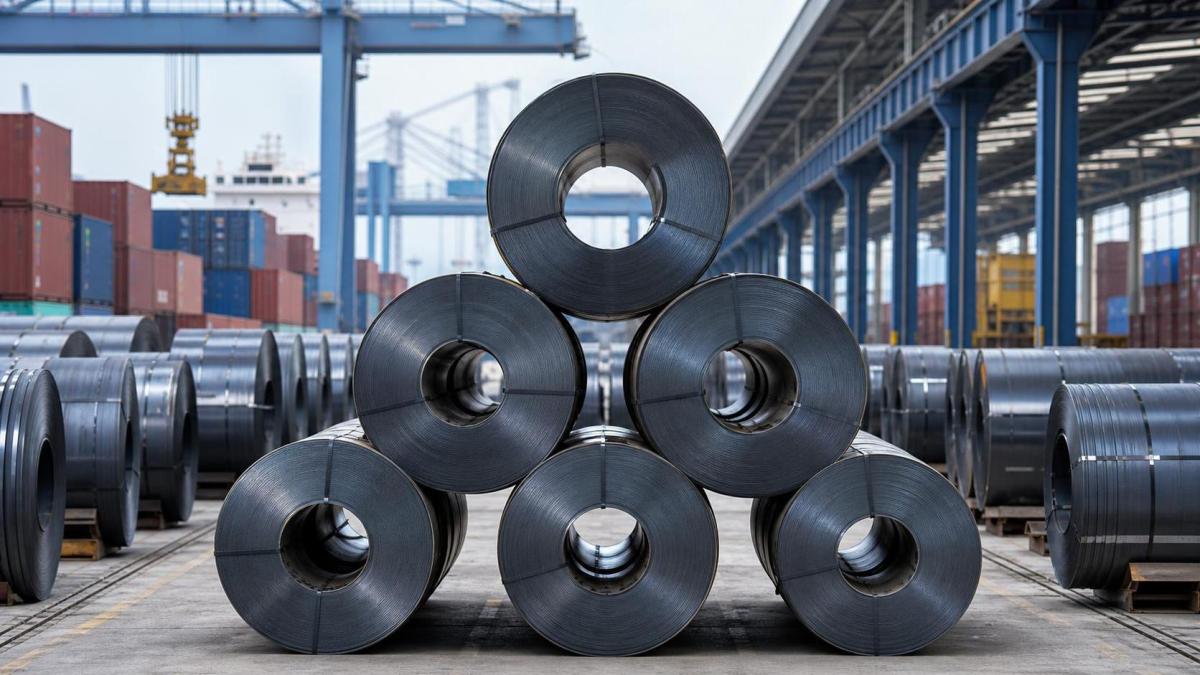
On July 19, 2026, the U.S. Department of Commerce initiated an expedited sunset review of the anti-dumping duty order covering hot-rolled coil from China. For companies tied to HRC trade into the U.S. market, this is not just a procedural update: it reopens questions around tariff continuity, landed cost assumptions, compliance planning, and supply alternatives ahead of the order’s scheduled July 2027 expiry point.
What the Commerce Department Has Officially Started
The confirmed development is that the U.S. Department of Commerce formally announced the first expedited sunset review of the anti-dumping duty order on Chinese hot-rolled coil on July 19, 2026. The review concerns the 128.5% anti-dumping rate established in 2021. Its purpose is to determine whether the order will remain in place after its current expiry timeline in July 2027.
The information provided also makes clear which market participants are immediately concerned: Chinese suppliers exporting HRC to the United States, overseas distributors handling this trade flow, and North American end buyers whose sourcing plans may depend on whether the order is extended or allowed to expire.
Where the Pressure May Be Felt Across the Supply Chain
Export-facing steel suppliers are back to a compliance-first posture
From an industry perspective, Chinese suppliers selling HRC toward the U.S. market may be affected because the review directly relates to whether the current anti-dumping framework continues beyond July 2027. The practical pressure point is not only price competitiveness, but also the need to reassess compliance pathways, shipment planning, and how future U.S.-bound business is structured.
Distributors may need to rework cost and inventory assumptions
Overseas distributors connected to this trade are exposed because the review affects the visibility of future duty treatment. Analysis shows that the most immediate concern is cost modeling: distribution businesses may need to revisit inventory timing, customer quotations, and supplier mix if tariff continuity remains uncertain during planning cycles.
North American buyers face a sourcing risk question, not just a pricing question
For end buyers in North America, the issue extends beyond headline duty levels. What deserves closer attention is how the review may influence procurement flexibility, alternative sourcing arrangements, and contract assumptions for future delivery periods. Buyers relying on HRC inputs may need to test whether existing supply plans remain workable under different review outcomes.
What Companies Should Track From Here
Watch official wording and procedural developments closely
Companies involved in HRC trade should focus on subsequent official statements and procedural updates tied to the review. The current fact is that the review has started; the commercial meaning will depend on how the process develops and what signals emerge regarding continuation of the order after July 2027.
Separate policy headlines from executable business decisions
Analysis shows that launching a review is not the same as reaching a final outcome. Businesses should avoid treating the initiation itself as a settled market result. Internal planning should distinguish between confirmed policy steps and decisions that would affect actual procurement, pricing, and contract execution.
Recheck documentation, transaction structure, and customer communication
For exporters and intermediaries, this is an appropriate point to review document readiness, supplier qualification records, transaction flows, and communication with downstream customers. The reason is straightforward: when a trade remedy order enters a review stage, weak documentation or unclear delivery assumptions can become more exposed in customer negotiations and compliance screening.
Prepare alternative supply and delivery scenarios early
North American buyers and distributors may benefit from scenario planning around substitute supply channels, revised lead-time assumptions, and cost contingencies. Observably, the review creates a need to test procurement resilience before any final decision is known, rather than after a new outcome forces rushed adjustments.
Why This Reads as a Continuing Signal, Not a Final Market Outcome
This development is better understood as an active policy signal than as a completed trade shift. The confirmed fact is the start of an expedited sunset review; the unresolved issue is whether the anti-dumping order on Chinese HRC will continue beyond July 2027. Analysis shows that the market relevance lies in the reopening of uncertainty around trade conditions, especially for businesses with medium-term supply commitments.
Observably, this matters because it affects planning horizons now, even though the final status of the order has not yet been determined. For industry participants, the review stage is the point at which compliance, sourcing, and customer-facing assumptions should be stress-tested.
How the Industry Should Read the Current Stage
The industry significance of this update lies less in immediate rule change and more in the renewed need for disciplined planning. It is more appropriate to understand this as a continuing trade-policy development with direct implications for exporters, distributors, and North American buyers, rather than as a final determination on market access. The key near-term task is to monitor the review while aligning sourcing, cost, and compliance decisions with a still-open policy outcome.
Basis of This Article and What Still Needs Verification
This article is based on the user-provided news title, event date, and event summary concerning the U.S. Department of Commerce’s July 19, 2026 initiation of an expedited sunset review of the anti-dumping duty order on Chinese hot-rolled coil. For this type of development, relevant source categories usually include official government notices, company disclosures, trade association updates, authoritative media coverage, and other formal policy materials.
No specific official source link was provided in the input, so the exact underlying notice should still be verified on an ongoing basis. Follow-up attention should remain on subsequent official wording, procedural developments in the review, and any confirmed decision regarding whether the order continues after July 2027.
Please give us a message
Tianjin Kaichuang Metal Material Co., Ltd
Add: No. 41, District 6, First Street, Huanghuadian Town, Wuqing District, Tianjin
Tel: + 86 137 9101 9833
E-mail: boss@kaichsteel.com