Steel Hub

On July 27, 2026, the European Commission formally put Phase 3 of the Carbon Border Adjustment Mechanism (CBAM) into effect for steel products, extending coverage to all imported steel materials and sections. For companies trading into the EU market, this is not simply a regulatory update: it directly affects customs cost, delivery timing, and document readiness, especially for Chinese exporters, importers, compliance teams, and supply chain operators handling hot-rolled coil, H-sections, seamless pipe, and other steel categories.
What Has Entered into Force
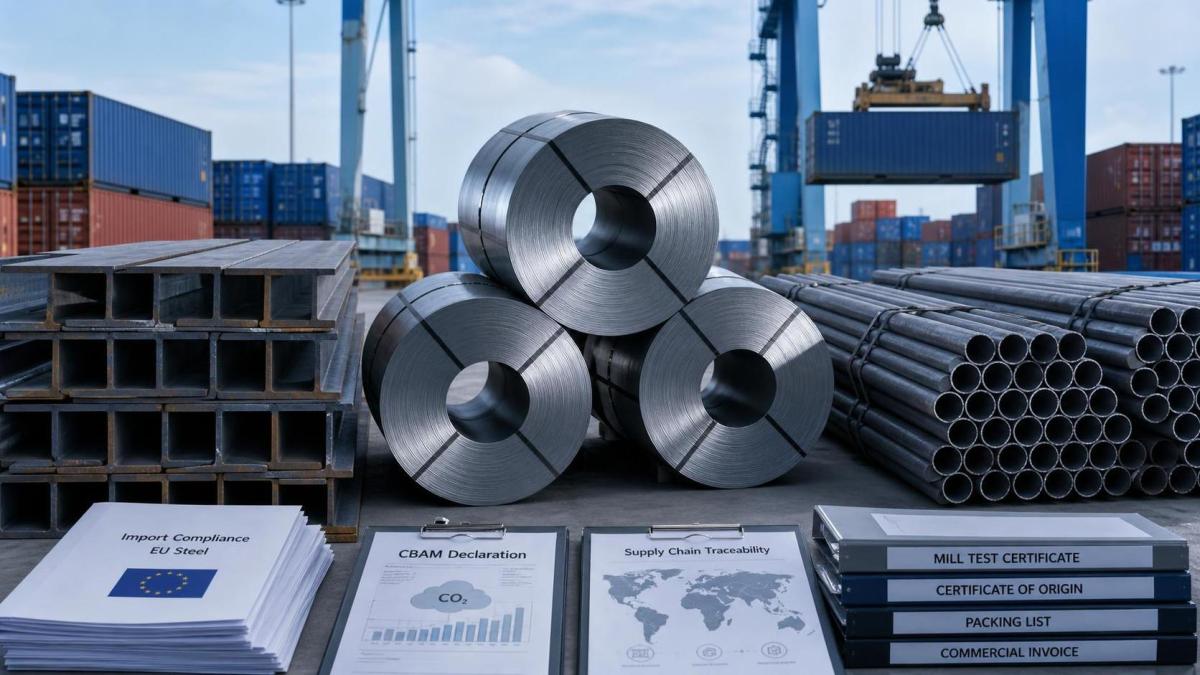
According to the provided information, from July 27, 2026, Phase 3 of the EU CBAM fully covers all imported steel products and sections, including products such as hot-rolled coil, H-beams, and seamless pipe. Importers are required to declare the actual embedded carbon emissions of the imported goods and purchase CBAM certificates on that basis.
The same information also indicates that the mechanism has a direct impact on customs clearance cost, delivery cycles, and compliance document preparation for Chinese export enterprises. Suppliers that have not completed MRV certification for monitoring, reporting, and verification face the risk of customs delays or refusal of acceptance.
Where the Pressure Appears Across the Trade Chain
Export-side steel suppliers face a documentation threshold
From an industry perspective, steel exporters shipping to the EU may be affected first through document and compliance preparation. The immediate pressure point is not only the product itself, but whether the supplier can support the importer's declaration of actual embedded emissions. What deserves closer attention is the growing importance of MRV-related readiness in supporting shipment acceptance and customs processing.
EU importers carry the reporting and certificate burden
Analysis shows that importers are positioned at the center of execution because they must declare embedded emissions and purchase CBAM certificates. This means their operational exposure may show up in filing accuracy, timing coordination, and cost handling. For importers, supplier data quality and submission readiness become practical business issues rather than background compliance matters.
Logistics and customs handling may see timing risk
Observably, supply chain service providers and customs-facing teams may be affected through changes in clearance workflows and document review. If MRV certification is incomplete, the reported risk is delay or refusal, which places more weight on pre-shipment coordination, file completeness, and timing management across the shipment process.
Buyers and downstream users may need closer supplier coordination
For procurement teams and downstream industrial buyers sourcing steel into the EU, the issue may appear through delivery predictability and supplier qualification. The main concern is whether upstream partners can provide the compliance support needed for import execution. In practice, procurement decisions may need to pay more attention to document capability alongside product and scheduling requirements.
What Companies Should Watch in Practical Terms
Whether supplier MRV readiness can support shipment execution
What deserves closer attention is whether suppliers have completed MRV certification and can provide the information needed for embedded emissions declaration. Based on the provided information, this is directly tied to the risk of delayed clearance or refusal of acceptance.
How compliance work affects delivery schedules
Analysis shows that the mechanism should be watched not only as a cost item but also as a scheduling issue. Where compliance documents are incomplete or coordination starts too late, delivery cycles may be affected. Companies involved in contract execution, dispatch planning, and customer communication should therefore monitor timing dependencies more closely.
Which steel categories now require tighter handling
The provided information specifically mentions categories including hot-rolled coil, H-beams, and seamless pipe, while also stating that all imported steel products and sections are covered in this phase. For businesses with multiple steel lines, the practical focus is to identify which EU-bound products now require the same level of emissions reporting and certificate preparation.
How customer communication and internal workflows need to adjust
From an operational perspective, teams may need to align sales, compliance, logistics, and customer-facing communication more tightly. The distinction to watch is between the policy requirement itself and the company's ability to translate that requirement into complete documents, realistic lead times, and clear shipment expectations.
Why This Looks Like More Than a Short-Term Procedural Change
Observably, this development is better understood as an implemented compliance requirement rather than a market rumor or an early discussion signal. At the same time, analysis shows it should not be treated as a fully settled business outcome for every company, because the practical effect still depends on execution quality, document readiness, and coordination between exporter and importer.
It is more appropriate to understand this as both an immediate operational change and a longer-term signal for steel trade into the EU. The confirmed facts already point to direct effects on cost, timing, and paperwork. What remains worth watching is how consistently market participants can meet the reporting and MRV-related requirements in day-to-day transactions.
How This Update Should Be Read Now
For the steel trade, the significance of this update lies in its direct connection to import execution rather than in abstract policy language. Based on the confirmed information, the current message for the industry is clear: carbon reporting, certificate purchasing, and MRV readiness now sit closer to the center of customs clearance and delivery management for EU-bound steel shipments.
A neutral reading is that this is already an active operating condition for affected trade flows, while its full business impact still requires continued observation at the transaction level. For companies involved in exporting, importing, procurement, and logistics, the more practical approach is to read it as a compliance-driven shift with immediate workflow consequences.
Basis of This Article and What Still Needs Verification
This article is based on the user-provided news title, event date, and event summary concerning the European Commission's formal implementation of Phase 3 of the CBAM for steel products on July 27, 2026.
For this type of development, commonly relevant source categories may include official announcements, company disclosures, industry association updates, authoritative media coverage, and standards-related documents. A specific official source link was not provided in the input, so the exact source document still requires ongoing verification.
Further attention should remain on any subsequent official wording, implementation clarifications, or market-side execution updates related to steel product scope, emissions declaration practice, certificate handling, and MRV-linked customs processing.
Please give us a message
Tianjin Kaichuang Metal Material Co., Ltd
Add: No. 41, District 6, First Street, Huanghuadian Town, Wuqing District, Tianjin
Tel: + 86 137 9101 9833
E-mail: boss@kaichsteel.com