Steel Hub

On August 10, 2026, the EU formally moved CBAM into its third phase for imported steel sections, bringing hot-rolled, cold-formed, and structural profiles such as H-beams, angles, and channels into a stricter declaration regime. For importers, exporters, verification partners, and supply-chain teams handling these products, the immediate issue is no longer policy awareness alone but whether certified embedded carbon emissions data can be submitted through the CBAM portal in time for customs clearance.
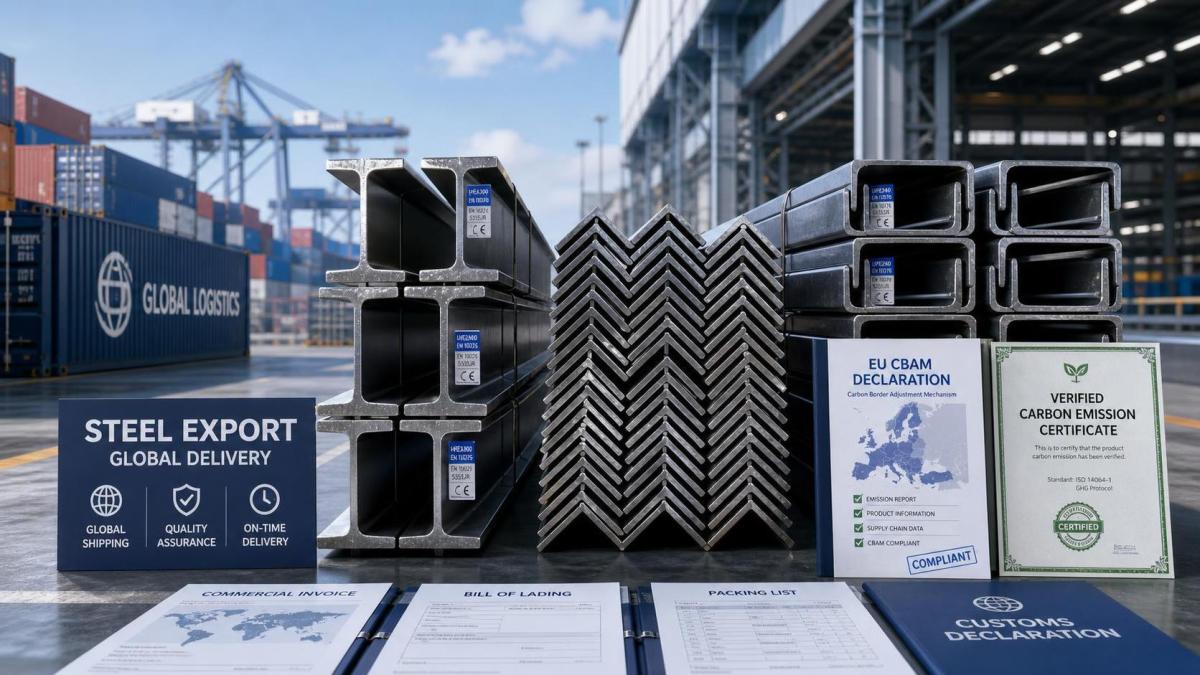
What Has Taken Effect in This Stage
From August 10, 2026, the third phase of the EU CBAM applies to all imported hot-rolled, cold-formed, and structural steel sections, including products such as H-beams, angle steel, and channel steel. Importers are required to submit certified embedded carbon emissions data, expressed as tCO2e/ton, through the CBAM portal. Where that data is not submitted, the goods may be refused entry at customs. The requirement directly affects compliance preparation, cooperation with third-party verification parties, and customs clearance timing for Chinese steel section exporters. Orders that are not supported by carbon data declarations may face delivery delays or additional cost pass-through.
Where the Pressure Now Appears in Daily Trade
Export shipments face a new documentation gate
For exporters of steel sections, the rule change matters because customs access now depends on whether the shipment can be matched with certified embedded carbon emissions data. The impact is concentrated in export documentation, order preparation, and pre-shipment coordination with the importing side. What deserves closer attention is whether product records, carbon data, and shipment timing can be aligned early enough to avoid delays at the border.
Importers and buyers carry a more direct filing burden
For importers and procurement-side participants, the main effect lies in the obligation to submit data through the CBAM portal. This shifts part of the trade process from a conventional customs and purchasing workflow into a compliance-led filing process. Buyers therefore need to pay closer attention to whether suppliers can support the required data package and whether missing declarations could turn into delivery disruption or added landed cost.
Third-party verification becomes part of transaction readiness
Certification-related service providers and verification partners are affected because the required emissions figure must be certified before portal submission. In practical terms, this can influence the timing of document collection, review coordination, and readiness for shipment release. From an industry perspective, the issue is not only the existence of a carbon figure, but whether the figure is accepted in the form required for filing.
Logistics and customs timelines may tighten
Supply-chain service providers involved in booking, customs handling, and delivery planning may also feel the effect. If a shipment reaches the customs stage without a completed declaration, timing pressure can move from compliance teams to freight, clearance, and customer delivery arrangements. This makes document completeness a more visible operational risk in cross-border steel section trade.
What Companies Should Track Closely Now
Check whether covered product lines are already in scope
Companies handling hot-rolled, cold-formed, or structural steel sections should first review whether current export or import orders fall within the covered category. This is particularly relevant for businesses shipping H-beams, angles, channels, and similar section products, because scope confirmation affects whether carbon data preparation must begin before shipment.
Review the readiness of carbon data and supporting files
Analysis shows that one practical focus is whether embedded carbon emissions data can be assembled in a certified form and linked to the relevant order and product batch. Where execution details are not provided in the input, it is more appropriate to treat this as a document-readiness issue that still requires close verification during actual transactions.
Coordinate earlier with verification and filing counterparts
Because the declared figure must be certified and submitted through the CBAM portal, companies should pay attention to coordination between exporters, importers, and third-party verification partners. The immediate concern is less about broad strategy and more about whether each party's responsibilities in the filing chain are clear enough to avoid shipment interruption.
Reassess delivery schedules and cost exposure in open orders
Observably, orders that have not completed carbon data declaration may face delayed delivery or added cost transfer. Companies with ongoing quotations, shipment schedules, or buyer commitments should therefore watch for changes in lead times, contract execution pressure, and document submission deadlines, while avoiding assumptions that every transaction will be handled in the same way.
Why This Looks Like an Execution Signal
From an industry perspective, this development is better understood as a rule now entering operational enforcement rather than as a distant policy direction. The key signal is that embedded carbon data for covered steel section imports is tied directly to customs entry. At the same time, analysis should remain measured: the input does not provide fuller detail on interpretive guidance, filing practice, or market response, so businesses still need to monitor how implementation language and transaction requirements are applied in practice.
How This Development Should Be Read
This update points to a clear change in the trade handling of covered steel section imports into the EU: carbon data submission has become part of shipment admissibility, not merely a reporting topic in the background. A neutral reading is that the market is facing a compliance-linked execution requirement with immediate operational consequences for documentation, verification cooperation, and delivery timing. It is more appropriate to understand this as a landed rule with practical effects already attached, while recognizing that some execution details still require continued observation.
Basis of This Article and What Still Needs Checking
This article is based on the user-provided news title, event date, and event summary. For developments of this type, relevant source categories would typically include official notices, releases from regulatory authorities, customs or trade administration information, industry association updates, standard-setting documents, and reporting by authoritative media. A specific official source link was not provided in the input, so the exact documentary basis still needs ongoing verification. What should continue to be watched includes policy detail, certification interpretation, filing practice, tender document changes, industry feedback, and how companies are executing against the requirement.
Please give us a message
Tianjin Kaichuang Metal Material Co., Ltd
Add: No. 41, District 6, First Street, Huanghuadian Town, Wuqing District, Tianjin
Tel: + 86 137 9101 9833
E-mail: boss@kaichsteel.com