Steel Hub

On July 10, 2026, the EU moved the steel segment of CBAM into a mandatory reporting stage for embedded carbon data, creating a direct compliance requirement for Chinese exporters shipping steel products and sections into the EU market. For companies dealing in hot-rolled coil, H-beams, square and rectangular tubes, and other mainstream steel products, the change matters not only as a regulatory update but as a practical issue affecting documentation, verification, customs timing, and coordination between exporters and overseas importers.
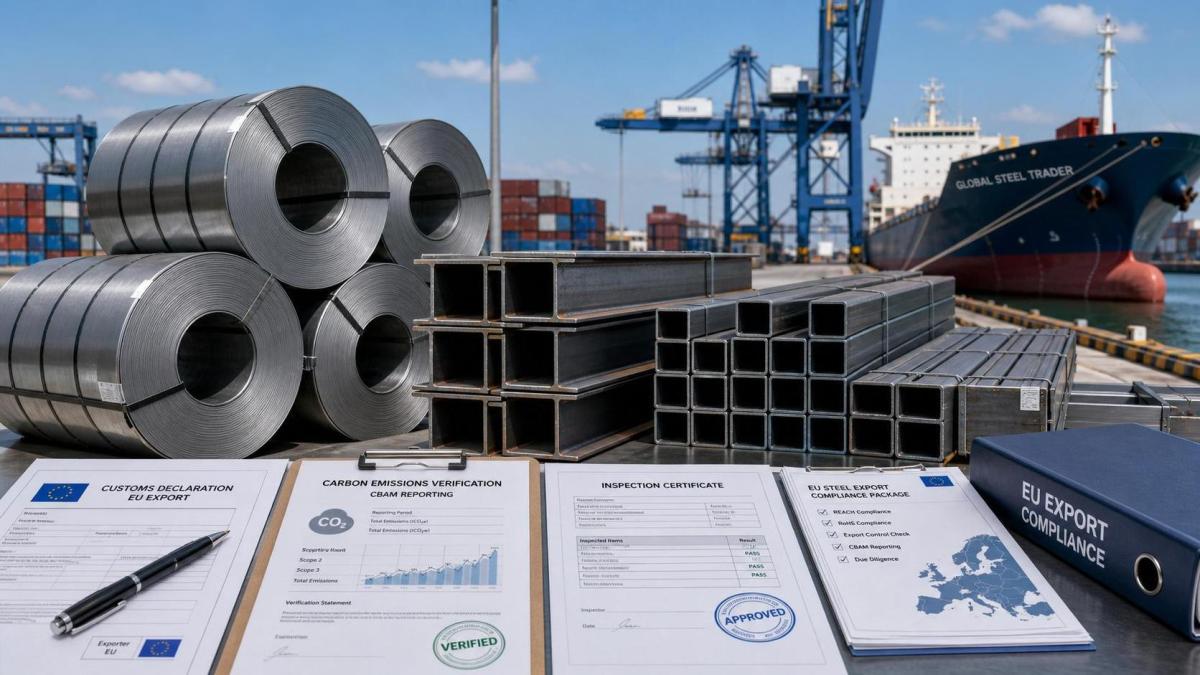
What Has Taken Effect on July 10
The confirmed change is that, from July 10, 2026, CBAM entered a compulsory data reporting phase for steel products exported to the EU. Chinese exporters of steel products and sections are required to submit quarterly data on embedded carbon emissions and that data must undergo third-party verification.
The scope described in the provided information covers mainstream steel sections and flat products, including hot-rolled coil, H-beams, and square and rectangular tubes. The same information states that the new reporting obligation directly affects compliance costs and customs clearance timing.
It is also confirmed that failure to submit reports on time may result in cargo being held at port or refused. Overseas importers are expected to work with Chinese suppliers to prepare MRV processes, meaning monitoring, reporting, and verification.
Where the Pressure Appears Across the Trade Chain
Export transactions now depend on emissions-ready documentation
For exporters shipping steel and structural products to the EU, the most immediate impact is on the export compliance process. The reporting obligation turns embedded carbon data into a required part of transaction readiness, which means shipment planning is no longer only about product specifications, price, and delivery schedule. Analysis shows that exporters will need to pay closer attention to whether quarterly reporting data, supporting records, and third-party verification are aligned before goods move toward customs and delivery.
Overseas buyers face a coordination risk, not only a purchasing risk
For overseas importers, the issue is not limited to supplier selection. The provided information makes clear that importers need to coordinate MRV preparation with Chinese suppliers. From an industry perspective, this adds a new layer to buyer-supplier cooperation: procurement decisions may now depend more heavily on whether a supplier can provide emissions-related reporting inputs in a usable and verifiable form, and whether that work can be completed in time to avoid clearance disruption.
Processing and manufacturing suppliers may be pulled into upstream data preparation
Manufacturers and processors involved in steel products covered by the mechanism may feel the impact through data collection and document preparation requirements tied to export orders. Observably, even when a company is not the final exporter, it may still be asked to support the reporting chain with production-related emissions information, product-level records, or other technical inputs needed for quarterly declarations and third-party review.
Logistics and delivery planning become more sensitive to compliance timing
Supply chain service providers, including parties involved in shipping coordination and delivery scheduling, may be affected because the summary links non-compliance to cargo delays or refusal. Analysis shows that the timing of reporting and verification can become a practical delivery risk. For businesses working with EU-bound steel cargoes, customs timing and handover schedules may need to be reviewed together with compliance readiness rather than treated as separate tasks.
Practical Issues Companies Should Watch Now
Prepare MRV work as an operational process, not a last-minute filing task
What deserves closer attention is the need to treat MRV preparation as part of routine export operations. The summary confirms cooperation between overseas importers and Chinese suppliers is required, so companies should watch whether internal reporting responsibilities, supplier inputs, and external verification steps are clearly assigned and scheduled.
Check whether covered product lines are exposed to reporting risk
The information provided specifically mentions hot-rolled coil, H-beams, and square and rectangular tubes, while also referring to mainstream sections and plates. Companies trading multiple steel categories should therefore review which EU-bound products fall into their immediate reporting workflow and whether the product mix creates different documentation or verification pressures. This is a point of attention rather than a confirmed classification guide, because no further product-by-product execution detail is provided in the input.
Review delivery commitments against reporting and verification timing
Because late filing may lead to cargo being held or rejected, shipment promises and procurement schedules deserve a closer look. Analysis shows that companies may need to watch the connection between quarterly reporting cycles, third-party verification readiness, and planned dispatch dates, especially where delivery windows are tight or buyer acceptance depends on smooth customs processing.
Keep contract and document flows under review
From an industry perspective, firms should also pay attention to the practical document chain around export transactions. That includes the consistency of commercial documents, technical records, and compliance materials used to support reporting and verification. The input does not provide detailed filing templates or official document lists, so this remains an area for continued monitoring rather than a settled checklist.
Why This Looks Like an Execution Signal
Observably, this development is more than a policy headline because it introduces a compulsory reporting action tied directly to trade execution. The immediate business relevance comes from three linked features already confirmed in the provided information: quarterly filing, third-party verification, and the risk of cargo delay or refusal if reporting is not completed on time.
At the same time, it is more appropriate to understand this as both an implemented change and a rule set that still requires close observation in practice. The obligation itself has taken effect, but the day-to-day execution impact on reporting standards, document expectations, and transaction handling will likely be shaped by how companies, importers, and service providers apply MRV preparation in actual shipments.
How the Market Is Likely to Read This Change
The clearest industry meaning of this update is that carbon reporting has moved closer to the center of steel export execution for EU-bound trade. For affected businesses, the issue is no longer abstract regulatory awareness; it now touches order handling, supplier coordination, verification readiness, and delivery reliability.
Analysis shows that the most balanced reading is to treat this as a rule already entering operational use, while continuing to watch how reporting practice, verification expectations, and buyer documentation requirements develop. The event should therefore be understood as a concrete compliance signal with immediate procedural consequences, not as a fully settled framework with every practical detail already clarified.
Basis of This Article and What Still Needs Verification
This article is based on the user-provided news title, event date, and event summary. It does not add unverified policy numbers, market data, company names, or source links beyond that input.
For this type of development, relevant source categories would usually include official announcements, regulatory releases, customs or trade authority information, industry association updates, standard-setting documents, and reporting by authoritative media. No specific official source link was provided in the input, so the exact documentary basis still needs to be verified on an ongoing basis.
Further observation is still needed on detailed implementation language, verification practice, documentation expectations, changes in tender or procurement files, market feedback from importers and exporters, and how companies actually execute MRV preparation under the mandatory reporting stage.
Please give us a message
Tianjin Kaichuang Metal Material Co., Ltd
Add: No. 41, District 6, First Street, Huanghuadian Town, Wuqing District, Tianjin
Tel: + 86 137 9101 9833
E-mail: boss@kaichsteel.com