Steel Hub

Why do steel processing costs often show up later as quality problems?
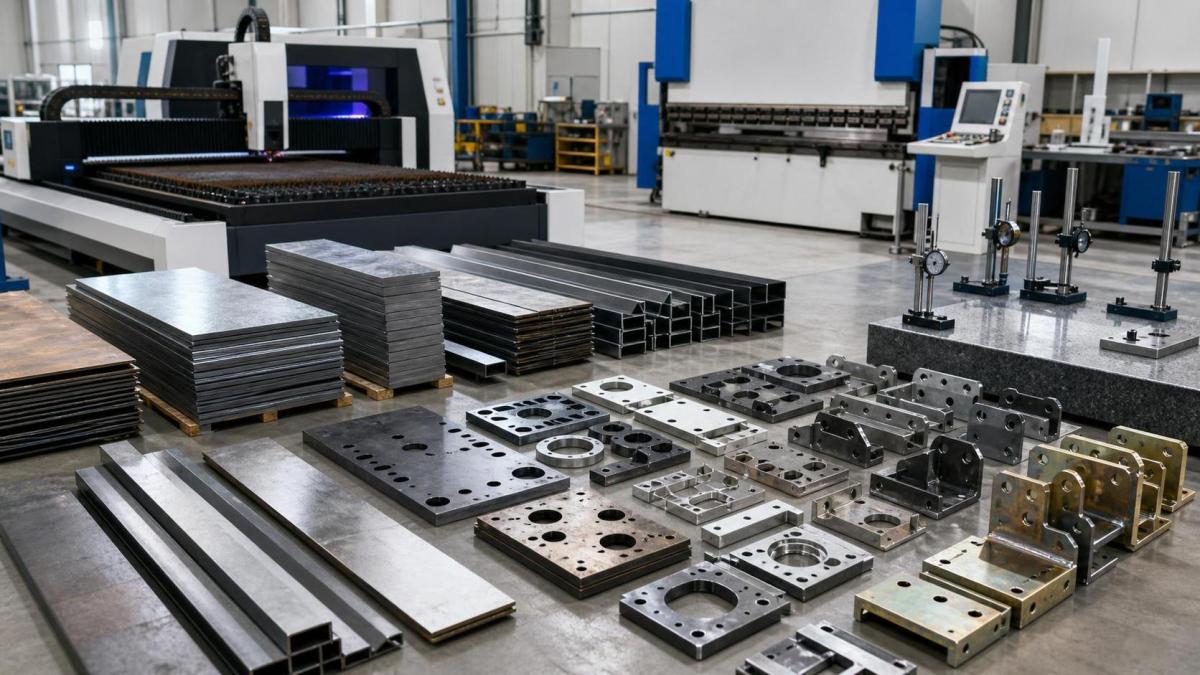
Steel processing rarely fails because of one dramatic mistake. More often, part quality drifts when cost decisions are made too early and checked too late.
That matters because steel sits upstream of construction, equipment, transport, energy, and appliance supply chains. A small processing error can travel far.
In practical terms, steel processing cost is not just the cutting price. It includes material grade selection, tolerance control, heat input, finishing steps, inspection, yield loss, and rework risk.
A lower quote can still become the higher total cost if flatness changes, holes shift, edges harden, or coating adhesion drops after fabrication.
The more common mistake is comparing suppliers by piece price while ignoring how steel processing affects fit-up time, scrap rate, welding stability, and delivery consistency.
A useful starting point is simple: ask which cost items directly influence final function, and which only affect internal shop efficiency. Those are not the same thing.
Which steel processing steps have the strongest impact on part quality?
Not every operation carries equal risk. Some steel processing stages have a much stronger link to dimensional accuracy, mechanical behavior, and downstream assembly.
Raw material comes first. Plate, section, tube, and long products vary in chemistry, cleanliness, thickness tolerance, and residual stress.
If the incoming steel is inconsistent, later processing can only compensate so much. The result is usually more sorting, more setup time, and more variation.
Cutting method is another major driver. Laser, plasma, flame, sawing, and shearing each create different edge conditions, heat-affected zones, and accuracy profiles.
For example, plasma cutting may lower immediate steel processing cost on thick material, but edge taper or dross can increase grinding and fitting time later.
Bending and forming also deserve close attention. Springback changes with grade, thickness, rolling direction, and tooling condition. When that is not controlled, assembly variation follows.
Heat treatment can improve hardness or relieve stress, yet poor temperature control can distort parts or create uneven properties across the same batch.
Surface finishing matters more than many buyers expect. Shot blasting, pickling, galvanizing, or painting all depend on surface condition created by prior steel processing.
- Material variation affects machinability, weldability, and part-to-part consistency.
- Cutting quality influences edge hardness, burrs, hole geometry, and rework time.
- Forming control determines whether dimensions stay stable after release from tooling.
- Finishing quality affects corrosion protection and appearance retention.
How can you judge whether a low steel processing quote is actually reasonable?
A low number is not automatically a warning sign. But it should trigger a closer look at what has been included, excluded, or quietly assumed.
Start by checking the quote structure. Does it specify grade, standard, tolerance, cutting route, heat treatment condition, surface requirement, inspection method, and packaging?
When these items are vague, steel processing cost often looks attractive because quality responsibility has been left undefined.
The table below helps separate low-price opportunities from low-control risk.
In many sourcing cases, the better question is not “Who is cheapest?” but “Whose steel processing assumptions match the actual drawing and use condition?”
What hidden variables usually change steel processing cost the most?
Several cost drivers remain invisible until production starts. That is why first quotes and real landed cost often diverge.
Batch size is one of the biggest variables. Small runs carry more setup cost per part, especially for CNC programming, tooling changes, and inspection preparation.
Part geometry matters too. Tight inside radii, many holes, bevels, mixed thicknesses, and difficult nesting all reduce yield and extend machine time.
Material utilization is often underestimated. When layout efficiency drops, steel processing cost rises even if labor hours stay almost unchanged.
Lead time pressure also changes quality risk. Expedited orders may skip process optimization, increase overtime, or force substitution of standard stock.
Another overlooked factor is secondary processing. Drilling, tapping, machining, deburring, blasting, coating, and special packing can exceed the base cutting price.
When parts serve automotive, shipbuilding, energy, or rail applications, documentation can add real cost as well. Certificates, dimensional reports, and traceability are not administrative extras.
A practical review list usually includes:
- Lot size and release schedule
- Yield rate from sheet, plate, or bar stock
- Tolerance zones that truly matter
- Post-processing and surface protection
- Quality records needed for receiving or audit
Where do buyers usually over-specify, and where do they under-specify?
This is where steel processing decisions often lose money. Over-specification raises cost without improving function, while under-specification shifts risk into production or field use.
Over-specification often appears in blanket tolerances. A drawing may demand tight accuracy on every feature, even though only a few interfaces are function-critical.
That drives unnecessary steel processing steps, slower inspection, and more rejected parts that would still perform correctly in service.
Under-specification is more dangerous around edge quality, residual stress, and coating preparation. These gaps rarely show up in a simple dimensional check.
In actual applications, a part can pass size inspection but fail during welding, painting, or long-term corrosion exposure because the process expectation was never stated.
A balanced specification should identify what must be controlled tightly and what can remain commercially reasonable. That gives suppliers room to optimize steel processing without weakening quality.
Need a quick rule of thumb? Tie every strict requirement to a known function, assembly interface, safety concern, or compliance need.
How should steel processing be evaluated before placing a repeat order?
A repeat order should not rely only on whether the first shipment arrived on time. Timing matters, but repeatability matters more.
The best evaluation combines price, quality stability, and operational friction. If receiving, assembly, or welding teams keep making adjustments, the process is not truly under control.
Before expanding volume, review three things together: batch-to-batch consistency, responsiveness on technical clarifications, and transparency when deviations happen.
It also helps to compare quoted steel processing assumptions with actual outcomes from the first lot. Did scrap increase? Did coating fail? Was extra machining needed?
If the answers are unclear, the source of cost is still hidden. That makes future pricing unstable, especially when raw material markets move.
For upstream products such as plate, tube, sections, and wire-based components, stable supply and processing discipline usually protect total cost better than aggressive first-piece pricing.
The next step is straightforward. Define the critical features, confirm the steel processing route, and compare suppliers on total execution quality rather than quoted unit price alone.
That approach makes sourcing decisions easier to defend and reduces long-term risk across the broader manufacturing and infrastructure chain.
Please give us a message
Tianjin Kaichuang Metal Material Co., Ltd
Add: No. 41, District 6, First Street, Huanghuadian Town, Wuqing District, Tianjin
Tel: + 86 137 9101 9833
E-mail: boss@kaichsteel.com