Steel Hub

On June 30, 2026, the current EU steel safeguard arrangement is set to expire and be replaced by a much tighter import rule. The change centers on a sharp reduction in duty-free quota volume and a higher tariff for shipments above quota, making it immediately relevant to steel exporters, overseas importers, procurement teams, customs planning, and delivery scheduling. For companies involved in hot-rolled coil, H-beams, and I-beams, the issue is not only price pressure but also whether orders can still move into the market under acceptable compliance and clearance costs.
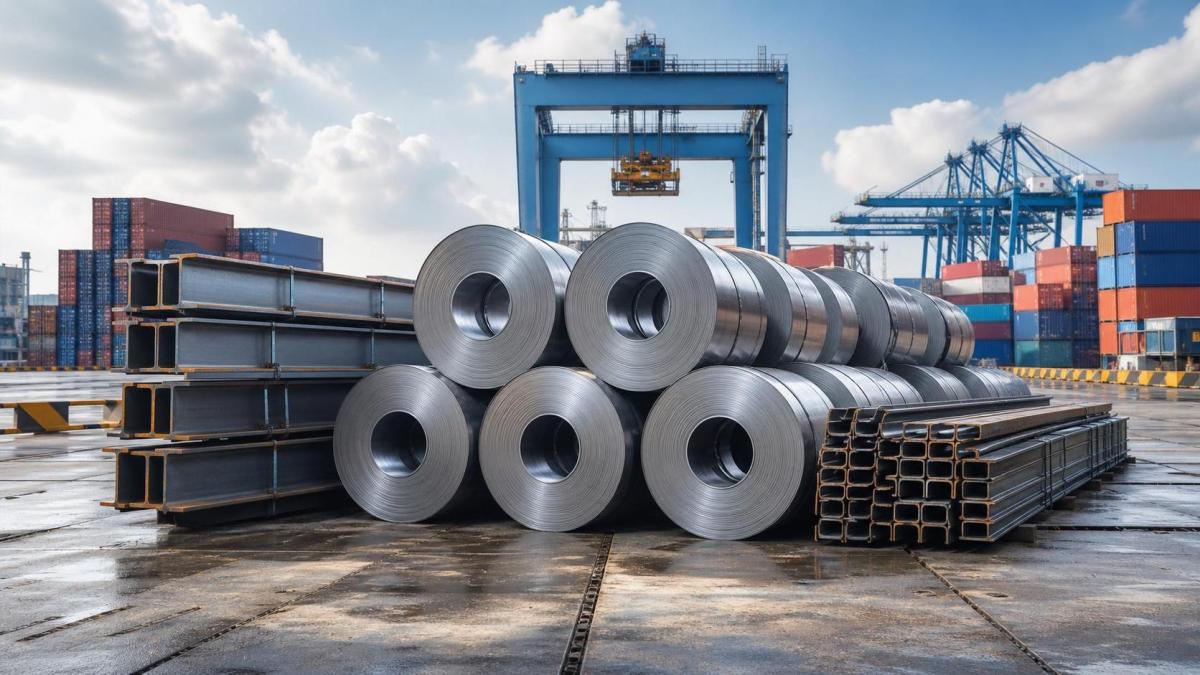
What the rule change confirms on June 30
The confirmed information is limited but commercially significant. The existing EU steel safeguard measures are due to end on June 30, 2026. They will be replaced by a stricter arrangement under which the duty-free import quota is reduced from 34.5 million tonnes to 18.3 million tonnes, a cut of 47%. At the same time, the tariff applied to imports above quota rises from 25% to 50%.
The change directly affects the cost structure and market access conditions for Chinese steel exports to the EU. The products specifically identified as exposed include hot-rolled coil, H-beams, and I-beams. The summary also makes clear that overseas importers need to reassess quota usage, adjust ordering rhythm, and prepare for higher compliance and customs-clearance costs.
Where pressure is likely to appear first in the chain
Export transactions face a narrower margin for timing errors
From an industry perspective, exporters are likely to feel the impact first through timing, pricing, and shipment allocation. When duty-free quota volume is reduced so sharply, the commercial value of shipment timing increases, because entry within quota and entry above quota can lead to very different landed cost outcomes. What deserves closer attention is the need to align contract terms, booking schedules, and delivery windows more tightly with quota availability rather than relying only on production readiness.
Overseas importers must connect purchasing with customs cost control
For overseas importers, the issue is broader than simple procurement price comparison. Analysis shows that quota consumption progress, order release timing, and customs budgeting now become linked decisions. Importers may need to review whether current purchasing plans still work under the new quota ceiling and the 50% above-quota tariff. Documentation discipline, clearance planning, and cost forecasting therefore become more important in day-to-day execution.
Processors and downstream buyers may see delivery decisions become more cautious
Companies that depend on imported steel for processing or project delivery may also be affected through sourcing stability and order sequencing. This is especially relevant for businesses using hot-rolled coil, H-beams, and I-beams as regular supply items. Observably, when import access becomes tighter, downstream buyers may need to pay closer attention to whether supplier commitments, lead times, and shipping arrangements remain workable under the revised trade conditions.
Supply chain service providers face higher coordination demands
Logistics, customs, and trade service participants may not be the direct subject of the rule, but they are exposed through execution risk. The tighter quota and higher above-quota tariff increase the importance of accurate shipment planning, document readiness, and customs coordination. In practice, the operational burden may rise where customers need more frequent updates on quota use, landing schedules, and clearance cost assumptions.
What companies should review now
Recheck quota exposure by product and order batch
Analysis shows that companies should first identify which pending or planned shipments are tied to the product categories specifically mentioned in the event summary, including hot-rolled coil, H-beams, and I-beams. The practical question is not only whether a product is affected, but whether each batch still has a commercially acceptable path into the EU under the tighter quota setting.
Adjust order rhythm and delivery planning
What deserves closer attention is the sequencing of orders, shipment release, and customs entry. Because the event summary highlights immediate reassessment of quota usage progress, companies should treat delivery scheduling as a compliance-linked commercial issue rather than only a logistics matter. Where execution details are not yet provided in the input, it is more appropriate to flag this as an area requiring close monitoring rather than assume a fixed operating method.
Prepare for higher compliance and clearance budgets
The confirmed summary indicates that importers should allow for higher compliance and customs-clearance costs. Companies involved in pricing, procurement approval, and contract review should therefore recheck whether internal budgets, quotations, and customer discussions still reflect the new tariff risk for above-quota shipments. This should be treated as a current planning issue, not as a theoretical policy note.
Watch for follow-up wording and execution practice
Observably, the event provides the direction of change clearly, but not the full operational detail. Companies should therefore keep watching for how the rule is described and applied in customs, trade documentation, tender requirements, and buyer-side compliance review. Where no further official execution detail is included in the input, it should not be presented as already settled.
Why this matters beyond a tariff headline
Analysis shows that this development is more than a routine tariff adjustment. It signals a stricter market-entry environment in which quota access, order timing, and customs cost control become more closely connected. For affected steel categories, the commercial risk now sits not only in price competition but also in whether a shipment can still enter under workable landed-cost assumptions.
It is more appropriate to understand this as a concrete execution signal rather than a distant policy discussion, because the event includes a defined date and specific changes to quota volume and above-quota tariff treatment. At the same time, it remains necessary to keep observing how market participants interpret and implement the change in actual trade flows and procurement behavior.
How the development should be read at this stage
From an industry perspective, this is best read as an already defined tightening of trade conditions with immediate implications for planning, rather than as a broad market conclusion. The confirmed facts point to higher entry barriers for affected steel shipments into the EU, especially where companies depend on duty-free quota access to preserve pricing and delivery feasibility. Even so, the full business effect will still depend on how companies adjust sourcing plans, order timing, and compliance execution in response.
Basis of this article and what still needs verification
This article is generated from the user-provided news title, event date, and event summary. For this type of development, commonly relevant source categories may include official notices, releases from regulatory or trade authorities, customs or trade administration updates, industry association information, standards-related documents, and reporting by authoritative media. No specific official source link was provided in the input, so the exact official reference still needs ongoing verification.
Further observation is still needed on any detailed implementation language, compliance interpretation, customs practice, tender-document changes, industry feedback, and how companies execute shipment and procurement adjustments after the June 30, 2026 transition.
Please give us a message
Tianjin Kaichuang Metal Material Co., Ltd
Add: No. 41, District 6, First Street, Huanghuadian Town, Wuqing District, Tianjin
Tel: + 86 137 9101 9833
E-mail: boss@kaichsteel.com